Kód: 04035034
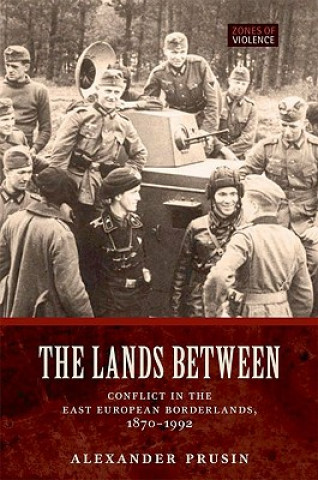
Lands Between
Autor Alexander V Prusin
The Lands Between investigates the causes and dynamics of conflict in the 'borderlands' of Eastern Europe: the modern Baltic republics of Estonia, Latvia, and Lithuania, the western provinces of Byelorussia and Ukraine, and the re ... celý popis


- Jazyk:
 Angličtina
 - Väzba: Pevná
- Počet strán: 338
Nakladateľ: Oxford University Press, 2010
- Viac informácií o knihe


Mohlo by sa vám tiež páčiť
-

One Piece, Vol. 5
9.08 € -30 % -

Classic
27.45 € -24 % -

Elusive Alliance
39.07 € -1 % -

From the Realm of a Dying Sun. Volume 3
28.87 € -21 % -

Practical Guide To Using Number Sequences
30.99 € -7 % -

Concise Yoga Vasistha
40.98 € -

A Shattered Peace: Versailles 1919 and the Price We Pay Today
25.03 € -25 % -

Okuribi
10.49 € -

Canzone nera. Testo originale a fronte
16.25 € -

Defending the Faith Against Present Heresies
18.87 € -25 % -

Forgotten Wars
109.04 € -

Masaccio e la cappella Brancacci. Note storiche e teologiche
21.40 € -9 % -

ESV Illuminated Scripture Journal: Zephaniah, Haggai, Zechariah, and Malachi
4.53 € -25 % -

Nuclear Impact
22.61 € -6 % -

El sabio Cirilo. Cuaderno de lectura comprensiva
13.62 € -

Naturstoffe
53 € -7 % -

Aesthetics of Ugliness
185.27 € -

Coffee and Confidence Sudoku Puzzle: Sudoku Puzzle Books for Adults - Sudoku Puzzle Book Medium to Hard - Cute Stylish Coffee Designed Cover Sudoku Pu
6.86 € -6 % -

Approach to Assessing the Technical Feasibility and Market Potential of a New Automotive Device
25.54 € -

Are They Moving, or Are We? Children's Physics of Energy
11.30 € -25 % -

Rethinking the French Classroom
58.86 € -

El dia de la Família
6.35 € -9 % -

Le Droit De La Guerre
18.37 € -1 % -

Auspicious Good Fortune
20.89 € -9 % -

Los poetas de la Gran Guerra
24.83 € -1 % -

The Bully Affect
6.25 € -6 % -

I Will Bless the Lord at All Times: Psalm 34:1
7.26 € -6 % -

37-MM Gun. M1916: Basic Field Manual
9.08 € -7 %
Darčekový poukaz: Radosť zaručená
- Darujte poukaz v ľubovoľnej hodnote, a my sa postaráme o zvyšok.
- Poukaz sa vzťahuje na všetky produkty v našej ponuke.
- Elektronický poukaz si vytlačíte z e-mailu a môžete ho ihneď darovať.
- Platnosť poukazu je 12 mesiacov od dátumu vystavenia.
Viac informácií o knihe Lands Between
Nákupom získate 213 bodov
 Anotácia knihy
The Lands Between investigates the causes and dynamics of conflict in the 'borderlands' of Eastern Europe: the modern Baltic republics of Estonia, Latvia, and Lithuania, the western provinces of Byelorussia and Ukraine, and the republic of Moldova - areas that have changed hands in the course of the twentieth-century on several occasions. Alexander V. Prusin looks at these 'borderlands' as a whole, synthesizing narrower national histories into a wider-ranging study that highlights the common factors feeding conflict across the region. He also takes a long-term view, from the modernizing of the Russian and Austro-Hungarian empires in the late nineteenth century, through to the break-up of the Soviet Union, with a particular focus on the 'era of conflict' between the outbreak of the First World War and the Soviet pacification of the area in the mid-1950s. While admitting the importance of socio-economic cleavages and ethnic rivalries in creating conflict, Prusin argues that the borderlands' ethno-cultural diversity was in basic conflict with the policies of the authorities that dominated the region, whether these authorities were imperial or (after 1919) nation states. Since collective identities in the borderlands were based on ethno-communal rather than national association, connections between ethnic groups across state borders raised suspicions that their allegiances and identities were not necessarily compatible with those envisioned by the ruling authority. In wartime, when the state's economic and human resources became strained to the limit, suspicion of the groups deemed less loyal blurred the concept of internal and external enemies and entailed pressure on allegedly "corrosive" ethnic elements. Efforts to impose some sort of supranational identity upon the patchwork of ethnically-mixed settlements thus became the standard practice through the first half of the twentieth-century, accelerating the conflict between the state and the population and making the potential for extreme violence so much greater. Simultaneously, as war progressed, violence was sustained and exacerbated by popular participation and acquired its own destructive logic, mutating into a vicious cycle of ethnic conflicts and civil wars.
Parametre knihy
Zaradenie knihy Knihy po anglicky Humanities History Regional & national history
88.04 €
- Celý názov: Lands Between
- Autor: Alexander V Prusin
- Jazyk: Angličtina
- Väzba: Pevná
- Počet strán: 338
- EAN: 9780199297535
- ISBN: 0199297533
- ID: 04035034
- Nakladateľ: Oxford University Press
- Hmotnosť: 662 g
- Rozmery: 239 × 162 × 24 mm
- Dátum vydania: 05. August 2010
Obľúbené z iného súdka
-

Hundred Years' War on Palestine
13.22 € -19 % -

Rubicon
15.14 € -24 % -

Bury My Heart At Wounded Knee
11.40 € -34 % -

History of the Kings of Britain
17.66 € -5 % -

Cuneiform
10.79 € -25 % -

Alexander the Great
18.06 € -25 % -
Osman's Dream
16.85 € -24 % -

How to be a Victorian
13.01 € -29 % -

'Tis
11.80 € -25 % -

On China
16.95 € -34 % -

Empress Dowager Cixi
13.62 € -33 % -

Ecclesiastical History of the English People
10.59 € -25 % -

Voynich Manuscript
41.29 € -6 % -

We Were Soldiers Once...And Young
11.30 € -28 % -
Rise And Fall of Athens
17.36 € -22 % -

Colossus
11.80 € -25 % -

Austrian Commanders of the Napoleonic Wars
18.06 € -15 % -

Blood, Toil, Tears and Sweat
13.92 € -24 % -

Genghis Khan
18.77 € -16 % -

Origins of the Second World War
13.92 € -24 % -

Benjamin Franklin
18.87 € -12 % -

Children of Ash and Elm
19.98 € -20 % -

Campaigns of Alexander
13.72 € -26 % -

Diana: Her True Story - In Her Own Words
13.01 € -25 % -
Oxford History of Greece and the Hellenistic World
16.85 € -24 % -

Byzantium
16.04 € -24 % -

Florence
55.83 € -25 % -

History of the Byzantine State and Society
53.60 € -12 % -

Lords of the Horizons
13.12 € -29 % -

Annals & The Histories
15.44 € -25 % -

American Nations
13.42 € -24 % -

Badges and Uniforms of the Royal Air Force
16.04 € -24 % -

Spanish Civil War
13.92 € -24 % -

Berlin
12.81 € -26 % -
Winston Churchill
17.46 € -2 % -

Imagining the Balkans
37.75 € -

Inventing Eastern Europe
29.47 € -11 % -

Unfinished Empire
13.01 € -29 % -

German Fighter Ace Werner Molders:: An Illustrated Biography
35.43 € -26 % -

Two Lives of Charlemagne
12.71 € -25 % -

Secret History of the IRA
20.18 € -24 % -

Thracians 700BC-46AD
15.74 € -15 % -

Paston Letters
9.88 € -25 % -

Attila and the Nomad Hordes
18.06 € -15 % -

Middle Ground
32 € -24 % -

Promised You A Miracle
13.92 € -24 % -

Black Athena Writes Back
41.08 € -

Brief History of the Private Lives of the Roman Emperors
15.74 € -20 % -

Rising '44
21.19 € -25 %
Osobný odber Bratislava a 12422 dalších
Copyright ©2008-26 najlacnejsie-knihy.sk Všetky práva vyhradenéSúkromieCookies

 24 miliónov titulov
 Vrátenie do mesiaca
 02/210 210 99 (8-15.30h)