Kód: 04517859
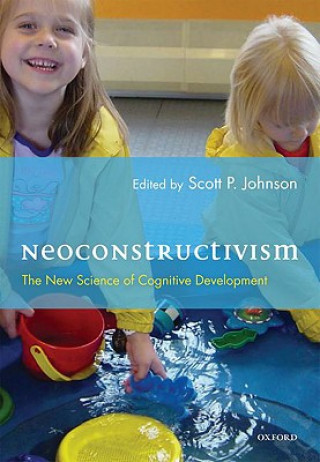
Neoconstructivism
Autor Scott Johnson
Arguments over the developmental origins of human knowledge are ancient, founded in the writings of Plato, Aristotle, Descartes, Hume, and Kant. They have also persisted long enough to become a core area of inquiry in cognitive an ... celý popis


- Jazyk:
 Angličtina
 - Väzba: Pevná
- Počet strán: 384
Nakladateľ: Oxford University Press Inc, 2010
- Viac informácií o knihe


Mohlo by sa vám tiež páčiť
-

Oxford Guide to Effective Writing and Speaking
31.59 € -

Sound Design, Mixing and Mastering with Ableton Live 9
27.76 € -4 % -

The Dome Summer 2024, 2 Audio-CD
25.74 € -4 % -

En attendant l'eau chaude
29.07 € -

Memorial Of Noah Porter, Late Of Farmington, Connecticut (1867)
19.28 € -2 % -

Adamson's 1969
21.09 € -1 % -

Mind and Labor on the Farm in Black-Earth Russia, 1861-1914
162.85 € -9 %
Darčekový poukaz: Radosť zaručená
- Darujte poukaz v ľubovoľnej hodnote, a my sa postaráme o zvyšok.
- Poukaz sa vzťahuje na všetky produkty v našej ponuke.
- Elektronický poukaz si vytlačíte z e-mailu a môžete ho ihneď darovať.
- Platnosť poukazu je 12 mesiacov od dátumu vystavenia.
Viac informácií o knihe Neoconstructivism
Nákupom získate 332 bodov
 Anotácia knihy
Arguments over the developmental origins of human knowledge are ancient, founded in the writings of Plato, Aristotle, Descartes, Hume, and Kant. They have also persisted long enough to become a core area of inquiry in cognitive and developmental science. Empirical contributions to these debates, however, appeared only in the last century, when Jean Piaget offered the first viable theory of knowledge acquisition that centered on the great themes discussed by Kant: object, space, time, and causality. The essence of Piaget's theory is constructivism: The building of concepts from simpler perceptual and cognitive precursors, in particular from experience gained through manual behaviors and observation. The constructivist view was disputed by a generation of researchers dedicated to the idea of the "competent infant," endowed with knowledge (say, of permanent objects) that emerged prior to facile manual behaviors. Taking this possibility further, it has been proposed that many fundamental cognitive mechanisms -- reasoning, event prediction, decision-making, hypothesis testing, and deduction -- operate independently of all experience, and are, in this sense, innate. The competent-infant view has an intuitive appeal, attested to by its widespread popularity, and it enjoys a kind of parsimony: It avoids the supposed philosophical pitfall posed by having to account for novel forms of knowledge in inductive learners. But this view leaves unaddressed a vital challenge: to understand the mechanisms by which new knowledge arises. This challenge has now been met. The neoconstructivist approach is rooted in Piaget's constructivist emphasis on developmental mechanisms, yet also reflects modern advances in our understanding of learning mechanisms, cortical development, and modeling. This book brings together, for the first time, theoretical views that embrace computational models and developmental neurobiology, and emphasize the interplay of time, experience, and cortical architecture to explain emergent knowledge, with an empirical line of research identifying a set of general-purpose sensory, perceptual, and learning mechanisms that guide knowledge acquisition across different domains and through development.
Parametre knihy
Zaradenie knihy Knihy po anglicky Society & social sciences Psychology Child & developmental psychology
137.01 €
- Celý názov: Neoconstructivism
- Podnázov: The New Science of Cognitive Development
- Autor: Scott Johnson
- Jazyk: Angličtina
- Väzba: Pevná
- Počet strán: 384
- EAN: 9780195331059
- ISBN: 0195331052
- ID: 04517859
- Nakladateľ: Oxford University Press Inc
- Hmotnosť: 1119 g
- Rozmery: 259 × 187 × 26 mm
- Dátum vydania: 28. January 2010
Obľúbené z iného súdka
-

Highly Sensitive Child
14.93 € -29 % -

Free to Learn
14.73 € -25 % -

Range
21.40 € -27 % -

Uses of Enchantment
12.61 € -23 % -
Neurobiology and the Development of Human Morality
43.21 € -17 % -

Playing and Reality
32.10 € -5 % -
Evolving Self
63.20 € -13 % -

Integrating Play Therapy and Emdr with Children
13.92 € -1 % -

End of Average
13.52 € -27 % -

Me, Myself, and Us
14.73 € -25 % -

Early Trauma
28.26 € -1 % -

Mothers, Sons, and Lovers
27.35 € -18 % -

EMDR Therapy and Adjunct Approaches with Children
72.69 € -

Disappearance of Childhood
12.01 € -25 % -

Sandtray Play in Education
17.76 € -

Holodynamic State of Being
23.62 € -18 % -

Short Introduction to Attachment and Attachment Disorder, Second Edition
27.25 € -

Presence in a Conscious Universe
23.62 € -18 % -

Empty Fortress
23.62 € -10 % -

Life Paints Its Own Span
34.52 € -8 % -

Identity and the Life Cycle
13.12 € -21 % -

Life Cycle Completed
12.41 € -21 % -

Understanding Human Nature
12.01 € -

Interpersonal World of the Infant
31.59 € -

Understanding Deeper Developmental Needs
27.45 € -17 % -

Conscious Femininity
17.05 € -24 % -

Bright Kids Who Can't Keep Up
11.30 € -24 % -

Attachment
30.79 € -

Philosophical Baby
18.06 € -25 % -

Maturity
14.02 € -25 % -

The Psychology of the Child
24.32 € -

Early Start Denver Model for Young Children with Autism
77.94 € -

How Children Learn
13.72 € -26 % -

Truth Will Set You Free
13.12 € -26 % -

Tree of Knowledge
17.46 € -48 % -

Affect Regulation, Mentalization, and the Development of the Self
36.34 € -2 % -

Teachings of Dora Kalff
17.76 € -

Development of Children
100.86 € -

Fire Child, Water Child
16.75 € -25 % -
NurtureShock
14.73 € -25 % -

Bilingual
25.74 € -12 % -

Supporting the Highly Sensitive Child: Making Sense of Meltdowns
6.35 € -7 % -

Brain Child
17.05 € -24 % -

Secure Base
25.54 € -5 % -

Young Children's Drawings as a Mirror of Development
19.28 € -9 % -

ADHD
12.71 € -24 % -

Vygotsky for Educators
42.90 € -

Visiting Feelings
13.42 € -24 % -

Play in Childhood
55.62 €
Osobný odber Bratislava a 12422 dalších
Copyright ©2008-26 najlacnejsie-knihy.sk Všetky práva vyhradenéSúkromieCookies

 24 miliónov titulov
 Vrátenie do mesiaca
 02/210 210 99 (8-15.30h)