Kód: 37057334
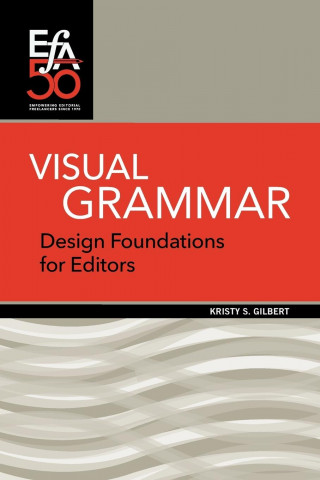
Visual Grammar
Autor Kristy Gilbert, Robin Martin
Design awareness is increasingly important in the quick-publishing models embraced by web publishers and rapid-release book publishers eager to create reader-ready documents. These models often condense the number of trained profe ... celý popis


- Jazyk:
 Angličtina
 - Väzba: Brožovaná
- Počet strán: 36
Nakladateľ: Editorial Freelancers Association Publications, 2021
- Viac informácií o knihe


Mohlo by sa vám tiež páčiť
-
New Page Design: Layout and Editorial Design
29.47 € -19 % -

Literacy
18.06 € -9 % -

Subtle Art of Not Giving a F*ck
12.61 € -29 % -

National Geographic Kids Readers: In the Forest
5.14 € -24 % -

Book Design: From the Basics to the most Impressive Designs
42.20 € -25 % -

Book Cover Designs
25.33 € -26 % -

Blue Latitudes
16.85 € -24 % -
The Elements of Visual Grammar
26.34 € -5 % -

Mehr Zeit für die Seele
15.24 € -16 % -
Visual Grammar
24.02 € -
Visual Grammar
52.19 € -

László Moholy-Nagy
11.70 € -10 % -
KOGIN. BORDADO CONTADO SASHIKO
29.37 € -

Telecommunication Networks
305.93 € -

Advanced Typography
45.93 € -

Our Discovery Island Starter Active Teach
65.92 € -

TRESCHER Reiseführer Schlösser der Loire
22.30 € -11 % -

CÔTE ? CÔTE 1 - Étude comparative de l'anglais et du français
10.79 € -18 % -

Sarcoma Diet Cookbook: Recovery Meal Recipes to Heal Malignant Tumor and Other Related Cancer
11.40 € -7 % -
Manual de derecho y mercado de la energía
75.01 € -
TIGRESA ESCONDIDA EN LA ALMOHADA, LA
25.03 € -

The Dixie Highway in Illinois
19.58 € -21 % -

Nella mente del bambino. Per uno sviluppo a tutto tondo verso l'autonomia
20.49 € -

Don't Waste Money, Spend it!
9.88 € -25 % -

RESPONSABILIDAD SOCIAL TRANSPARENCIA Y RELACIONES PRIVADAS
33.51 € -

Outside the City Gate
14.53 € -

De las costumbres antiguas de los naturales del Pirú
28.26 € -
Pathways into Creative Working Lives
90.26 € -4 %
Darujte túto knihu ešte dnes
- Objednajte knihu a vyberte Zaslať ako darček.
- Obratom obdržíte darovací poukaz na knihu, ktorý môžete ihneď odovzdať obdarovanému.
- Knihu zašleme na adresu obdarovaného, o nič sa nestaráte.
Viac informácií o knihe Visual Grammar
Nákupom získate 39 bodov
 Anotácia knihy
Design awareness is increasingly important in the quick-publishing models embraced by web publishers and rapid-release book publishers eager to create reader-ready documents. These models often condense the number of trained professionals who touch a piece before it's published. Freelance editors become more valuable to publishing production process when, in addition to knowing written rhetoric, they understand the basic grammar of document design. Visual Grammar: Design Foundations for Editors explains the four basic principles of design along with examples of what to do and instances where things go wrong. It also presents how each principle can serve a project's message, purpose, and audience.
Visual Grammar includes 20 images illustrating the concepts of size, vertical and horizontal alignment, curve alignment, fonts and font alignment, eyeline and eyesight, proximity unity and exclusion, and other graphic design fundamentals. The author presents the basics of graphic design, not just for book design but other graphic design skills for editors, including: How to design a lead magnet, how good page layout design assures a message is delivered the way it is intended.
There are up to a dozen foundational principles, but arguably the most important of them are contrast, repetition, alignment, and proximity. Armed with an understanding of these principles, you can use visual grammar to create a coherent hierarchy of information for readers and viewers. Once you've structured your documents well, you can fine-tune the typefaces and typesetting to create elegant and effective reader-ready documents.
Each of these foundational principles of graphic design-contrast, repetition, alignment, proximity, and hierarchy-are rhetorical tools editors need to help organize, emphasize, and clarify texts in ways that are appropriate for a finalized, ready-to-publish work. An additional understanding of how to choose appropriate typefaces and how to typeset pages for optimal readability puts budding designers in a great position to create elegant and effective reader-ready documents.
Foundations of good design include: Contrast: ways in which elements in a design are different. Contrast creates emphasis; Repetition: ways in which elements in a design appear more than once. Repetition creates unity, rhythm, and a visual script. It helps create clarity; Alignment: ways to line elements up, both vertically and horizontally. Alignment creates flow up/down and left/right across a page and helps organize; Proximity: ways in which elements can be placed close together or far apart to communicate how logically related they are. It helps organize.
A strong designer knows how to use these foundational elements to create hierarchy. The purpose of hierarchy is to help readers know what to look at first and what to retain from a piece. The top and the bottom of the hierarchy are more important-the bit that gets their attention and the bit that lingers with them at the end.
Regarding typefaces and typesetting, the two main considerations for fonts are readability / legibility and personality. Most fonts are appropriate for a project based on where they fall on that sliding scale. To choose a typeface, a skilled book designer will use a JAGERN analysis for personality; X-height, serifs/sans serifs, other factors for readability. Design principles related to typesetting include: line length (margins) and justified vs. ragged edge.
Parametre knihy
Zaradenie knihy Knihy po nemecky Geisteswissenschaften, Kunst, Musik Kunst Theater, Ballett
16.25 €
- Celý názov: Visual Grammar
- Podnázov: Design Foundations for Editors
- Autor: Kristy Gilbert, Robin Martin
- Jazyk: Angličtina
- Väzba: Brožovaná
- Počet strán: 36
- EAN: 9781880407509
- ISBN: 1880407507
- ID: 37057334
- Nakladateľ: Editorial Freelancers Association Publications
- Hmotnosť: 64 g
- Rozmery: 229 × 152 × 2 mm
- Dátum vydania: 25. August 2021
Obľúbené z iného súdka
-

The Art of Gravity Falls
47.95 € -10 % -

Fairy Tales
34.52 € -28 % -

Call It Home
37.25 € -5 % -

Open Circuits
27.55 € -29 % -

Figure Drawing for Fashion Design, Vol. 1
29.47 € -30 % -
Thinking with Type: A Critical Guide for Designers, Writers, Editors, and Students (3rd Edition Revised & Updated)
27.05 € -6 % -

Ametora: How Japan Saved American Style
21.40 € -27 % -

Fashion School in a Book
27.86 € -24 % -

Jean Paul Gaultier
59.46 € -25 % -

Designing Brand Identity
41.99 € -17 % -

The Furniture Handbook: A Guide to Choosing, Arranging, and Caring for the Objects in Your Home
21.40 € -27 % -

John Derian Picture Book II
54.61 € -29 % -
My Hero Academia: Ultra Artworks
35.43 € -24 % -

Ridiculously Good Looking Saunas
39.87 € -15 % -

Elsa Schiaparelli
40.78 € -24 % -
Alphabet in Motion
57.74 € -27 % -

The Love of Home
32 € -24 % -

Feels Like Home
39.97 € -6 % -

Serenity Rosuuri Illustrations
21.70 € -24 % -
Printmaking
34.12 € -26 % -

We the Bacteria
17.96 € -14 % -

Patterns of Portugal: A Journey Through Colors, History, Tiles, and Architecture
21.40 € -27 % -

Yummy Tummy
29.98 € -24 % -

Worlds Beyond Time: Sci-Fi Art of the 1970s
28.56 € -24 % -

The Art of the Boy and the Heron
35.13 € -7 % -

The Squarzi Archive
33.81 € -22 % -

A New English Style
35.43 € -24 % -

100 More Things Every Designer Needs To Know About People
26.85 € -24 % -

Little Book of Maison Margiela
13.01 € -29 % -

Fashion: The Whole Story
31.09 € -26 % -

Dior For Ever
47.85 € -21 % -

Picturebook Makers: Part 2
23.72 € -29 % -

Permaculture
30.89 € -2 % -

Elise and the New Resistance
21.70 € -24 % -

Surf Shacks Vol. 3 by Matt Titone
50.27 € -10 % -

Slanted 47 Digital Tools
24.73 € -4 % -

Draw Like an Artist: 100 Buildings and Architectural Forms
15.44 € -21 % -
The Local Project
62.89 € -25 % -

Living in Tuscany
25.54 € -8 % -

Platform Engineering
42.30 € -24 % -

The Art of Marimekko Postcard Box
18.06 € -19 % -

Goes Like This
28.56 € -24 % -

Dior: The Collection of Azzedine Alaïa
31.19 € -28 % -

Clothes... and other things that matter
10.79 € -25 % -

Type Tricks: Layout Design
15.94 € -22 % -

The Vintage Way
28.06 € -26 % -

Shocking Life
21.70 € -24 % -

Vintage Knitwear
37.45 € -

The Great Indoors: The Surprising Science of How Buildings Shape Our Behavior, Health, and Happiness
14.02 € -25 %
Osobný odber Bratislava a 12422 dalších
Copyright ©2008-26 najlacnejsie-knihy.sk Všetky práva vyhradenéSúkromieCookies

 24 miliónov titulov
 Vrátenie do mesiaca
 02/210 210 99 (8-15.30h)