Code: 01624683
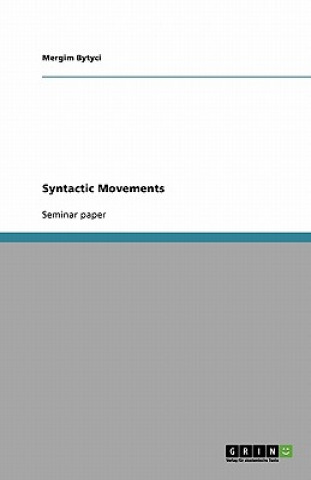
Syntactic Movements
by Mergim Bytyci
Seminar paper from the year 2008 in the subject English Language and Literature Studies - Linguistics, grade: 2.0, Technical University of Braunschweig, language: English, abstract: 1. IntroductionIn the course of this term paper ... more


- Language:
 English
 - Binding: Paperback
- Number of pages: 28
Publisher: Grin Verlag, 2009
- More about this

16.17 €
RRP: 18.96 €
You save 2.79 €

In stock at our supplier
Shipping in 5 - 8 days
You might also like
-

Wuthering Heights
4.64 € -

Colour Confident Stitching
18.09 € -24 % -

The Cost of Living
12.02 € -26 % -
The Picture of Dorian Gray
16.57 € -34 % -

Wabi Sabi
19.10 € -20 % -
The Element Encyclopedia of Secret Signs and Symbols
20.11 € -25 % -

How To Be An Explorer Of The World
12.22 € -30 % -

History of Illustration
129.09 € -

Plantopedia
35.37 € -25 % -

Book of Healing
14.45 € -29 % -

Flower, Exploring the World in Bloom
49.53 € -18 % -

Furyborn
11.72 € -1 % -

Europeans
17.88 € -30 % -

In This Moment
14.04 € -25 % -

White Gold
13.94 € -24 % -

Succubus Blues
12.83 € -25 % -

Odložené prípady Nezvestná
12.93 € -19 % -
Birds of Europe, Russia, China, and Japan: Non-Passerines: Loons to Woodpeckers
33.65 € -9 % -

Rick and Morty. Bd.1
13.13 € -13 % -

Handbuch Keramik
51.65 € -11 % -

Textbook of Hyperbaric Medicine
351.70 € -9 % -

Mutations, 1 Audio-CD
24.15 € -

Southern California
7.67 € -26 % -
![La huella de la noche [AdN]](https://media.libris.to/jacket/32911833t.jpg "La huella de la noche [AdN]")
La huella de la noche [AdN]
17.58 € -10 % -

Bezwstydna cnota
10.50 € -5 % -

Vertigo Relief
14.85 € -1 % -

Gourd Art Basics: the Complete Guide to Cleaning, Preparation, & Repair
11.72 € -26 % -

Le bull terrier
21.22 € -

Wild Girl
8.68 € -25 % -
Che
26.88 € -11 % -
Contract Bridge Made Easy - The New Point Count Way
24.66 € -9 % -

Nature Human Nature and God
20.21 € -
Suicide
27.29 € -

Successes and New Directions in Data Mining
187.52 € -

Commentaire de la Convention Internationale Signee A Paris, Le 20 Mars 1883, Pour La Protection
31.63 € -

Creative Techniques For Color Photography
27.49 € -9 % -
Perem
7.47 € -9 % -

Superman: Comic Chapter Books
11.51 € -10 % -

Paleobiology of the Polycystine Radiolaria
155.17 € -10 % -

CONSTRUCTION OF SUBSTRUCTURE OF MAYFAIR
17.48 € -2 % -

Call It Courage
14.75 € -25 % -

The Korean War: Restoring the Balance
14.04 € -7 % -

Democracy's Education
44.88 € -
Martin Luther
50.13 € -
Collection of the Occasional Papers. for the Year ... of 3; Volume 1
32.74 € -2 % -

Birthday Celebrations Coloring Book: Coloring Pages For Kids And Adults, A Birthday-Themed Illustrations And Designs Collection To Color
10.71 € -7 % -
Survivor's Guilt
5.85 € -7 % -

Maschinelle Verarbeitung altdeutscher Texte V
148.80 € -1 % -

Survival of the Blood
35.58 € -
Georg Wilhelm Friedrich Hegel: Sämtliche Werke. Jubiläumsausgabe / Band 7: Grundlinien der Philosophie des Rechts, oder Naturrecht und Staatswissensch
78.94 € -

Contribution A l'Etude de l'Albuminurie Dans La Variole
15.66 € -2 % -

Presidency and the Challenge of Democracy
55.69 € -
Semantic Web Services
102.90 € -7 % -

Poems from a Broken Heart: Volume III
7.27 € -6 % -
KOLORYE FAUNE ET FLORE "AN NOU"
13.33 € -
Judas & Justice
13.74 € -10 % -

What Roosevelt Thought
20.92 € -22 % -

Machines Et Inventions Approuvees Par l'Academie Royale Des Sciences. Tome 2
22.84 € -
Grammatical Institutes; or, an Easy Introduction to Dr. Lowth's English Grammar
30.01 € -2 % -

Food Oils and Fats
154.26 € -7 % -
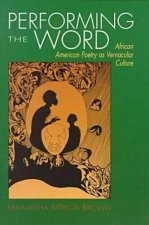
Performing the Word: African-American Poetry as Vernacular Culture
31.13 € -4 % -
The Wild Elephant and the Method of Capturing and Taming it in Ceylon
19.70 € -14 % -

AI 2017: Advances in Artificial Intelligence
51.65 € -7 %
Give this book as a present today
- Order book and choose Gift Order.
- We will send you book gift voucher at once. You can give it out to anyone.
- Book will be send to donee, nothing more to care about.
More about Syntactic Movements
You get 39 loyalty points
 Book synopsis
Seminar paper from the year 2008 in the subject English Language and Literature Studies - Linguistics, grade: 2.0, Technical University of Braunschweig, language: English, abstract: 1. IntroductionIn the course of this term paper I will analyze three kinds of syntactic movements, which will be the Head Movement, Argument Movement and the Wh-Movement. Initially I will defer to basic knowledge such as Feature Checking, Merge and C-Command since these operations are the basis of syntactic comprehension.After a short introduction I will briefly discuss and explain the Head Movement and the Argument Movement with the help of examples before I focus on the latter, namely the Wh-Movement. This syntactic operation will be the core of this paper. I will try to analyze the latest concepts and approaches to this issue and try to illustrate the way Wh-Movement takes place by several examples. I decided to concentrate on Adger s and Radford s points of view on this topic since they rate among the most accepted syntacticians worldwide. Despite this I will parse their statements very closely and try to find potential differences or grievances.An interesting question will be whether all operations can be explained in a plausible way or if there are arbitrary assumptions without any evidence. 2. Feature CheckingSyntacticians assume that every word of a sentence bears certain features. These features are called categorial-selectional (or c-selectional) features and can be either interpretable or uninterpretable. A noun, for example, bears an interpretable feature [N], a verb [V], an adverbial [Adv] and a preposition the feature [P].A verb cannot stand alone in a sentence but it needs the existence of a subject. In order to explain this phenomenon linguists came to the assumption that a verb has to bear uninterpretable features as well. Since a verb needs the presence of a subject, which usually is a DP, it is assumed that the verb bears next to the interpretable feature [V] the uninterpretable feature [N] (abbreviated [uN]). 2.1 MergeThis uninterpretable feature has to be checked and deleted in order to form a grammatically correct sentence. This happens via the operation of Merge. Merge can only
Book details
Book category Books in English Language Language: reference & general
16.17 €
- Full title: Syntactic Movements
- Author: Mergim Bytyci
- Language: English
- Binding: Paperback
- Number of pages: 28
- EAN: 9783640420247
- ISBN: 3640420241
- ID: 01624683
- Publisher: Grin Verlag
- Weight: 45 g
- Dimensions: 216 × 140 × 2 mm
- Date of publishing: 15. September 2009
Trending among others
-

MI6 Spy Skills for Civilians
12.73 € -28 % -

Doing Time Like a Spy
14.85 € -24 % -

Merriam-Webster's Intermediate Visual Dictionary
14.75 € -25 % -
Colloquial Bengali
59.03 € -18 % -

Save the Cat! Writes a Novel
13.94 € -32 % -

Hallo, Itt Magyarorszag! (Hungarian for Foreigners). by Direct Method
11.51 € -12 % -

Japanese Stories for Language Learners
13.44 € -24 % -

Remembering the Kanji 1
35.58 € -

Merriam-Webster s Advanced Learner's English Dictionary
23.04 € -24 % -

English Vocabulary Builder Workbook (200 Lessons)
16.67 € -6 % -

Nahuatl-English/English-Nahuatl Concise Dictionary
18.19 € -25 % -
Merriam-Webster's Dictionary and Thesaurus
7.88 € -25 % -
Oxford A-Z of Grammar and Punctuation
10.81 € -24 % -

Egy Szo Mint Szaz: Magyar-Angol Tematikus Szokincstar / Hungarian-English Vocabulary by Topic
10.50 € -12 % -
Basics of Biblical Greek Grammar
41.14 € -28 % -

Basics of Biblical Hebrew Grammar
42.15 € -26 % -
Basics of Biblical Greek Workbook
18.29 € -24 % -

Routledge Introductory Course in Modern Hebrew
62.67 € -
Great Gatsby
15.76 € -
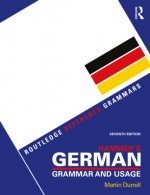
Hammer's German Grammar and Usage
56 € -

Mandarin Chinese for Beginners
14.04 € -25 % -
Jean-Pierre Jeunet's 'Le fabuleux destin d'Amelie Poulain'. A textual analysis of micro and macro textual features and extra-textual contexts
14.45 € -14 % -
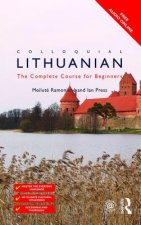
Colloquial Lithuanian
96.64 € -

Basics of Biblical Hebrew Workbook
21.22 € -24 % -
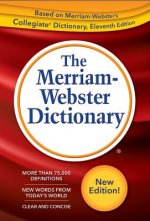
Merriam-Webster Dictionary
12.02 € -24 % -
Colloquial Welsh
77.83 € -
Don Quijote
27.39 € -
Essential Cantonese Phrasebook and Dictionary
7.88 € -25 % -
Colloquial Tibetan
112.51 € -

Intermediate Japanese Textbook
23.24 € -22 % -
Routledge Intensive Dutch Course
86.02 € -

Highway Code
3.73 € -29 % -
Easy Learning English Idioms
8.68 € -25 % -

Beginning Mandarin Chinese Characters Volume 1
12.73 € -25 % -
Graphologist's Alphabet
26.88 € -10 % -
Colloquial Serbian
53.27 € -23 % -

Time Machine
18.69 € -
Story of Yiddish
13.74 € -26 % -

Gnostic Devil in Bulgakov's 'Master and Margerita'
14.45 € -14 % -

Routledge Introductory Course in Moroccan Arabic
74.80 € -
Lithuanian Dictionary
121.40 € -
Reading Hindi: Novice to Intermediate
56.91 € -

"The Lies of Savages". Inuit, Victorians and Cannibalism in the Aftermath of the Franklin Expedition
23.04 € -7 % -
Top 35 Mistakes Danes Make in English
10.71 € -15 % -
Form and function of Paris representation in Hemingway's A Moveable Feast
14.45 € -14 % -

Pünktlich wie die Maurer
12.83 € -
Applied Graphology - A Textbook on Character Analysis From Handwriting - For the Practical Use of the Expert, the Student, and the Layman Arranged in
25.77 € -9 % -

Translating and Reimagining - Recovering Pizarnik in her late Prose Works
42.75 € -14 % -

The Various Roles of the Teacher in the English Classroom
20.51 € -6 %
Collection points Bratislava a 13216 dalších
Copyright ©2008-26 najlacnejsie-knihy.sk All rights reservedPrivacyCookies

 26436 collection points
 Delivery 2.99 €
 02/210 210 99 (8-15.30h)