Kód: 04616490
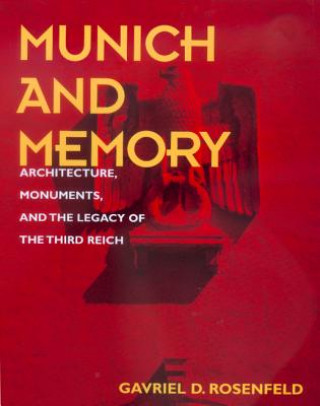
Munich and Memory
Autor Gavriel David Rosenfeld
Munich, notorious in recent history as the capital of the Nazi movement, is the site of Gavriel Rosenfeld's stimulating inquiry into the German collective memory of the Third Reich. Rosenfeld shows, with the aid of a wealth of pho ... celý popis


- Jazyk:
 Angličtina
 - Väzba: Pevná
- Počet strán: 456
Nakladateľ: University of California Press, 2000
- Viac informácií o knihe

69.08 €
Bežne: 76.76 €
Ušetríte 7.68 €

Skladom u dodávateľa
Odosielame za 10 - 18 dní
Mohlo by sa vám tiež páčiť
-

Drug Allergy Testing
92.92 € -4 % -

Market Leader ESP Book - Logistics Management
33.02 € -

Heaven, Texas
15.34 € -18 % -

JIGORO KANO
20.29 € -

Rabbi Yitzchak Hutner's Theology of Meaning
144.54 € -

Beauty of the Unity and the Harmony of the Whole
25.04 € -25 % -

Como Evitar El Caerse Muerto!
28.17 € -10 % -

Bible
29.89 € -

The Show must go on
14.84 € -1 % -

Managing Reverse Logistics Using System Dynamics
51.61 € -14 % -

Breaking the Power of Alcohol, Drugs, and Tobacco
17.06 € -2 % -

The Mute Button
11.51 € -6 % -

Narrative of Scenes and Events in Italy; From 1847 to 1849, Including the Siege of Venice. ... Translated from the Unpublished Italian Manuscript.Vol.
23.53 € -25 % -

Flatland: A Romance of Many Dimensions
10.60 € -7 % -

200 Puzzles sudoku for beginners 15 years and up
18.78 € -10 % -

John Halifax
31.20 € -14 % -

Inclusion y Diversidad: Innovaciones y Experiencias
23.73 € -

LA INTEGRACION DEL DICCIONARIO EN EDUCACION INFANTIL
17.87 € -

Mode de jouir au féminin
15.75 € -

Sel et société - Tome 2
39.99 € -

Engineering Handbook of Smart Technology for Aging, Disability, and Independence
371.51 € -2 %
Darujte túto knihu ešte dnes
- Objednajte knihu a vyberte Zaslať ako darček.
- Obratom obdržíte darovací poukaz na knihu, ktorý môžete ihneď odovzdať obdarovanému.
- Knihu zašleme na adresu obdarovaného, o nič sa nestaráte.
Viac informácií o knihe Munich and Memory
Nákupom získate 167 bodov
 Anotácia knihy
Munich, notorious in recent history as the capital of the Nazi movement, is the site of Gavriel Rosenfeld's stimulating inquiry into the German collective memory of the Third Reich. Rosenfeld shows, with the aid of a wealth of photographs, how the city's urban form developed after 1945 in direct reflection of its inhabitants' evolving memory of the Second World War and the Nazi dictatorship. In the second half of the twentieth century, the German people's struggle to come to terms with the legacy of Nazism has dramatically shaped nearly all dimensions of their political, social, and cultural life. The area of urban development and the built environment, little explored until now, offers visible evidence of the struggle. By examining the ways in which the people of Munich reconstructed the ruins of their historic buildings, created new works of architecture, dealt with surviving Nazi buildings, and erected new monuments to commemorate the horrors of the recent past, Rosenfeld identifies a spectrum of competing memories of the Nazi experience. Munich's postwar development was the subject of constant controversy, pitting representatives of contending aesthetic and mnemonic positions against one another in the heated battle to shape the city's urban form. Examining the debates between traditionalists, modernists, postmodernists, and critical preservationists, Rosenfeld shows that the memory of Nazism in Munich has never been 'repressed' but has rather been defined by constant dissension and evolution. On balance, however, he concludes that Munich came to embody in its urban form a conservative view of the past that was inclined to diminish local responsibility for the Third Reich.
Parametre knihy
Zaradenie knihy Books in English Humanities History History: earliest times to present day
69.08 €
- Celý názov: Munich and Memory
- Podnázov: Architecture, Monuments, and the Legacy of the Third Reich
- Autor: Gavriel David Rosenfeld
- Jazyk: Angličtina
- Väzba: Pevná
- Počet strán: 456
- EAN: 9780520219106
- ISBN: 0520219104
- ID: 04616490
- Nakladateľ: University of California Press
- Hmotnosť: 1038 g
- Rozmery: 187 × 264 × 34 mm
- Dátum vydania: 10. May 2000
Obľúbené z iného súdka
-

From Third World to First
19.69 € -

Tuesdays With Morrie
10.39 € -30 % -

The Origins of Totalitarianism
13.32 € -33 % -

Deng Xiaoping and the Transformation of China
25.75 € -25 % -

The Art of Combat
26.35 € -25 % -
Peloponnesian War
14.23 € -18 % -

Egyptian Book of the Dead: The Book of Going Forth by Day : The Complete Papyrus of Ani Featuring Integrated Text and Full-Color Images (History ... M
33.02 € -7 % -

Creation of Patriarchy
26.35 € -

Rise and Fall of Ancient Egypt
16.86 € -29 % -

Medieval Costume and How to Make It
11.20 € -2 % -

1453
14.64 € -28 % -

Chernobyl Prayer
11.81 € -20 % -

Exploring History Student Book 1
37.67 € -

Paris 1919
15.95 € -25 % -

Age Of Empire
17.97 € -15 % -

Age Of Extremes
16.35 € -27 % -

Transformation of the World
34.94 € -17 % -
Annals
13.73 € -26 % -

Collapse
18.27 € -24 % -

Confronting the Classics
10.39 € -30 % -

Communist Manifesto
11.71 € -25 % -

Failed Illusions
18.27 € -24 % -

Redgauntlet
9.28 € -24 % -

Kosovo: a Short History
24.94 € -20 % -

Failed Empire
42.01 € -
Chronicles of the Crusades
13.93 € -24 % -

Electric Kool-Aid Acid Test
11.81 € -24 % -

Besieged
13.93 € -24 % -

Song of Roland and Other Poems of Charlemagne
9.89 € -25 % -

Key of Solomon the King (Clavicula Salomonis)
9.28 € -
Chronicles of the First Crusade
14.43 € -26 % -

Early China
27.87 € -24 % -

Army of Frederick the Great
36.76 € -25 % -

Libyan Air Wars
21.10 € -25 % -

Armies of Bismarck's Wars
51.71 € -21 % -

King Leopold's Ghost
12.62 € -15 % -

Last Word
12.21 € -17 % -

General History of Music, from the Earliest Ages to the Present Period. to Which Is Prefixed, a Dissertation on the Music of the Ancients. by Charles
29.99 € -2 % -

Constantine - Dynasty, Religion and Power in the Later Roman Empire
30.60 € -10 % -

Socialism and Man in Cuba
4.43 € -25 % -

Truman
18.88 € -25 % -

Inch'on 1950
22.82 € -9 % -

Tuesdays With Morrie
11.30 € -28 % -

Illustrated Encyclopedia of Uniforms of World War I
21.20 € -24 % -

History of the Decline and Fall of the Roman Empire
14.84 € -24 % -

Guns, Germs, and Steel
14.74 € -25 % -

Learn to Read Ancient Sumerian
28.27 € -2 % -

Fall of Carthage
14.84 € -30 % -

On Tyranny
9.89 € -28 %
Collection points Bratislava a 13253 dalších
Copyright ©2008-26 najlacnejsie-knihy.sk All rights reservedPrivacyCookies

 26510 collection points
 Delivery 2.99 €
 02/210 210 99 (8-15.30h)