Code: 01389248
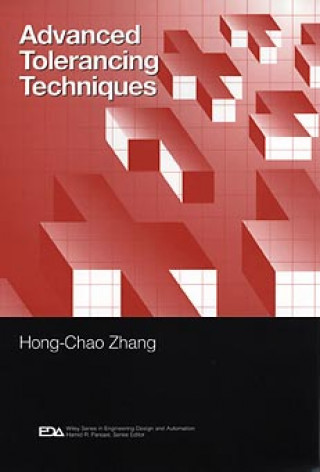
Advanced Tolerancing Techniques
by Hong-Chao Zhang
Dieses Buch ist ein idealer Seminarbegleiter für Maschinenbauer und Wirtschaftsingenieure. Schwerpunktmäßig werden weiterentwickelte Techniken zur Toleranzanalyse besprochen, wobei gleichzeitig der Grundstein gelegt wird für compu ... more


- Language:
 English
 - Binding: Hardback
- Number of pages: 608
Publisher: John Wiley & Sons Inc, 1997
- More about this

210.76 €
Availability:
50/50 We think title might be available. Upon your order we will do our best to get it within 6 weeks.
We search the world
You might also like
-

Little Prince
6.36 € -34 % -

Awful Auntie
7.98 € -29 % -

The Body: A Guide for Occupants
14.05 € -25 % -

Sheet Metal Stamping Dies
69.57 € -6 % -

Sto let odinochestva
14.86 € -12 % -

Manifesto on How to be Interesting
8.08 € -30 % -

Mouse or Rat?
14.45 € -19 % -

Thor Epic Collection: The Thor War
45 € -25 % -

Schachspiel in Holzklappkassette
34.07 € -4 % -

Espresso Coffee
111.85 € -9 % -

Study Guide for Daniel Keyes's Flowers for Algernon
10.91 € -

Ahn, Y: Korean for K-POP Travellers
32.56 € -

British Motor Industry
11.01 € -15 % -

Der Gral
17.99 € -10 % -

Inklings on Philosophy and Worldview: Inspired by C.S. Lewis, G.K. Chesterton, and J.R.R. Tolkien
10.91 € -22 % -

Chintz Ceramics
28.71 € -25 % -

Woman's Institute Domestic Arts Series - Textiles And Sewing Materials - Textiles, Laces Embroideries And Findings, Shopping Hints, Mending, Household
32.76 € -9 % -

Oxford Handbook of Interdisciplinarity
224.82 € -

Arbeitsmigration und der japanische Pflegemarkt
14.45 € -10 % -

Šablica
4.54 € -38 % -

Happy Birthday to You!
12.73 € -25 % -

Extruding Plastics
205.70 € -7 % -

Oil, power and a Sign of Hope
16.27 € -14 % -

Canguri Libro da Colorare 1
9.80 € -6 % -

Stark in ... Gesellschaftslehre - Ausgabe 2007. Tl.1
12.53 € -
Computer Algebra in Scientific Computing
51.67 € -7 % -

ADVANCED THINK AHEAD 4ºESO. WORKBOOK 2019
31.14 € -

Janiyah's Reading Log
14.76 € -25 % -

Geoenvironmental Reclamation
292.48 € -

Abwasserabgabengesetz und Indirekteinleitung.
42.97 € -

Geschichte Alexanders des Großen
38.32 € -15 % -

How Sensors Work
34.17 € -
Incorporating Knowledge Sources into Statistical Speech Recognition
146.94 € -
La légende de ruines - arbres et châteaux des Vosges et du Jura alsacien
36.30 € -
Deterministic and Statistical Methods in Machine Learning
51.67 € -7 % -
From Physics to Biology
111.85 € -

Race, Colour and the Processes of Racialization
56.93 € -

Künstliche Intelligenz und maschinelles Lernen für eine verbesserte Diagnose
39.23 € -11 % -

Italian Design
23.76 € -9 % -
Discovering Horse-Drawn Farm Machinery
8.28 € -14 % -

Selected Works of Jindrich Necas
102.95 € -7 % -

Angels
17.99 € -11 % -

Songs of Elizabeth Maconchy & Ralph V.Williams
23.05 € -
Fourier Analysis and Approximation of Functions
154.32 € -7 % -

Race, Sports, and Education
69.17 € -

Observation of the Earth and Its Environment, 2
164.54 € -7 % -

On the Determination of the Orbits of Comets
39.74 € -

Oxford Reading Tree Story Sparks: Oxford Level 3: We Want a Dog!
9.50 € -

Das Ingenieurwissen: Chemie
35.89 € -6 % -

Geek Chic
55.72 € -

Science Askew
292.48 € -

How Roosevelt Failed America in World War II
42.77 € -

Martin O'Neill - the Biography
13.95 € -1 % -

Besser leben
7.37 € -8 % -

Democracy and the Politics of Electoral System Choice
129.75 € -

Microfinance Performance Analysis From A Gender Perspective: Zambia
35.69 € -14 %
Give this book as a present today
- Order book and choose Gift Order.
- We will send you book gift voucher at once. You can give it out to anyone.
- Book will be send to donee, nothing more to care about.
Availability alert
Enter your e-mail address and once book will be available,
we will send you a message. It's that simple.
More about Advanced Tolerancing Techniques
You get 510 loyalty points
 Book synopsis
Dieses Buch ist ein idealer Seminarbegleiter für Maschinenbauer und Wirtschaftsingenieure. Schwerpunktmäßig werden weiterentwickelte Techniken zur Toleranzanalyse besprochen, wobei gleichzeitig der Grundstein gelegt wird für computerisierte Analysemethoden. (11/97)Since the 1960s, when engineering science replaced practice-oriented teaching in most American engineering colleges, the teaching of dimensional tolerancing has disappeared as a part of the training of industrial design and manufacturing engineers. Manufacturers adjusted to this lack of training either by instituting in-house training programs or by subcontracting dimensional tolerancing work to specialty firms. When computer-aided design (CAD) prompted a return to the practice-oriented teaching approach in the mid-1980s, tolerancing was not restored as part of most curricula. Part of the reason for this has been the lack of a suitable advanced research/reference volume that treats recent improvements in tolerancing techniques in a manner compatible with CAD, computer-aided manufacturing (CAM), and coordinated measuring machine (CMM) based inspection. Advanced Tolerancing Techniques is the first book to provide comprehensive coverage of new developments in geometric dimensional tolerancing and statistical tolerancing, and to focus on the use of these techniques in a CAD/CAM/CMM environment. Editor Hong-Chao Zhang has assembled a team of internationally recognized experts in every aspect of tolerancing theory, techniques, and applications. These authors explore and explain tolerancing from its history and fundamentals to state-of-the-art techniques. They also describe specialized applications of tolerancing in particular industries, including automobiles, electronics, and aerospace. For product design, manufacturing, and R&D engineer, as well as production managers, this one-stop resource unifies the disparate aspects of the discipline and is the only source for completely up-to-date and authoritative information on the latest tolerancing techniques. It is also an important reference for graduate students and CAD/CAM/CAPP software developers.Since the 1960s, when engineering science replaced practice-oriented teaching in most American engineering colleges, the teaching of dimensional tolerancing has disappeared as a part of the training of industrial design and manufacturing engineers. Manufacturers adjusted to this lack of training either by instituting in-house training programs or by subcontracting dimensional tolerancing work to specialty firms. When computer-aided design (CAD) prompted a return to the practice-oriented teaching approach in the mid-1980s, tolerancing was not restored as part of most curricula. Part of the reason for this has been the lack of a suitable advanced research/reference volume that treats recent improvements in tolerancing techniques in a manner compatible with CAD, computer-aided manufacturing (CAM), and coordinated measuring machine (CMM) based inspection.§Advanced Tolerancing Techniques is the first book to provide comprehensive coverage of new developments in geometric dimensional tolerancing and statistical tolerancing, and to focus on the use of these techniques in a CAD/CAM/CMM environment. Editor Hong-Chao Zhang has assembled a team of internationally recognized experts in every aspect of tolerancing theory, techniques, and applications. These authors explore and explain tolerancing from its history and fundamentals to state-of-the-art techniques. They also describe specialized applications of tolerancing in particular industries, including automobiles, electronics, and aerospace.§For product design, manufacturing, and R&D engineers, as well as production managers, this one-stop resource unifies the disparate aspects of the discipline and is the only source for completely up-to-date and authoritative information on the latest tolerancing techniques. It is also an important reference for graduate students and CAD/CAM/CAPP software developers.§Advanced Tolerancing Techniques covers the following topics:§Parametric tolerancing§Geometric dimensioning and tolerancing§Tolerance chain/chart§Statistical tolerancing§Mathematical definition and modeling§Standardized tolerancing§Computerized tolerancing§Tolerance representation within CAD models§Automated tolerance analysis and synthesis§Tolerance design/optimization§Tolerancing issues for inspection planning§Tolerance analysis for process planning and assembly§CMM sampling and form-fitting
Book details
Book category Books in English Technology, engineering, agriculture Mechanical engineering & materials Materials science
210.76 €
- Full title: Advanced Tolerancing Techniques
- Author: Hong-Chao Zhang
- Language: English
- Binding: Hardback
- Number of pages: 608
- EAN: 9780471145943
- ISBN: 0471145947
- ID: 01389248
- Publisher: John Wiley & Sons Inc
- Weight: 1056 g
- Dimensions: 238 × 163 × 34 mm
- Date of publishing: 16. September 1997
Trending among others
-

Elasticity
136.73 € -1 % -

Turbulence
107.60 € -

Fourth Phase of Water
26.18 € -24 % -
Lectures on Fluid Mechanics
14.76 € -25 % -

Ultrasonic Waves in Solid Media
76.15 € -
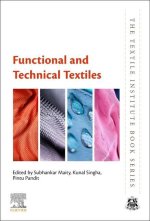
Functional and Technical Textiles
306.23 € -
Proceedings of the Second International Conference of Innovative Textiles and Developed Materials- ITDM'2; 05-06 May 2023; Tunisia
201.15 € -9 % -
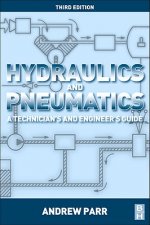
Hydraulics and Pneumatics
44.89 € -
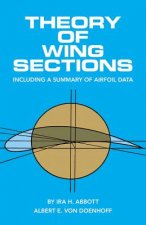
Theory of Wing Sections
40.04 € -24 % -

Statistics of Metal Fatigue in Engineering
31.24 € -14 % -

Basic Machines and How They Work
18.40 € -1 % -

Harris' Shock and Vibration Handbook
213.69 € -

Schaums Outline of Thermodynamics for Engineers, Fourth Edition
22.85 € -15 % -

New Science of Strong Materials
13.95 € -24 % -
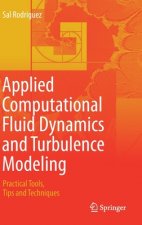
Applied Computational Fluid Dynamics and Turbulence Modeling
120.85 € -9 % -

Laser Material Processing
70.58 € -9 % -
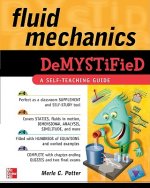
Fluid Mechanics DeMYSTiFied
26.69 € -18 % -

Advanced Dynamics - Rigid Body, Multibody, and Aerospace Applications
186.69 € -4 % -
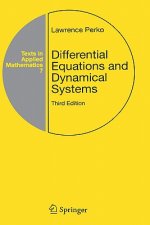
Differential Equations and Dynamical Systems
70.58 € -9 % -

Dynamics of Flight - Stability & Control 3e (WSE)
320.79 € -

Carbon Fiber
30.33 € -6 % -
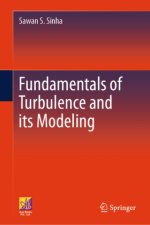
Fundamentals of Turbulence and its Modeling
85.65 € -9 % -

Fiberglass Repair and Construction Handbook
27.50 € -17 % -

Heat and Mass Transfer
84.74 € -9 % -

Engineering Analysis of Flight Vehicles
16.78 € -25 % -
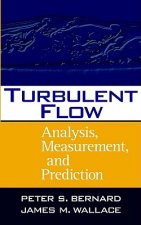
Turbulent Flow - Analysis, Measurement & Prediction
173.94 € -

Introduction to Turbulent Flow
91.21 € -

Fundamentals and Applications of Microfluidics
151.80 € -
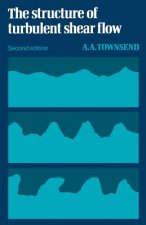
Structure of Turbulent Shear Flow
114.38 € -
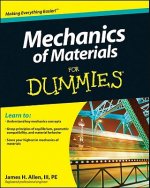
Mechanics of Materials for Dummies
18.30 € -24 % -

Mechanics
64.01 € -
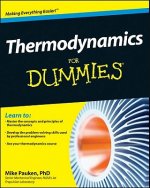
Thermodynamics For Dummies
26.59 € -
Fatigue of Structures and Materials
65.93 € -9 % -

Fourth Phase of Water
48.64 € -9 % -
History of Strength of Materials
21.63 € -25 % -
Multiaxial Fatigue
37.31 € -2 % -

Introduction to Computational Fluid Dynamics, An
86.26 € -14 % -
Basic Machines and How They Work
9.29 € -

Concrete: Microstructure, Properties, and Materials
169.19 € -

Understanding Aerodynamics - Arguing from the Real Physics
98.70 € -9 % -
Advances in Asphalt Materials
247.57 € -
Computational Methods for Fluid Dynamics
70.58 € -9 % -

Rocket Propulsion
87.27 € -
Vibration Spectrum Analysis
69.57 € -6 % -

What Engineers Know and How They Know It
35.69 € -

Design of Piping Systems
16.98 € -
Computational Fluid Dynamics
101.83 € -

Materials
82.11 € -2 % -

Materials and the Environment
72.61 € -2 %
Collection points Bratislava a 13174 dalších
Copyright ©2008-26 najlacnejsie-knihy.sk All rights reservedPrivacyCookies

 26352 collection points
 Delivery 2.99 €
 02/210 210 99 (8-15.30h)