Code: 04532321
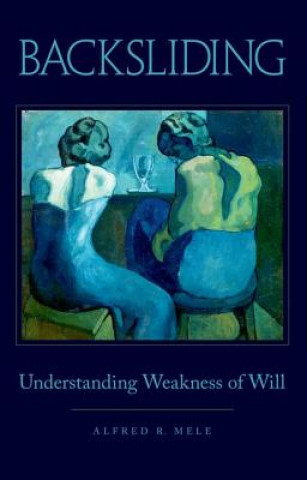
Backsliding
by Alfred R. Mele
People backslide.They freely do things they believe it would be best on the whole not to do - a judgment developed from their own point of view, not just the perspective of their peers or their parents. The aim of this book is to ... more


- Language:
 English
 - Binding: Paperback
- Number of pages: 160
Publisher: Oxford University Press Inc, 2014
- More about this


You might also like
-

Fairy Tail 51
8.59 € -24 % -

Scaling Force
15.06 € -26 % -

Eyre Affair
10.51 € -29 % -

Katamino
37.92 € -

Choice Theory: A Very Short Introduction
10 € -24 % -

New Commentary on the Code of Canon Law
59.57 € -24 % -

Turkish Grammar II / Turkische Grammatik II
19.82 € -10 %
Give this book as a present today
- Order book and choose Gift Order.
- We will send you book gift voucher at once. You can give it out to anyone.
- Book will be send to donee, nothing more to care about.
More about Backsliding
You get 85 loyalty points
 Book synopsis
People backslide.They freely do things they believe it would be best on the whole not to do - a judgment developed from their own point of view, not just the perspective of their peers or their parents. The aim of this book is to to clarify the nature of backsliding - of actions that display some weakness of will - using traditional philosophical techniques that date back to Plato and Aristotle (whose work on weakness of will or "akrasia" he discusses) and some new studies in the emerging field of experimental philosophy. Mele then attacks the thesis that backsliding is an illusion because people never freely act contrarily to what they judge is best. He argues that it is extremely plausible that if people ever act freely, they sometimes backslide. At the book's heart is the development of a theoretical and empirical framework that sheds light both on backsliding and on exercises of self-control that prevent it. Here, Mele draws on work in social and developmental psychology and in psychiatry to motivate a view of human behavior in which both backsliding and overcoming the temptation to backslide are explicable. He argues that backsliding is no illusion and our theories about the springs of action, the power of evaluative judgments, human agency, human rationality, practical reasoning, and motivation should accommodate backsliding.
Book details
Book category Books in English Humanities Philosophy Philosophy of mind
35.09 €
- Full title: Backsliding
- Subtitle: Understanding Weakness of Will
- Author: Alfred R. Mele
- Language: English
- Binding: Paperback
- Number of pages: 160
- EAN: 9780199366644
- ISBN: 0199366640
- ID: 04532321
- Publisher: Oxford University Press Inc
- Weight: 202 g
- Dimensions: 217 × 143 × 10 mm
- Date of publishing: 27. March 2014
Trending among others
-

Stalking the Wild Pendulum
12.13 € -30 % -

The Emperor's New Mind
13.85 € -23 % -
Simulating Minds
29.93 € -

Ghost in the Machine
18.40 € -2 % -

Essay Concerning Human Understanding
6.67 € -24 % -

Women, Fire, and Dangerous Things
22.14 € -18 % -

Death
14.05 € -25 % -
Consciousness Explained
14.96 € -29 % -
Galileo's Error
14.05 € -25 % -

Sources of the Self
36.41 € -4 % -
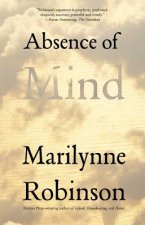
Absence of Mind
15.06 € -19 % -
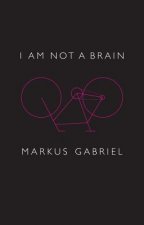
I am Not a Brain - Philosophy of Mind for the 21st Century
22.14 € -

Worlds Apart
19.31 € -2 % -
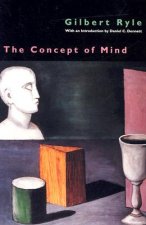
Concept of Mind
23.76 € -17 % -
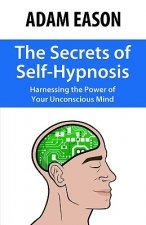
Secrets of Self-Hypnosis
14.76 € -25 % -

Inner Touch
35.19 € -

Kybalion; A Study of the Hermetic Philosophy of Ancient Egypt and Greece, by Three Initiates
8.49 € -

Principles of Uncertainty
18.91 € -25 % -

HERMENEUTICS OF THE SUBJECT
20.12 € -19 % -

Mind, Self, and Society
36.61 € -
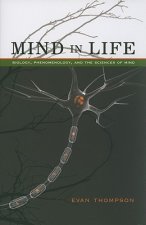
Mind in Life
39.04 € -
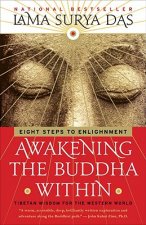
Awakening the Buddha Within
17.59 € -24 % -

Surfaces and Essences
24.67 € -29 % -

Notes Toward a Performative Theory of Assembly
26.39 € -

Iamblichus De Anima
38.03 € -6 % -

Mindful Universe
42.37 € -24 % -

Break Your Self Help Addiction
13.34 € -25 % -

Alchemy - The Turba Philosophorum or Assembly of the Sagas
22.04 € -1 % -
How the Body Shapes the Mind
26.49 € -5 % -

On Touching-Jean-Luc Nancy
25.48 € -11 % -

Essential Ernest Holmes
21.44 € -18 % -

Philosophy of Mind
69.89 € -

Varieties of Consciousness
34.38 € -

Quantum Physics Meets the Philosophy of Mind
14.76 € -25 % -

Life of Imagination
39.54 € -

Philosophy of Mind
11.83 € -25 % -

Super Brain
16.88 € -30 % -

Book of Five Rings
8.08 € -1 % -

Taking Appearance Seriously
25.38 € -12 % -
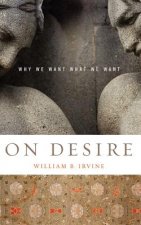
On Desire
13.44 € -24 % -
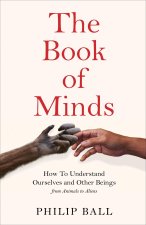
Book of Minds
23.15 € -19 % -

Lost Knowledge of the Imagination
21.23 € -25 % -

Fluid Concepts and Creative Analogies
20.73 € -17 % -

Cambridge Handbook of Cognitive Science
38.33 € -

Private Truths, Public Lies
54.72 € -

Character of Consciousness
39.54 € -
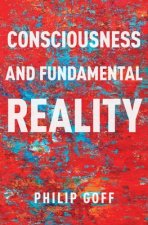
Consciousness and Fundamental Reality
98.11 € -
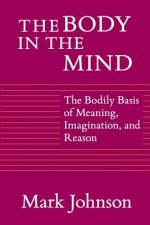
Body in the Mind
36.81 € -

Matter and Memory
9.40 € -18 %
Collection points Bratislava a 12441 dalších
Copyright ©2008-26 najlacnejsie-knihy.sk All rights reservedPrivacyCookies

 24886 collection points
 Delivery 2.99 €
 02/210 210 99 (8-15.30h)