Code: 04634481
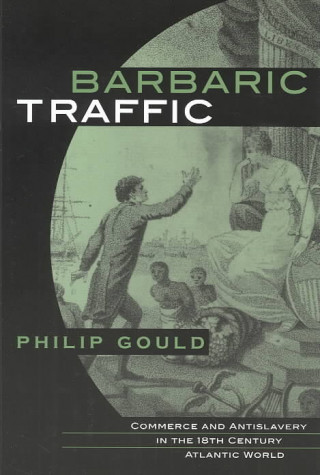
Barbaric Traffic
by Philip Gould
Eighteenth-century antislavery writers attacked the slave trade as "barbaric traffic" - a practice that would corrupt the mien and manners of Anglo-American culture to its core. Less concerned with slavery than with the slave trad ... more


- Language:
 English
 - Binding: Hardback
- Number of pages: 272
Publisher: Harvard University Press, 2003
- More about this


You might also like
-

Moonwalk
13.93 € -18 % -

The Score
13.63 € -11 % -

The Deal
12.31 € -21 % -

The Mistake
13.42 € -1 % -

Jujutsu Kaisen, Vol. 30
9.89 € -20 % -

Berserk Deluxe Volume 1
35.65 € -25 % -

The Goal
14.64 € -7 % -

Berserk Deluxe Volume 2
33.12 € -30 % -

Dancing The Dream
19.89 € -31 % -

Invincible Compendium Volume 2
45.75 € -24 % -

Berserk Deluxe Volume 3
55.14 € -

Lord of Mysteries, Vol. 3: The Clown, Part III
17.06 € -13 % -

Murdoku
14.03 € -28 % -

Legacy
11.91 € -22 % -

White Nights
4.54 € -

Chainsaw Man, Vol. 21
7.67 € -30 % -

Invincible Compendium Volume 3
46.35 € -23 % -

Witch Hat Atelier Manga Box Set 1
55.75 € -29 % -

Jujutsu Kaisen, Vol. 29
9.89 € -20 % -

JoJo's Bizarre Adventure: Part 7--Steel Ball Run, Vol. 7
18.17 € -25 % -

Witch Hat Atelier: Grimoire Edition 1
35.24 € -29 %
Give this book as a present today
- Order book and choose Gift Order.
- We will send you book gift voucher at once. You can give it out to anyone.
- Book will be send to donee, nothing more to care about.
More about Barbaric Traffic
You get 227 loyalty points
 Book synopsis
Eighteenth-century antislavery writers attacked the slave trade as "barbaric traffic" - a practice that would corrupt the mien and manners of Anglo-American culture to its core. Less concerned with slavery than with the slave trade in and of itself, these writings expressed a moral uncertainty about the nature of commercial capitalism. This is the argument Philip Gould advances here. A work of cultural criticism, the book constitutes a rethinking of the fundamental agenda of antislavery writing from pre-revolutionary America to the end of the British and American slave trades in 1808. Studying the rhetoric of various antislavery genres - from pamphlets, poetry and novels to slave narratives and the literature of disease - Gould exposes the close relation between antislavery writings and commercial capitalism. By distinguishing between good commerce, or the importing of commodities that refined manners, and bad commerce, like the slave trade, the literature offered both a critique and an outline of acceptable forms of commercial capitalism. A challenge to the premise that objections to the slave trade were rooted in modern laissez-faire capitalism, Gould's work revises - and expands - our understanding of antislavery literature as a form of cultural criticism in its own right.
Book details
Book category Books in English Literature & literary studies Literature: history & criticism Literary studies: general
93.63 €
- Full title: Barbaric Traffic
- Subtitle: Commerce and Antislavery in the Eighteenth-Century Atlantic World
- Author: Philip Gould
- Language: English
- Binding: Hardback
- Number of pages: 272
- EAN: 9780674011663
- ISBN: 067401166X
- ID: 04634481
- Publisher: Harvard University Press
- Weight: 535 g
- Dimensions: 235 × 156 × 19 mm
- Date of publishing: 27. November 2003
Collection points Bratislava a 12873 dalších
Copyright ©2008-26 najlacnejsie-knihy.sk All rights reservedPrivacyCookies

 25750 collection points
 Delivery 2.99 €
 02/210 210 99 (8-15.30h)