Code: 04731656
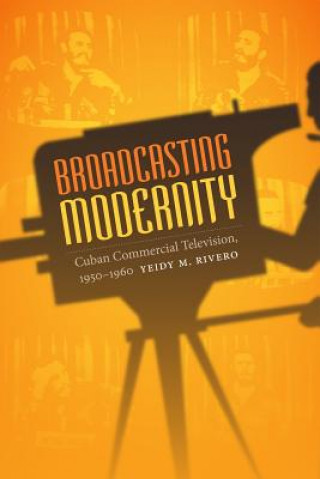
Broadcasting Modernity
by Yeidy M Rivero
The birth and development of commercial television in Cuba in the 1950s occurred alongside political and social turmoil. In this period of dramatic swings encompassing democracy, a coup, a dictatorship, and a revolution, televisio ... more


- Language:
 English
 - Binding: Hardback
- Number of pages: 264
Publisher: Duke University Press, 2015
- More about this


You might also like
-

Pasta
27.51 € -24 % -

Nightbird, 2 Audio-CDs + 1 DVD (Limited Edition)
22.55 € -4 % -

Poor Things
9.70 € -29 % -

Přehledová tabulka učiva Matematika - základní matematické operace
1.10 € -31 % -

Motorworld
13.04 € -29 % -

Odvážna v Bohu
8.89 € -24 % -

Can't Spell Treason Without Tea
15.98 € -25 % -

It's the Gruffalo! A Finger Puppet Book
9.70 € -25 % -

Ne brini se
13.95 € -15 % -

George Foreman's Guide to Life: How to Get Up Off the Canvas When Life Knocks You
9.40 € -17 % -

Divorcing Religion
12.74 € -

Life's Too Short
31.25 € -18 % -

Problems of Genocide
40.26 € -5 % -

Birthday girl
21.44 € -

Different World: A Gina Stone Mystery
9.80 € -6 % -

La tolerancia represiva y otros ensayos
17.80 € -

MARYLIN MANSON - Autopsie du Diable
43.40 € -

Feminist Companion to the Acts of the Apostles
117.76 € -

Cantus
5.45 € -15 % -

Het leren kennen van Allah, onze Schepper
13.95 € -1 % -

Body and Soul - The Story of Life and Death
9.80 € -6 % -

Mi mundo y yo
99.45 € -

Princesse Sybille et le Seigneur du Mal: Livre 1
14.26 € -7 % -

Autobiographisches
6.57 € -

Der Apostel Geschichten: Und Die Pastoralbriefe Und Der Brief An Philemon (1862)
41.78 € -2 % -

Counsels and Maxims
22.25 € -

Oclus?o: Conceitos Básicos e Importância
39.25 € -14 % -

Nanostructured Thin Films and Coatings
327.40 € -

Under Ninja 2
8.29 € -

Die Geister von Graz
12.64 € -10 % -

Wall of Men
37.32 € -1 % -

Urbanizacion y Marginalidad en la Ciudad de Sincelejo
42.79 € -14 % -

Queen of Love
21.95 € -

Auf den Spuren Johannes Keplers - Zu seinem 450. Geburtstag
21.44 € -11 % -

Genetics and Christian Ethics
64.84 € -

Documentación, historia y población. Fuerteventura en la Edad Moderna
33.68 € -
Post-Colonial National Identity in the Philippines
203.56 € -

Kurzgeschichten
22.25 € -

Internationale Steuergestaltung durch den Einsatz von Basisgesellschaften in Mauritius anhand von praktischen Beispielen
51.69 € -11 % -

Gesundbrunnen im Schaumburger Land
10.92 € -10 % -

Der Wohlfahrtsstaat Und Seine Burger
67.48 € -4 % -

prayer for love
17.90 € -7 %
Give this book as a present today
- Order book and choose Gift Order.
- We will send you book gift voucher at once. You can give it out to anyone.
- Book will be send to donee, nothing more to care about.
More about Broadcasting Modernity
You get 275 loyalty points
 Book synopsis
The birth and development of commercial television in Cuba in the 1950s occurred alongside political and social turmoil. In this period of dramatic swings encompassing democracy, a coup, a dictatorship, and a revolution, television functioned as a beacon and promoter of Cuba's identity as a modern nation. In "Broadcasting Modernity," television historian Yeidy M. Rivero shows how television owners, regulatory entities, critics, and the state produced Cuban modernity for television. The Cuban television industry enabled different institutions to convey the nation's progress, democracy, economic abundance, high culture, education, morality, and decency. After nationalizing Cuban television, the state used it to advance Fidel Castro's project of creating a modern socialist country. As Cuba changed, television changed with it. Rivero not only demonstrates television's importance to Cuban cultural identity formation, she explains how the medium functions in society during times of radical political and social transformation.
Book details
Book category Books in English Economics, finance, business & management Industry & industrial studies Media, information & communication industries
113.51 €
- Full title: Broadcasting Modernity
- Subtitle: Cuban Commercial Television, 1950-1960
- Author: Yeidy M Rivero
- Language: English
- Binding: Hardback
- Number of pages: 264
- EAN: 9780822358596
- ISBN: 082235859X
- ID: 04731656
- Publisher: Duke University Press
- Weight: 476 g
- Dimensions: 229 × 152 × 18 mm
- Date of publishing: 31. March 2015
Trending among others
-

Blood, sweat, and pixels
13.04 € -29 % -

Mindset
16.48 € -23 % -

Steve Jobs
15.07 € -25 % -

Cartoons in Hard Times
47.34 € -

Film Encyclopedia
24.88 € -29 % -

Steve Jobs
33.18 € -17 % -

Sleight of Mouth
21.64 € -25 % -

Dot.Con
13.45 € -24 % -

Glass Castle
12.13 € -18 % -

How Google Works
14.16 € -19 % -

Easy Riders, Raging Bulls
17.19 € -28 % -

Talking As Fast As I Can
13.35 € -23 % -

Cybersecurity and Cyberwar
12.74 € -24 % -

The Thinking Machine
13.85 € -29 % -

Nobody Leaves
11.42 € -27 % -

Hit Refresh
10.01 € -34 % -

Shakespeare and Company
18.20 € -25 % -

Leadership Is Language
16.89 € -29 % -

Inside Vogue
12.54 € -28 % -

Significant Zero
14.05 € -25 % -

Sylvia Beach and the Lost Generation
23.77 € -17 % -

Cataloging the World
24.47 € -24 % -

Jadoo
18.40 € -1 % -

Conquest of Cool
27 € -5 % -

So You Want to be a Producer
33.18 € -

Repeated Takes
23.67 € -18 % -

Political Speechwriter's Companion
54.53 € -

Attention Merchants
14.86 € -24 % -

Master Switch
14.86 € -26 % -

AI Superpowers: China, Silicon Valley and the New World Order
14.26 € -16 % -

Project to Product
20.33 € -22 % -

Diary of a Bookseller
15.87 € -3 % -

Behind the Cloud - The Untold Story of How Salesforce.com Went from Idea to Billion-Dollar Company-- and Revolutionized an Industry
21.34 € -25 % -

Jony Ive
13.04 € -29 % -

Grace: Thirty Years of Fashion at Vogue
54.02 € -17 % -

Fender: The Inside Story
26.90 € -4 % -

Alibaba
12.74 € -25 % -

How Music Got Free
12.94 € -30 % -

Steve Jobs The Man Who Thought Different
12.03 € -23 % -

Music Business For Dummies
21.74 € -24 % -

Selling Hitler
13.35 € -18 % -

Dark Net
11.83 € -24 % -

Driving Digital Strategy
23.06 € -25 % -

Six Steps to Songwriting Success
13.95 € -32 % -

Best Story Wins
14.05 € -25 % -

Troubleshooting Analog Circuits
70.51 € -4 % -

Music Industry Forms
19.62 € -21 % -

Modern Monopolies
26.60 € -9 % -

Samuel Beckett's Library
33.58 €
Collection points Bratislava a 13321 dalších
Copyright ©2008-26 najlacnejsie-knihy.sk All rights reservedPrivacyCookies

 26646 collection points
 Delivery 2.99 €
 02/210 210 99 (8-15.30h)