Code: 50751170
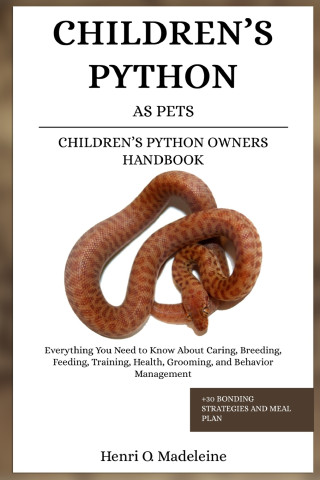
CHILDREN'S PYTHON AS PETS - CHILDREN'S PYTHON OWNERS HANDBOOK
by Henri O. Madeleine
THE NATURAL HABITAT AND CHARACTERISTICS OF CHILDREN'S PYTHONSChildren's Pythons (Antaresia childreni) are a small, non-venomous snake species native to northern Australia. They thrive in diverse environments, including forests, sa ... more


- Language:
 English
 - Binding: Paperback
- Number of pages: 166
Publisher: Independently published, 2025
- More about this

14.96 €
RRP: 16.08 €
You save 1.12 €

In stock at our supplier
Shipping in 14 - 21 days
You might also like
-

Moonwalk
14.05 € -18 % -

The Score
13.75 € -10 % -

Berserk Deluxe Volume 1
35.70 € -25 % -

The Deal
12.33 € -9 % -

The Mistake
13.54 € -14 % -

Jujutsu Kaisen, Vol. 30
9.70 € -25 % -

Berserk Deluxe Volume 2
33.17 € -30 % -

Dancing The Dream
19.92 € -31 % -

Murdoku
14.05 € -25 % -

Berserk Deluxe Volume 3
55.22 € -

The Goal
14.66 € -
White Nights
4.54 € -14 % -
Chainsaw Man, Vol. 21
9.90 € -20 % -

Invincible Compendium Volume 2
45.81 € -24 % -
The Legacy
11.93 € -22 % -

Jujutsu Kaisen, Vol. 29
9.90 € -20 % -

Invincible Compendium Volume 3
45.81 € -24 % -
Lord of Mysteries, Vol. 3: The Clown, Part III
17.09 € -13 % -

Jujutsu Kaisen, Vol. 26
9.90 € -20 % -
Witch Hat Atelier: Grimoire Edition 1
34.99 € -29 % -

JoJo's Bizarre Adventure: Part 7--Steel Ball Run, Vol. 7
18.20 € -25 %
Give this book as a present today
- Order book and choose Gift Order.
- We will send you book gift voucher at once. You can give it out to anyone.
- Book will be send to donee, nothing more to care about.
More about CHILDREN'S PYTHON AS PETS - CHILDREN'S PYTHON OWNERS HANDBOOK
You get 36 loyalty points
 Book synopsis
THE NATURAL HABITAT AND CHARACTERISTICS OF CHILDREN'S PYTHONS
Children's Pythons (Antaresia childreni) are a small, non-venomous snake species native to northern Australia. They thrive in diverse environments, including forests, savannas, and rocky outcrops, where they seek shelter in tree hollows, caves, and under rocks. Their natural adaptability makes them an excellent pet choice for reptile enthusiasts.PHYSICAL CHARACTERISTICS
- Size: Typically grow between 3 to 4 feet (90 to 120 cm) in length.
- Coloration: Ranges from light brown to reddish hues, often with dark speckles that help with camouflage.
- Scalation: Smooth, glossy scales that allow easy movement through their habitat.
- Lifespan: Can live 20 to 30 years in captivity with proper care.
- Nocturnal Nature: Most active at night, preferring to hunt in low-light conditions.
- Docile Temperament: Generally calm and easy to handle with proper socialization.
- Constrictor Hunting Method: Captures prey by wrapping around it and suffocating before consumption.
CHOOSING A CHILDREN'S PYTHON: WHAT TO CONSIDER BEFORE BUYING
IS A CHILDREN'S PYTHON RIGHT FOR YOU?
Before purchasing a Children's Python, it's important to assess whether you are fully prepared for the responsibility. Consider the following:
- Commitment: These snakes can live for multiple decades.
- Space: Requires an appropriately sized enclosure with proper temperature and humidity controls.
- Diet: Feeds primarily on small rodents, meaning you must be comfortable handling and storing feeder mice.
When choosing a python, look for:
- Bright, alert eyes (except when shedding).
- Smooth, unbroken scales with no signs of stuck shed.
- Steady, controlled movements with no visible tremors.
- A well-rounded body without noticeable ribs or spine showing.
- No wheezing, excessive yawning, or mouth bubbling, which can indicate respiratory infections.
- Reputable Breeders: Ensure ethical breeding practices and well-socialized hatchlings.
- Pet Stores: Only buy from stores with knowledgeable staff and clean enclosures.
- Rescue Centers: Consider adopting from reputable reptile rescues.
Ethical reptile ownership involves supporting responsible breeding and conservation efforts. Many wild reptile populations are declining due to habitat destruction and illegal collection.
HOW TO SUPPORT ETHICAL SOURCING
- Choose Captive-Bred Pythons: Avoid wild-caught specimens to prevent ecological damage.
- Research Breeders: Ensure they follow humane and legal breeding practices.
- Avoid Pet Mills: Do not buy from mass-breeding facilities with poor animal welfare standards.
- Support Wildlife Conservation Programs: Organizations like the Australian Wildlife Conservancy work to protect native reptile species.
- Promote Responsible Pet Ownership: Educate others about ethical snake keeping.
Book details
14.96 €
- Full title: CHILDREN'S PYTHON AS PETS - CHILDREN'S PYTHON OWNERS HANDBOOK
- Subtitle: Everything You Need to Know About Caring, Breeding, Feeding, Training, Health, Grooming, and Behavior Management +30 Bonding Strategies and Meal Plan
- Author: Henri O. Madeleine
- Language: English
- Binding: Paperback
- Number of pages: 166
- EAN: 9798313865287
- ID: 50751170
- Publisher: Independently published
- Weight: 232 g
- Dimensions: 229 × 152 × 9 mm
- Date of publishing: 13. March 2025
Shopping guide
Books by language
Collection points Bratislava a 12830 dalších
Copyright ©2008-26 najlacnejsie-knihy.sk All rights reservedPrivacyCookies

 25664 collection points
 Delivery 2.99 €
 02/210 210 99 (8-15.30h)