Code: 04531973
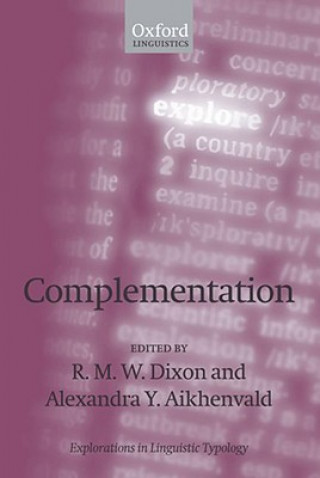
Complementation
by R. M. W. Dixon, Alexandra Y. Aikhenvald
A complement clause is used instead of a noun phrase; for example one can say either I heard [the result] or I heard [that England beat France]. Languages differ in the grammatical properties of complement clauses, and the types o ... more


- Language:
 English
 - Binding: Hardback
- Number of pages: 308
Publisher: Oxford University Press, 2006
- More about this


You might also like
-
Objectif crochet : Ma première poupée
13.40 € -
High Functioning
21.17 € -25 % -
Lost Words: Spell Songs
22.58 € -19 % -
Esquemas de francés : gramática y usos lingüísticos
14.01 € -

Aus dem Leben Theodor von Bernhardis
19.66 € -11 % -

LEON KOSSOFF
64.04 € -

Building Strong School Cultures
71.40 € -10 % -

El año que murió Machín
13 € -

Yeniceri Agaci
22.08 € -4 % -

The Snowy Day
14.01 € -7 % -

unbekannte Ich
17.84 € -10 % -

Sketches of the History of Christian Art
51.13 € -

Le Périgord, terroirs et rivières, coutumes et traditions, localités et populations
27.22 € -

Journals...
22.79 € -25 % -

Decision-Making in High Risk Organizations Under Stress Conditions
144.73 € -

Lia-Ria and the Old-Timers
10.28 € -2 % -

BABADADA, bahasa Melayu - shqipe, kamus visual - fjalor me ilustrime
26.82 € -7 % -

Central & Eastern Europe in Transition, Volume 4
116.49 € -10 % -

Olympia; die Ergebnisse der von dem Deutschen Reich veranstalteten Ausgrabung
16.94 € -1 % -
PRELUDE, FUGUE ET ALLEGRO BWV 998 POUR ORGUE SANS PEDALE
18.35 € -

THE SUPPLIES FOR THE CONFEDERATE ARMY: H
15.62 € -2 %
Give this book as a present today
- Order book and choose Gift Order.
- We will send you book gift voucher at once. You can give it out to anyone.
- Book will be send to donee, nothing more to care about.
More about Complementation
You get 207 loyalty points
 Book synopsis
A complement clause is used instead of a noun phrase; for example one can say either I heard [the result] or I heard [that England beat France]. Languages differ in the grammatical properties of complement clauses, and the types of verbs which take them. Some languages lack a complement clause construction but instead employ other construction types to achieve similar ends; these are called complementation strategies. The book explores the variety of types of complementation found across the languages of the world, their grammatical properties and meanings. Detailed studies of particular languages, including Akkadian, Israeli, Jarawara, and Pennsylvania German, are framed by R. M. W. Dixon's introduction, which sets out the range of issues, and his conclusion, which draws together the evidence and the arguments. This book will interest scholars of typology, language universals, syntax, information structure, and language contact in departments of linguistics and anthropology, as well as advanced and graduate students taking courses in these subjects.
Book details
Book category Books in English Language linguistics Grammar, syntax & morphology
85.32 €
- Full title: Complementation
- Author: R. M. W. Dixon, Alexandra Y. Aikhenvald
- Language: English
- Binding: Hardback
- Number of pages: 308
- EAN: 9780199297870
- ISBN: 0199297878
- ID: 04531973
- Publisher: Oxford University Press
- Weight: 580 g
- Dimensions: 242 × 163 × 23 mm
- Date of publishing: 22. June 2006
Trending among others
-
Metaphors We Live By
17.34 € -7 % -

Core Syntax
38.72 € -

McGraw-Hill's Conversational American English
21.37 € -18 % -
Cambridge Grammar of the English Language
430.99 € -
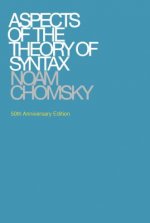
Aspects of the Theory of Syntax
37.92 € -
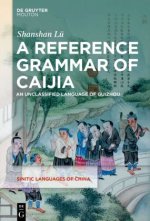
A Reference Grammar of Caijia
23.69 € -24 % -
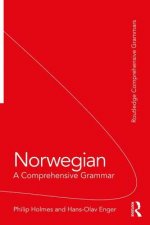
Norwegian: A Comprehensive Grammar
108.32 € -

Thinking Syntactically - A Guide to Argumentation and Analysis
50.32 € -
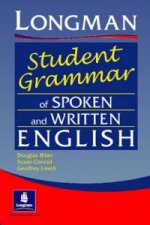
Longman's Student Grammar of Spoken and Written English Paper
42.96 € -4 % -
Successful Writing
28.84 € -

Introduction to English Syntax
27.32 € -
English for Presentations at International Conferences
39.53 € -10 % -
English Syntax
34.89 € -

Einführung in die Syntax des Deutschen
37.51 € -6 % -
Introduction to Attic Greek
23.89 € -10 % -
Adverbs and Functional Heads
164.30 € -
Baskische Grammatik
35.80 € -6 % -
Latin Grammar
11.99 € -29 % -
Making Sense
12.80 € -25 % -
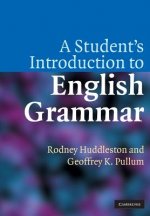
Student's Introduction to English Grammar
42.15 € -
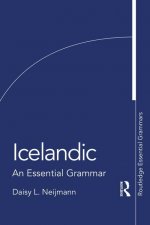
Icelandic
85.52 € -
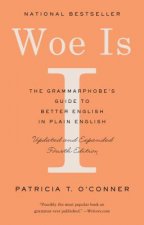
Woe Is I
13.40 € -24 % -
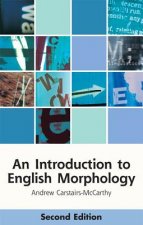
Introduction to English Morphology
27.32 € -
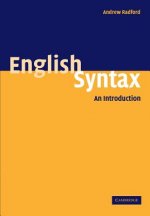
English Syntax
58.90 € -
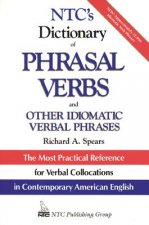
NTC's Dictionary of Phrasal Verbs
42.35 € -18 % -
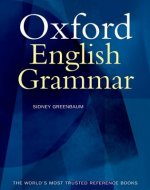
Oxford English Grammar
79.07 € -
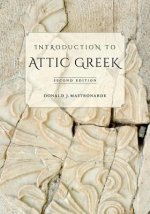
Introduction to Attic Greek
50.22 € -
Introduction to Sahidic Coptic
50.93 € -
Foundations of Cognitive Grammar
41.45 € -12 % -
Introduction to Syntax
42.56 € -11 % -
Top 50 Grammar Mistakes
27.12 € -24 % -

English for Academic Correspondence
31.96 € -24 % -
English Grammar
89.46 € -

International Investment Arbitration
128.90 € -

Construction Grammar and its Application to English
32.57 € -
Preposition Book
28.53 € -5 % -
Celtic and Medieval Alphabets
9.87 € -25 % -
Introducing Syntax
37.81 € -

Morphology
32.57 € -
Corpus Linguistics
53.75 € -
Essentials of Cognitive Grammar
50.52 € -
Possession
45.78 € -
Oxford Handbook of Grammaticalization
234.80 € -
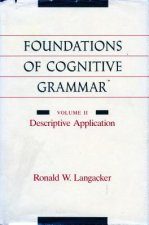
Foundations of Cognitive Grammar
37.41 € -12 % -
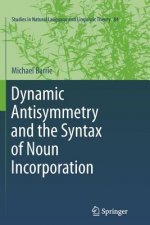
Dynamic Antisymmetry and the Syntax of Noun Incorporation
102.67 € -7 % -

Interactive Vocabulary
67.57 € -
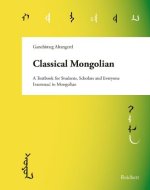
Classical Mongolian
44.47 € -

Fachsprachprüfung Zahnmedizin
15.02 € -10 % -
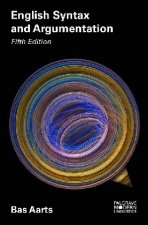
English Syntax and Argumentation
47.80 €
Collection points Bratislava a 13225 dalších
Copyright ©2008-26 najlacnejsie-knihy.sk All rights reservedPrivacyCookies

 26454 collection points
 Delivery 2.99 €
 02/210 210 99 (8-15.30h)