Kód: 02076580
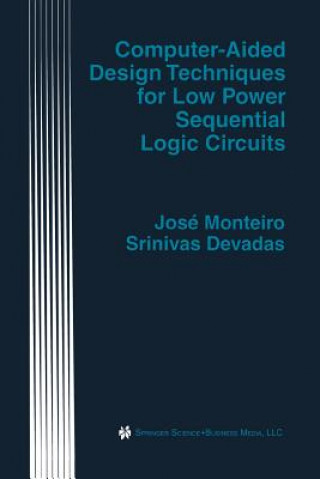
Computer-Aided Design Techniques for Low Power Sequential Logic Circuits
Autor José Monteiro, Srinivas Devadas
Rapid increases in chip complexity, increasingly faster clocks, and the proliferation of portable devices have combined to make power dissipation an important design parameter. The power consumption of a digital system determines ... celý popis


- Jazyk:
 Angličtina
 - Väzba: Brožovaná
- Počet strán: 181
Nakladateľ: Springer-Verlag New York Inc., 2012
- Viac informácií o knihe

153.44 €
Bežne: 166.23 €
Ušetríte 12.79 €

Skladom u dodávateľa
Odosielame za 5 - 8 dní
Mohlo by sa vám tiež páčiť
-

The Culture Map
19.90 € -7 % -

Book Lovers
7.83 € -29 % -

The Green Book
8.94 € -6 % -

Fourth Closet (Five Nights at Freddy's Graphic Novel 3)
10.35 € -30 % -

Niemiecki w tłumaczeniach. Słownictwo 2. Poziom B1-B2
13.16 € -11 % -

Sorrow and Bliss
15.48 € -

Book of Answers
21.71 € -

Ankh-Morpork Archives: Volume One
31.46 € -24 % -

Nej - kung cvičení pro zdravé šlachy a klouby
14.17 € -21 % -

Maturita z biológie
10.05 € -30 % -

Classic Car Book
36.59 € -9 % -

Become A Hangeul Master
26.34 € -9 % -

Color Me Floral: Techniques for Creating Stunning Monochromatic Arrangements for Every Season
23.22 € -25 % -

Snow Queen and Other Winter Tales (Barnes & Noble Collectible Classics: Omnibus Edition)
39.41 € -19 % -

Devil's Hand
12.76 € -10 % -

Survivor's Quest: Star Wars Legends
14.37 € -

Mýty Arabské noci (a dny)
14.87 € -9 % -

Disrupting the Game
21.11 € -24 % -

Cloud Native Devops with Kubernetes
62.64 € -25 % -

Digital Business and E-Commerce Management
91.49 € -

Fotografía
34.58 € -1 % -

Frank O'Hara
41.42 € -

Revealing Architectural Design
69.47 € -

METANOIA - The Art of Transmutation
9.54 € -6 % -

Das traust du dich nie, Jona! - Lesestufe 3
7.73 € -

Bullet Journal
19.60 € -11 % -

Catholic Dogmatic Theology: A Synthesis
45.84 € -

Concise History of France
99.14 € -

Berufsbegleitendes Wissensmanagement in Theorie und Praxis
30.16 € -

Stark in ... Arbeit und Wirtschaft - Ausgabe 2012
34.48 € -

Agrammatismus bei Broca-Aphasie - Beeinträchtigung der Sprachproduktion am Beispiel englischer, deutscher und französischer Patienten -
16.08 € -10 % -

Genotoxic Potential in Fishes
79.23 € -3 % -

Cracking Your Calorie Code
18.19 € -7 % -

Harem Secrets: ........ Romance, Lust and Kama Sutra in Sultan Suleyman's harem
12.26 € -7 % -

Adequacy of Climate Observing Systems
52.18 € -

Sin Entra
10.05 € -

My Name is Cletus Trane
8.94 € -6 % -

Grundlage zu einer hessischen Gelehrten und Schriftsteller Geschichte
31.87 € -11 % -

Forget Me Not
11.65 € -6 % -

If Bread Could Rise to the Occasion
35.08 € -

Cavalry Service with General Sheridan
15.17 € -14 % -
Evolutionary Algorithms
102.35 € -7 % -

Melchizedek, High Priest of God and Your Destiny in This Eternal Priesthood
20.50 € -

For Nirvana
29.65 € -

Manly Palmer Hall collection of alchemical manuscripts, 1500-1825
17.39 € -2 % -

Lobbyists and the Making of US Tariff Policy, 1816 1861
74.20 € -

The Family Tree
13.97 € -7 % -

Fair-Value Bilanzierung in der Finanzkrise
33.78 € -11 % -

Francis Bacon and Renaissance Prose
54.09 € -

Newton y la manzana de la gravedad
15.37 € -
Advances in the Statistical Sciences: Foundations of Statistical Inference
90.19 € -

Südliches Afrika - VISTA POINT Reiseführer A bis Z
22.21 € -11 % -

Prospects in International Investment Law and Policy
114.22 € -

My Way Back to You
11.25 € -25 % -

Language Teacher Emotion, Identity Learning and Curriculum Reform
133.02 € -7 % -

Weatherford: Historic Walking Tours
19.40 € -22 % -

Jack and the Beans in Cotton: Illustrated Edition
6.83 € -6 % -

Plantae Lindheimerianae
29.85 € -2 % -
Super-Recursive Algorithms
102.35 € -7 % -

Der Alte Südfriedhof in München
25.13 € -16 % -

Doktor Barthel Karte Freiberg, Tharandter Wald und Umgebung
6.83 € -14 % -

EinFach Deutsch Unterrichtsmodelle
34.48 € -

Downtown Dynamics
112.61 € -7 % -

vae victoribus
13.46 € -10 % -

Insolvenz
42.52 € -11 % -

Karl Stauffer-Bern
35.49 € -11 % -
Algebraic Introduction to Complex Projective Geometry
72.79 € -

A Short History of Nuclear Regulation, 1946-2009
17.39 € -6 % -

Kissed By Karma
11.45 € -7 % -

Ghost Stories and Phantom Fancies
30.76 € -2 % -

Evaluierung des Übertritts von der 4. zur 5. Schulstufe an Wiener Schulen
20.30 € -
Short Course on Banach Space Theory
199.39 € -

Private Property and the Constitution
109.90 € -
Holography
130.01 € -
L'Europe et l'Amour en Poésie
19.10 € -

Dialoggestaltung der passwortgestützten Authentifizierung. Begriffe, Umsetzung und Empfehlungen
16.08 € -10 % -

Faith-Healed
14.57 € -1 %
Darčekový poukaz: Radosť zaručená
- Darujte poukaz v ľubovoľnej hodnote, a my sa postaráme o zvyšok.
- Poukaz sa vzťahuje na všetky produkty v našej ponuke.
- Elektronický poukaz si vytlačíte z e-mailu a môžete ho ihneď darovať.
- Platnosť poukazu je 12 mesiacov od dátumu vystavenia.
Viac informácií o knihe Computer-Aided Design Techniques for Low Power Sequential Logic Circuits
Nákupom získate 373 bodov
 Anotácia knihy
Rapid increases in chip complexity, increasingly faster clocks, and the proliferation of portable devices have combined to make power dissipation an important design parameter. The power consumption of a digital system determines its heat dissipation as well as battery life. For some systems, power has become the most critical design constraint. §Computer-Aided Design Techniques for Low Power Sequential Logic Circuits presents a methodology for low power design. The authors first present a survey of techniques for estimating the average power dissipation of a logic circuit. At the logic level, power dissipation is directly related to average switching activity. A symbolic simulation method that accurately computes the average switching activity in logic circuits is then described. This method is extended to handle sequential logic circuits by modeling correlation in time and by calculating the probabilities of present state lines. §Computer-Aided Design Techniques for Low Power Sequential Logic Circuits then presents a survey of methods to optimize logic circuits for low power dissipation which target reduced switching activity. A method to retime a sequential logic circuit where registers are repositioned such that the overall glitching in the circuit is minimized is also described. The authors then detail a powerful optimization method that is based on selectively precomputing the output logic values of a circuit one clock cycle before they are required, and using the precomputed value to reduce internal switching activity in the succeeding clock cycle. §Presented next is a survey of methods that reduce switching activity in circuits described at the register-transfer and behavioral levels. Also described is a scheduling algorithm that reduces power dissipation by maximising the inactivity period of the modules in a given circuit. §Computer-Aided Design Techniques for Low Power Sequential Logic Circuits concludes with a summary and directions for future research.
Parametre knihy
Zaradenie knihy Books in English Technology, engineering, agriculture Electronics & communications engineering Electronics engineering
153.44 €
- Celý názov: Computer-Aided Design Techniques for Low Power Sequential Logic Circuits
- Autor: José Monteiro, Srinivas Devadas
- Jazyk: Angličtina
- Väzba: Brožovaná
- Počet strán: 181
- EAN: 9781461379010
- ISBN: 1461379016
- ID: 02076580
- Nakladateľ: Springer-Verlag New York Inc.
- Hmotnosť: 320 g
- Rozmery: 235 × 155 × 12 mm
- Dátum vydania: 12. October 2012
Obľúbené z iného súdka
-

Practical Electronics for Inventors
33.27 € -24 % -
Complete Electronics Self-Teaching Guide with Projects
32.67 € -15 % -

The Art of Electronics
113.21 € -1 % -
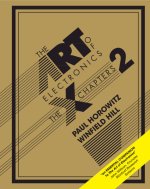
The Art of Electronics: The x-Chapters
81.34 € -

Lego Technic Idea Book: Simple Machines
17.99 € -27 % -
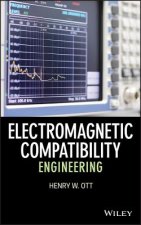
Electromagnetic Compatibility Engineering
142.07 € -10 % -
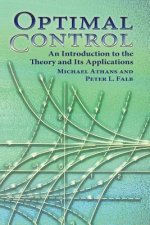
Optimal Control
31.77 € -25 % -

Fundamentals of Power Electronics
90.09 € -9 % -
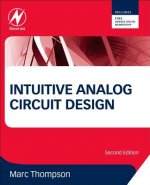
Intuitive Analog Circuit Design
82.95 € -
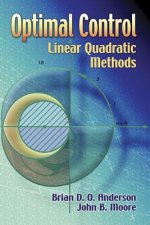
Optimal Control
18.09 € -25 % -

Lego Power Functions Idea Book, Volume 1
17.69 € -29 % -
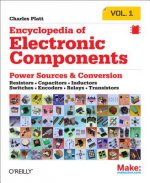
Encyclopedia of Electronic Components
18.19 € -24 % -

Lego Technic Idea Book: Fantastic Contraptions
14.67 € -28 % -
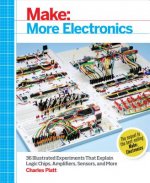
Make: More Electronics
24.93 € -25 % -

Manga Guide To Microprocessors
18.39 € -26 % -
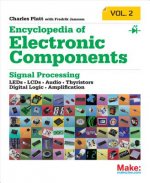
Encyclopedia of Electronic Components Volume 2
21.61 € -24 % -
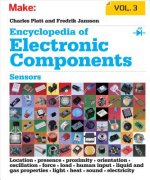
Encyclopedia of Electronic Components V3
21.61 € -24 % -

Lego Technic Idea Book: Wheeled Wonders
14.67 € -25 % -

The LEGO Power Functions Idea Book, Vol. 2
17.69 € -29 % -

Cybernetics
13.87 € -
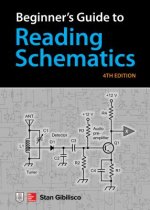
Beginner's Guide to Reading Schematics, Fourth Edition
20.20 € -24 % -
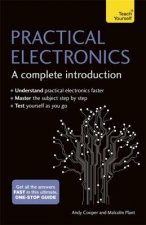
Practical Electronics: A Complete Introduction
18.29 € -20 % -
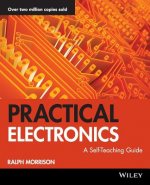
Practical Electronics - A Self-Teaching Guide
17.39 € -25 % -

TAB Guide to Vacuum Tube Audio: Understanding and Building Tube Amps
31.87 € -24 % -

Easy Electronics
7.83 € -25 % -

Rise of the Robots
13.67 € -29 % -
Robotics, Vision and Control
65.55 € -
Springer Handbook of Robotics
445.04 € -
Introduction to Radio Frequency Engineering
65.05 € -

Real-Time Systems
55.19 € -9 % -

Surrogate Humanity
28.04 € -

Isaac Asimov - Alle Roboter-Geschichten
13.46 € -10 % -
Practical Electronics - Components and Techniques
28.45 € -24 % -

Modern Robotics
85.36 € -

Automobile Electrical and Electronic Systems
75.10 € -

The Art of Electronics: The x Chapters
75.51 € -

Signal and Power Integrity - Simplified
130.71 € -
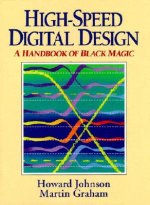
High Speed Digital Design
129.60 € -

Hardware Hacker
14.27 € -23 % -
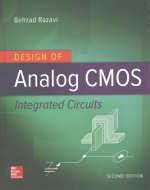
Design of Analog CMOS Integrated Circuits
82.04 € -

How to Diagnose and Repair Automotive Electrical Systems
20.50 € -30 % -
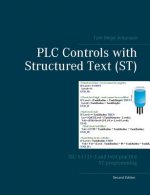
PLC Controls with Structured Text (ST)
29.25 € -6 % -

Audiophile Vacuum Tube Amplifiers - Design, Construction, Testing, Repairing & Upgrading, Volume 2
78.82 € -

Audiophile Vacuum Tube Amplifiers Volume 3
78.82 € -

Sae J1939 ECU Programming & Vehicle Bus Simulation with Arduino
23.62 € -2 % -

Arduino Cookbook
39.41 € -24 % -

Automating with SIMATIC S7-1500
97.23 € -9 % -

Electronics For Dummies, UK Edition
22.92 € -15 % -
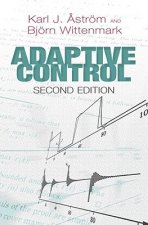
Adaptive Control
23.62 € -24 %
Collection points Bratislava a 13392 dalších
Copyright ©2008-26 najlacnejsie-knihy.sk All rights reservedPrivacyCookies

 26788 collection points
 Delivery 2.99 €
 02/210 210 99 (8-15.30h)