Code: 08138081
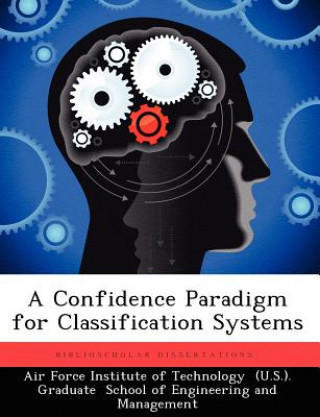
Confidence Paradigm for Classification Systems
by Nathan J Leap
There is no universally accepted methodology to determine how much confidence one should have in a classifier output. This research proposes a framework to determine the level of confidence in an indication from a classifier syste ... more


- Language:
 English
 - Binding: Paperback
- Number of pages: 196
Publisher: Biblioscholar, 2012
- More about this

18.36 €
RRP: 18.72 €
You save 0.36 €

In stock at our supplier
Shipping in 14 - 21 days
You might also like
-

Commentaries on the Laws of England. Book the Third. by Sir William Blackstone, ... the Twelfth Edition, with the Last Corrections of the Author; And
29.16 € -1 % -

Captain Jeff of the Texas Rangers
16.54 € -1 % -

Spuren lesen im Ego-Tunnel
25.02 € -11 % -

Essays in a Series of Letters. the Eighth Edition.
27.64 € -25 % -

Zeno and the Tortoise
12.71 € -25 % -

Gwen and the Dragon
10.79 € -

Book of Power Poemulus E=mc2 from the World of 'Rajo'
15.53 € -2 %
Give this book as a present today
- Order book and choose Gift Order.
- We will send you book gift voucher at once. You can give it out to anyone.
- Book will be send to donee, nothing more to care about.
More about Confidence Paradigm for Classification Systems
You get 45 loyalty points
 Book synopsis
There is no universally accepted methodology to determine how much confidence one should have in a classifier output. This research proposes a framework to determine the level of confidence in an indication from a classifier system where the output is or can be transformed into a posterior probability estimate. This is a theoretical framework that attempts to unite the viewpoints of the classification system developer (or engineer) and the classification system user (or war-fighter). The paradigm is based on the assumptions that the system confidence acts like, or can be modeled as a value and that indication confidence can be modeled as a function of the posterior probability estimates. The introduction of the non-declaration possibility induces the production of a higher-level value model that weighs the contribution of engineering confidence and associated non-declaration rate. Now, the task becomes to choose the appropriate threshold to maximize this overarching value function. This paradigm is developed in a setting considering only in-library problems, but it is applied to out-of-library problems as well. Introduction of out-of-library problems requires expansion of the overarching value model. This confidence measure is a direct link between traditional decision analysis techniques and traditional pattern recognition techniques. This methodology is applied to multiple data sets, and experimental results show the behavior that would be expected from a rational confidence paradigm.
Book details
Book category Books in English Society & social sciences Education
18.36 €
- Full title: Confidence Paradigm for Classification Systems
- Author: Nathan J Leap
- Language: English
- Binding: Paperback
- Number of pages: 196
- EAN: 9781249449225
- ISBN: 9781249449225
- ID: 08138081
- Publisher: Biblioscholar
- Weight: 358 g
- Dimensions: 246 × 189 × 11 mm
- Date of publishing: 20. September 2012
Trending among others
-
geog.2 Workbook
13.11 € -

Oxford IB Diploma Programme: IB Course Preparation Economics Student Book
49.04 € -1 % -

iPrimary Building Blocks: Spelling, Punctuation, Grammar and Handwriting Year 6
18.26 € -
Imagine If...
12.30 € -29 % -

Deutsch Ferienhefte - 2. Klasse - Volksschule
10.49 € -10 % -
Oxford International Primary Maths Second Edition: Student Book 5
31.58 € -
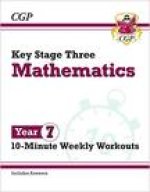
KS3 Maths 10-Minute Weekly Workouts - Year 7
8.97 € -15 % -

Mathematik Ferienhefte - Volksschule - 2. Klasse
9.88 € -10 % -
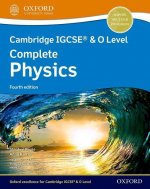
Cambridge IGCSE (R) & O Level Complete Physics: Student Book Fourth Edition
46.92 € -

Cambridge IGCSE (R) & O Level Complete Chemistry: Student Book Fourth Edition
46.92 € -

Maria Montessori's Erdkinder
40.36 € -5 % -
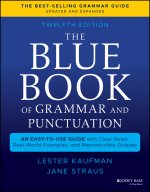
Blue Book of Grammar and Punctuation: An Easy- to-Use Guide with Clear Rules, Real-World Examples , and Reproducible Quizzes, Twelfth Edition
14.83 € -24 % -
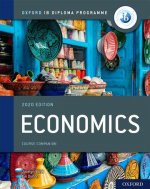
Oxford IB Diploma Programme: IB Economics Course Book
71.75 € -4 % -
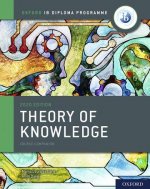
Oxford IB Diploma Programme: IB Theory of Knowledge Course Book
76.09 € -

Oet Pharmacy Prep: Speaking Sub-Test
21.89 € -1 % -
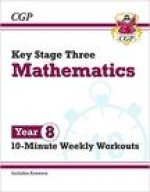
KS3 Maths 10-Minute Weekly Workouts - Year 8
8.97 € -15 % -
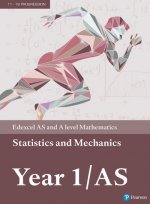
Pearson Edexcel AS and A level Mathematics Statistics & Mechanics Year 1/AS Textbook + e-book
16.74 € -
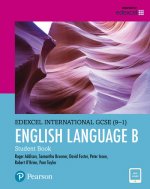
Pearson Edexcel International GCSE (9-1) English Language B Student Book
58.83 € -
Richard NongardOs Big Book of Hypnosis Scripts
27.34 € -2 % -
Oxford IB Diploma Programme: Oxford IB Diploma Programme: IB Mathematics: applications and interpretation Standard Level Enhanced Online Course Book
94.56 € -

Modern Accordion Technique (Pop Jazz Folk)
18.66 € -2 % -

The Jazz Accordion Complete Book
28.86 € -1 % -

iPrimary Building Blocks: Spelling, Punctuation, Grammar and Handwriting Year 1
16.74 € -
Writing Sci-Fi, Fantasy, & Horror For Dummies
18.26 € -24 % -
Identifying Japanese Seal Script
34.51 € -9 % -

Abenaki Dictionary
16.54 € -2 % -

Slanguage Dictionary: Caribbean and Latin American Slang Words and Phrases
17.05 € -2 % -

Educational Achievement in Japan
60.55 € -

Teaching Young Singers
9.38 € -1 % -

Fokus DaF/DaZ
69.93 € -5 % -

English for Medical Purposes: Spelling and Vocabulary
14.62 € -2 % -
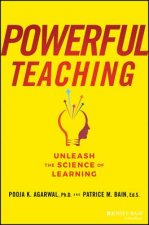
Powerful Teaching: Unleash the Science of Learning
24.01 € -28 % -

Einkorn
18.26 € -24 % -

Business Partner B2 Workbook
18.76 € -3 % -
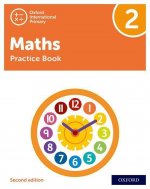
Oxford International Primary Maths Second Edition: Practice Book 2
18.16 € -

MOWIE PO POLSKU DWICZENIA POZIOM B1 I B2
16.54 € -
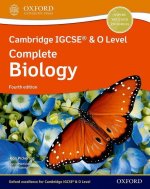
Cambridge IGCSE (R) & O Level Complete Biology: Student Book Fourth Edition
44.60 € -5 % -

Business Partner B1 Workbook
18.76 € -1 % -

OET Preparation
9.28 € -

Deep Healing and Transformation
41.67 € -2 % -

Read Write Inc. Phonics: Red Ditty Book Bag Books (Mixed Pack of 10)
64.38 € -
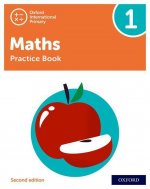
Oxford International Primary Maths Second Edition: Practice Book 1
18.16 € -
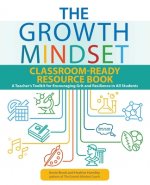
Growth Mindset Classroom-ready Resource Book
12.10 € -27 % -
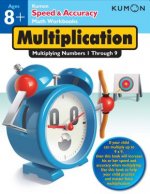
Speed and Accuracy: Multiplication
6.15 € -27 % -

Freedom Writers Diary Teacher's Guide
17.55 € -24 % -
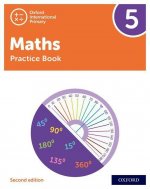
Oxford International Primary Maths Second Edition: Practice Book 5
18.16 € -
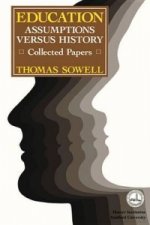
Education
10.79 € -18 % -
They Don't Teach This at School
21.18 € -25 % -
Oxford International Primary Maths Second Edition: Student Book 2
31.58 €
Collection points Bratislava a 12833 dalších
Copyright ©2008-26 najlacnejsie-knihy.sk All rights reservedPrivacyCookies

 25670 collection points
 Delivery 2.99 €
 02/210 210 99 (8-15.30h)