Code: 04669204
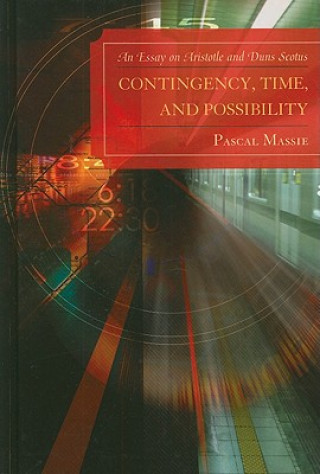
Contingency, Time, and Possibility
by Pascal Massie
If we are to distinguish mere non-being from that which is not, yet may be, from that which was not, yet could have been, or from that which will not be, yet could become, we are committed in some way to grant being to possibiliti ... more


- Language:
 English
 - Binding: Hardback
- Number of pages: 316
Publisher: Lexington Books, 2010
- More about this

146.97 €
RRP: 147.01 €
You save 0.04 €

In stock at our supplier
Shipping in 10 - 18 days
You might also like
-

Werken mit dem Taschenmesser
22.75 € -16 % -
OXFORD HANDBOOK OF ADDICTION MEDICINE 3/e ()
54.01 € -

Mighty Min
8.69 € -25 % -
Strafrecht Allgemeiner Teil Bd. 1: Grundlagen. Der Aufbau der Verbrechenslehre. Bd.1
76.16 € -7 % -

Bite of Vengeance
19.61 € -25 % -

Girls
42.78 € -

Moroccan Monarchy and the Islamist Challenge
55.83 € -

Malaria: Drugs, Disease and Post-genomic Biology
198.46 € -

Bible Stories & Prayers for Harlow
60.99 € -

Bug Club Guided Fiction Year Two Purple B Yun and the Giant Bird
10.71 € -

Black River Road
18.60 € -9 % -
The Art of Music Publishing
58.96 € -
Contemporary dyecraft
16.68 € -1 % -
Le vrai trésor du curé de Rennes le château
10 € -5 % -
SEBS 30 Root Development and Function
49.05 € -

Beyond the Rhetoric
12.74 € -

Fort Valley
23.05 € -25 % -
Emerging Trends for EAPs in the 21st Century
245.40 € -
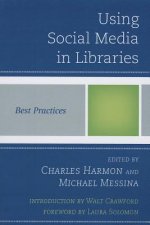
Using Social Media in Libraries
79.50 € -

Once More, With Feeling
15.26 € -20 % -
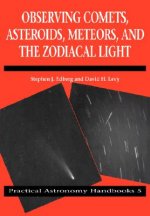
Observing Comets, Asteroids, Meteors, and the Zodiacal Light
60.08 € -
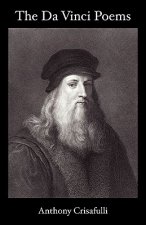
The Da Vinci Poems
14.05 € -6 % -
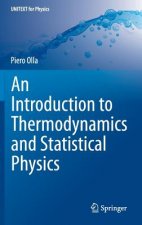
Introduction to Thermodynamics and Statistical Physics
50.57 € -9 % -

It Girl
11.22 € -19 % -

Test
11.83 € -14 % -
Solitaire Spirit
26.09 € -3 % -

Touch of Love from Heaven
24.37 € -25 % -

America's Mayor
27.10 € -9 %
Give this book as a present today
- Order book and choose Gift Order.
- We will send you book gift voucher at once. You can give it out to anyone.
- Book will be send to donee, nothing more to care about.
More about Contingency, Time, and Possibility
You get 356 loyalty points
 Book synopsis
If we are to distinguish mere non-being from that which is not, yet may be, from that which was not, yet could have been, or from that which will not be, yet could become, we are committed in some way to grant being to possibilities. The possible is not actual; yet it is not nothing. What then could it be? What ontological status could it possess? In Contingency, Time, and Possibility: An Essay on Aristotle and Duns Scotus, Pascal Massie opens these questions by combining two approaches: First, an original inquiry that analyses the notions of chance, fate, event, contradiction, and so forth, and suggests that the distinction between potency and act arises from a confrontation with the impossible. Second, a historical inquiry that focuses on Aristotle and Duns Scotus, two key figures contributing to a fundamental transformation in the history of Western ontology; namely, the transition from a metaphysics of nature (Aristotle) to a metaphysics of the will (Scotus). In doing so, this book departs from the prevailing interpretation of the history of modal logic according to which Scotus rejected the principle of plenitude attributed to Aristotle and replaced the ancient diachronic theory of possibilities with a synchronic one, thereby contributing to a "possible world's semantics." Rather, Massie argues that in its proper ontological import, the question of possibility concerns the limit between being and non-being and that this limit must be thought in terms of temporality. With Scotus, however, a radical shift occurs. Possibilities are understood in terms of will, creation, omnipotence, and transcending freedom. As such, they belong to the realm of what is supremely actual (i.e., superabundant activity). What used to be understood as a lesser degree of being (the quasi non-being of uninformed matter and mere possibilities) becomes the mark of omnipotence.
Book details
Book category Books in English Humanities Philosophy History of Western philosophy
146.97 €
- Full title: Contingency, Time, and Possibility
- Subtitle: An Essay on Aristotle and Duns Scotus
- Author: Pascal Massie
- Language: English
- Binding: Hardback
- Number of pages: 316
- EAN: 9780739149294
- ISBN: 0739149296
- ID: 04669204
- Publisher: Lexington Books
- Weight: 631 g
- Dimensions: 240 × 163 × 25 mm
- Date of publishing: 19. November 2010
Trending among others
-
Why I Am so Clever
4.54 € -7 % -

Meditations
8.18 € -30 % -

The Myth of Sisyphus
9.90 € -11 % -
The Republic
10.71 € -19 % -
Nausea
11.62 € -14 % -

Beyond Good and Evil
10 € -24 % -

Ride the Tiger
18.91 € -22 % -
Discourses and Selected Writings
11.22 € -24 % -
Thus Spoke Zarathustra: A Book for Everyone and No One
11.02 € -25 % -
Simulacra and Simulation
21.84 € -2 % -
Letters from a Stoic
10.92 € -24 % -

On the Shortness of Life
7.88 € -29 % -
Aphorisms on Love and Hate
4.04 € -17 % -
The Nicomachean Ethics
10.41 € -30 % -
Either/Or
14.86 € -30 % -
Anti-Oedipus
16.88 € -24 % -
Phenomenology of Spirit
17.59 € -24 % -
On the Genealogy of Morals
9.70 € -34 % -
Myth of Sisyphus
12.63 € -19 % -

Fear and Trembling
11.12 € -29 % -
Intellectual Life
4.85 € -79 % -
The Symposium
8.59 € -25 % -
Nicomachean Ethics
6.16 € -30 % -
Symposium
7.17 € -25 % -
Meditations
14.86 € -19 % -
World as Will and Representation, Vol. 1
21.74 € -19 % -
Camera Lucida
10.51 € -29 % -
Plato: Five Dialogues
16.68 € -10 % -
History of Western Philosophy
21.74 € -24 % -
Human, All Too Human & Beyond Good and Evil
6.36 € -19 % -
Existentialism from Dostoevsky to Sartre
14.86 € -24 % -
Human, All Too Human
12.33 € -21 % -

On War
6.77 € -14 % -

Simone Weil: An Anthology
13.95 € -24 % -
Last Days of Socrates
10.61 € -25 % -
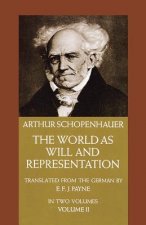
World as Will and Representation, Vol. 2
29.53 € -30 % -
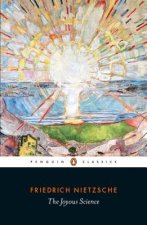
Joyous Science
12.03 € -28 % -

Ecce Homo
10.81 € -24 % -
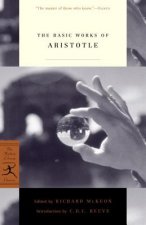
Basic Works of Aristotle
18.91 € -25 % -
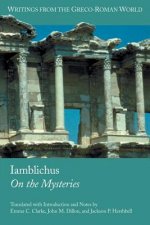
Iamblichus on The Mysteries
52.49 € -7 % -

Existential Psychotherapy
63.82 € -
Aquinas
11.02 € -30 % -
Twilight of the Idols
9.60 € -26 % -
Guide to the Good Life
18.50 € -18 % -
History of Philosophy Volume 1
27.10 € -20 % -
Ecce Homo
6.97 € -
Early Greek Philosophy
33.98 € -
At The Existentialist Cafe
14.76 € -15 % -

Phenomenology of Perception
38.03 € -18 %
Collection points Bratislava a 12892 dalších
Copyright ©2008-26 najlacnejsie-knihy.sk All rights reservedPrivacyCookies

 25788 collection points
 Delivery 2.99 €
 02/210 210 99 (8-15.30h)