Code: 04522705
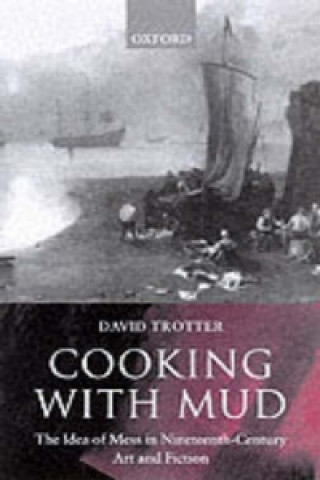
Cooking with Mud
by David Trotter
It seems safe to assume that people started to drop things as soon as they started to pick them up, and that even the most aboriginal litterings and spillages did not pass entirely without comment. Mess is age-old and universal, b ... more


- Language:
 English
 - Binding: Hardback
- Number of pages: 350
Publisher: Oxford University Press, 2000
- More about this


You might also like
-

Metro 2033
18.60 € -7 % -

Die Akte
9.09 € -10 % -

Lonely Planet Pocket Barcelona
17.39 € -

Creating Effective Teams
54.01 € -10 % -

Political Economy of Iraq
179.44 € -

Wolf The Storm Leader (1910)
26.49 € -1 % -

Vie, Les Voyages Et Aventures de Gilbert de Lannoy, Chevalier Lillois Au Xve Siecle
12.43 € -9 % -

Calamity Jane
15.77 € -9 % -

How to Control Costs in Your Pollution Prevention Program
181.26 € -2 % -

Just As Jesus Said: He Is Not Here; He Has Risen
15.06 € -7 % -

MODERN TURKISH LITERATURE
77.27 € -15 % -
Grazer Philosophische Studien, Vol 90 2014: International Journal for Analytic Philosophy
144.24 € -
Paulina Under the Sun of August
18.30 € -7 % -
L'Adn N°9 Les Nouveaux Explorateurs Decembre 2016
32.06 € -

Developing Alliance Capabilities
109.34 € -

ANGULOS
17.19 € -

Armenian History and the Question of Genocide
109.34 € -

Cp Uc Davis Lehninger Biochem 5e
112.78 € -

Notorious!: The Gangster Era in Carthage and Jasper County Missouri
31.15 € -7 % -

Deflagration and Detonation Flame Arresters
157.90 € -1 % -

Homo ludens en revolucion: lectura de nellie campobello
23.46 € -10 %
Give this book as a present today
- Order book and choose Gift Order.
- We will send you book gift voucher at once. You can give it out to anyone.
- Book will be send to donee, nothing more to care about.
More about Cooking with Mud
You get 495 loyalty points
 Book synopsis
It seems safe to assume that people started to drop things as soon as they started to pick them up, and that even the most aboriginal litterings and spillages did not pass entirely without comment. Mess is age-old and universal, both as phenomenon and as topic. The evidence collected in this book suggests, however, that the second half of the nineteenth century saw the first stirrings in Western culture of a primary interest in mess for its own sake: a development which had something to do with the gradual fading, amid a great deal of reassertion, of doctrines of determinism; and something to do with democracy, which would be hard to imagine without litter. Messes, like modern identities, happen by accident; their representation, in painting and fiction, made it possible to think boldly and inventively about chance. Ranging widelyDSfrom Turner to Courbet, Cezanne, and Degas, and from Melville to Maupassant, Chekhov, Gissing, and the New Woman writersDSthis book outlines a style of commentary on modern life in which the ancient dichotomy of order and chaos (culture and anarchy) was supplanted, at least temporarily, by a distinction between different kinds and qualities of mess.
Book details
Book category Books in English Literature & literary studies Literature: history & criticism Literary studies: general
204.53 €
- Full title: Cooking with Mud
- Subtitle: The Idea of Mess in Nineteenth-Century Art and Fiction
- Author: David Trotter
- Language: English
- Binding: Hardback
- Number of pages: 350
- EAN: 9780198185031
- ISBN: 0198185030
- ID: 04522705
- Publisher: Oxford University Press
- Weight: 608 g
- Dimensions: 224 × 146 × 24 mm
- Date of publishing: 24. February 2000
Trending among others
-

How to Read a Book
14.56 € -7 % -

The Picture of Dorian Gray
7.17 € -29 % -

Weird and the Eerie
13.34 € -

Saga of Tanya the Evil, Vol. 3
12.23 € -14 % -

Moveable Feast
8.59 € -30 % -

Count of Monte Cristo
10.21 € -29 % -

Odyssey
10.21 € -23 % -

Captain is Out to Lunch
13.75 € -30 % -
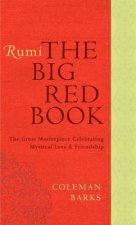
Rumi: The Big Red Book
12.84 € -25 % -

Iliad
15.67 € -24 % -

Germinal
7.17 € -25 % -
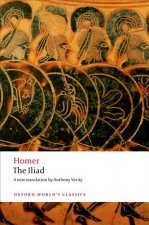
Iliad
10.81 € -24 % -

Plainwater
14.05 € -25 % -

Birth of Tragedy
10 € -24 % -

Devils
9.30 € -24 % -

Dead Souls
10.61 € -25 % -

Woman in Her Garden
14.05 € -19 % -

Rage To Live
21.94 € -20 % -

Gravity's Rainbow Companion
40.15 € -

Tom Jones
7.17 € -25 % -

Ivanhoe
8.59 € -24 % -

Means to Freedom
28.31 € -2 % -

Means to Freedom
28.31 € -2 % -

Long Day's Journey Into Night
10.41 € -30 % -

Happy Hooker
13.95 € -17 % -

Greek Epic Fragments
31.25 € -

David Copperfield
10.61 € -25 % -

North and South
17.19 € -

J. R. R. Tolkien Companion and Guide
131.60 € -16 % -

Beckett Canon
32.26 € -5 % -

Little Dorrit
9.30 € -24 % -

Gormenghast (Adaptation)
16.58 € -7 % -

Antigone's Claim
31.96 € -
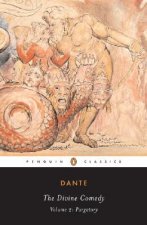
Divine Comedy
11.93 € -29 % -

Countess of Pembroke's Arcadia (The Old Arcadia)
12.03 € -24 % -

Marginalia
43.69 € -

Oxford Guide to Arthurian Literature and Legend
16.18 € -25 % -

Dubliners
8.99 € -29 % -

Zofloya or The Moor
10.41 € -24 % -

Karamazov Brothers
9.80 € -31 % -
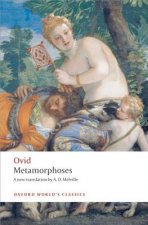
Metamorphoses
7.17 € -25 % -
Art of Rhetoric
4.54 € -24 % -

SEOUL University Korean 1B Workbook (QR), m. 1 Audio
34.08 € -

Edda
7.88 € -24 % -

If Not, Winter: Fragments Of Sappho
18.10 € -25 % -

Simple Passion
10.11 € -28 % -

SEOUL University Korean 1B Student's Book (QR), m. 1 Audio
50.06 € -

Complete Short Stories of Ambrose Bierce
21.64 € -25 % -

Persuasion
5.05 € -26 %
Collection points Bratislava a 12841 dalších
Copyright ©2008-26 najlacnejsie-knihy.sk All rights reservedPrivacyCookies

 25686 collection points
 Delivery 2.99 €
 02/210 210 99 (8-15.30h)