Code: 44123240
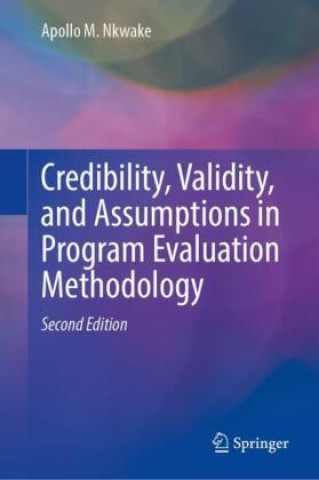
Credibility, Validity, and Assumptions in Program Evaluation Methodology
by Apollo M. Nkwake
This book focuses on methods of choice in program evaluation. Credible methods choice lies in the assumptions we make about the appropriateness and validity of selected methods and the validity of those assumptions. As evaluators ... more


- Language:
 English
 - Binding: Hardback
- Number of pages: 208
Publisher: Springer, Berlin, 2023
- More about this

123.50 €
RRP: 133.83 €
You save 10.33 €

In stock at our supplier
Shipping in 10 - 13 days
You might also like
-

Moonwalk
13.95 € -18 % -

The Score
13.65 € -13 % -

The Deal
12.23 € -22 % -

The Mistake
13.44 € -1 % -

Jujutsu Kaisen, Vol. 30
9.90 € -20 % -

Berserk Deluxe Volume 1
35.70 € -25 % -

The Goal
14.56 € -

Berserk Deluxe Volume 2
33.17 € -30 % -

Invincible Compendium Volume 2
45.81 € -24 % -

Dancing The Dream
19.92 € -31 % -

Legacy
11.93 € -22 % -

Berserk Deluxe Volume 3
55.22 € -

Lord of Mysteries, Vol. 3: The Clown, Part III
17.09 € -13 % -

Murdoku
14.05 € -28 % -

White Nights
4.54 € -

Chainsaw Man, Vol. 21
7.68 € -30 % -

Witch Hat Atelier Manga Box Set 1
55.83 € -29 % -

Jujutsu Kaisen, Vol. 29
9.90 € -20 % -

Jujutsu Kaisen, Vol. 25
9.70 € -25 % -

Invincible Compendium Volume 3
46.42 € -23 % -

Witch Hat Atelier: Grimoire Edition 1
35.29 € -29 %
Give this book as a present today
- Order book and choose Gift Order.
- We will send you book gift voucher at once. You can give it out to anyone.
- Book will be send to donee, nothing more to care about.
More about Credibility, Validity, and Assumptions in Program Evaluation Methodology
You get 299 loyalty points
 Book synopsis
This book focuses on methods of choice in program evaluation. Credible methods choice lies in the assumptions we make about the appropriateness and validity of selected methods and the validity of those assumptions. As evaluators make methodological decisions in various stages of the evaluation process, a number of validity questions arise. Yet unexamined assumptions are a risk to useful evaluation. The first edition of this book discussed the formulation of credible methodological arguments and methods of examining validity assumptions. However, previous publications suggest advantages and disadvantages of using various methods and when to use them. Instead, this book analyzes assumptions underlying actual methodological choices in evaluation studies and how these influence evaluation quality. This analysis is the basis of suggested tools.The second edition extends the review of methodological assumptions to the evaluation of humanitarian assistance. While evaluators of humanitarian action apply conventional research methods and standards, they have to adapt these methods to the challenges and constraints of crisis contexts. For example, the urgency and chaos of humanitarian emergencies makes it hard to obtain program documentation; objectives may be unclear, and early plans may quickly become outdated as the context changes or is clarified. The lack of up-to-date baseline data is not uncommon. Neither is staff turnover. Differences in perspective may intensify and undermine trust. The deviation from ideal circumstances challenges evaluation and calls for methodological innovation. And how do evaluators work with assumptions in non-ideal settings? What tools are most relevant and effective? This revised edition reviews major evaluations of humanitarian action and discusses strategies for working with evaluation assumptions in crises and stable program settings.
Book details
Book category Books in English Society & social sciences Psychology Social, group or collective psychology
123.50 €
- Full title: Credibility, Validity, and Assumptions in Program Evaluation Methodology
- Author: Apollo M. Nkwake
- Language: English
- Binding: Hardback
- Number of pages: 208
- EAN: 9783031456138
- ID: 44123240
- Publisher: Springer, Berlin
- Weight: 471 g
- Dimensions: 235 × 155 mm
- Date of publishing: 28. December 2023
Collection points Bratislava a 12892 dalších
Copyright ©2008-26 najlacnejsie-knihy.sk All rights reservedPrivacyCookies

 25788 collection points
 Delivery 2.99 €
 02/210 210 99 (8-15.30h)