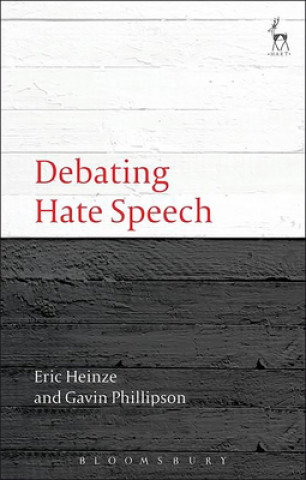
Code: 05106797
Debating Hate Speech
by Gavin P. Phillipson, Eric Heinze
Does hate speech undermine democracy, by attacking its most vulnerable members? Does it threaten the equal dignity of all citizens? Or are democracy and equality degraded not by hateful expression, but by censorship? Do hate sp ... more


- Language:
 English
 - Binding: Hardback
- Number of pages: 164
Publisher: Hart Publishing, 2023
- More about this


You might also like
-

International Primary English Student's Book 2
14.82 € -15 % -

Fly by Wire
12.70 € -25 % -

European Banking Union
68.81 € -

Project X: Alien Adventures: Lilac:Max's Rocket
5.14 € -25 % -

ONE PIECE - Large Glass - 400ml - Zoro - box x2
10.08 € -4 % -

Reading Planet Cosmos - Cemetery Grove 4: The Halloween House Supernova/Red+
12.30 € -

Sue?os Lúcidos: Guía Práctica para Controlar los Sue?os
19.97 € -14 % -

Travels in the Holy Land, Volume 1
23.50 € -25 % -

Haste Töne!
8.37 € -10 % -

Cuadrantes solares en la arquitectura, los
23.20 € -

Fyodor Dostoevsky: Crime and Punishment (English Edition)
21.48 € -14 % -

CARTE EN RELIEF DES PYRÉNÉES-ORIENTALES
48.12 € -

ANDROMEDE
18.86 € -

L'evoluzione dell'apprendimento dell'inglese per gli affari
66.49 € -14 % -

Udzial kobiet w rolnictwie
63.86 € -14 % -

Chemical Mutagens
51.55 € -7 % -

MAKING MONEY
13.41 € -24 % -

Law of Storms Considered in Connection with the Ordinary Movements of the Atmosphere
34.50 € -2 % -

TING-A-LING TALES
21.89 € -2 % -

Les trois vies du docteur Gourbeyre - T3 - Elie
25.22 € -

Programming Languages and Systems
51.55 € -7 %
Give this book as a present today
- Order book and choose Gift Order.
- We will send you book gift voucher at once. You can give it out to anyone.
- Book will be send to donee, nothing more to care about.
Availability alert
Enter your e-mail address and once book will be available,
we will send you a message. It's that simple.
More about Debating Hate Speech
You get 61 loyalty points
 Book synopsis
Does hate speech undermine democracy, by attacking its most vulnerable members? Does it threaten the equal dignity of all citizens? Or are democracy and equality degraded not by hateful expression, but by censorship? Do hate speech bans give governments too much control over thought and ideas, or do bans secure the conditions for ideas to be meaningfully debated? Should each society choose its own rules? Or are some principles of free expression universal? Whom should hate speech bans protect: racial and ethnic groups, religious communities, women, sexual minorities, the disabled? Should we ban hateful words and images in public spaces but not on the internet? Heinze and Phillipson draw on law, politics, philosophy and ethics to debate these questions. For Phillipson, narrowly drawn hate speech bans are essential to the social contract-a prerequisite for democratic deliberation, and a symbolic protection of every citizen's basic dignity. Heinze replies that punitive rules imposed to silence hateful views damage democracy, and governments have more legitimate and effective means of combating harmful speech. Drawing upon European, American and Commonwealth perspectives, this book will be of interest not only to lawyers, but also to readers in philosophy, politics and journalism.
Book details
Book category Books in English Law Laws of Specific jurisdictions Constitutional & administrative law
25.32 €
- Full title: Debating Hate Speech
- Author: Gavin P. Phillipson, Eric Heinze
- Language: English
- Binding: Hardback
- Number of pages: 164
- EAN: 9781849462648
- ISBN: 184946264X
- ID: 05106797
- Publisher: Hart Publishing
- Weight: 260 g
- Dimensions: 138 × 216 × 10 mm
- Date of publishing: 30. November 2023
Trending among others
-

Judicial Reasoning under the UK Human Rights Act
71.23 € -

The Cambridge Handbook of Constitutional Theory
208.56 € -

Comparative Constitutional Law
79.81 € -4 % -

Oxford Handbook of U.S. Judicial Behavior
175.47 € -

Constitutional Courts in Comparison: The Us Supreme Court and the German Federal Constitutional Court
141.26 € -

Framers' Coup
21.69 € -24 % -

Federalist Papers
12.70 € -25 % -
Matter of Interpretation
14.72 € -25 % -

Federalist Papers
7.15 € -29 % -

Constitution of the United States of America with the Declaration of Independence
15.73 € -15 % -

Local Matters
34 € -

Judicial Monarchs
33.69 € -
Fourteenth Amendment and the States
51.55 € -7 % -

Federal Preemption
14.82 € -24 % -

Law Express: Human Rights
19.77 € -

Art of the Advocate
15.93 € -25 % -

Anti-Federalist Papers and the Constitutional Convention Debates
7.15 € -25 % -

America's Unwritten Constitution
29.56 € -
Law of Public and Utilities Procurement Volume 2
375.57 € -

EU Constitutional Law
43.38 € -

Age of Dignity
114.52 € -

Federalism: A Very Short Introduction
9.98 € -24 % -
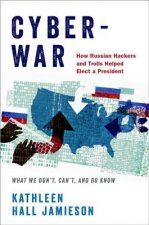
Cyberwar
21.69 € -24 % -

Human Rights, Ownership, and the Individual
83.64 € -

Founders' Constitution, Volume 2
16.24 € -

Constitutionalizing the European Union
59.32 € -
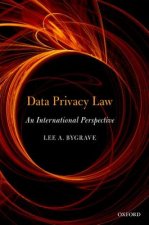
Data Privacy Law
193.13 € -
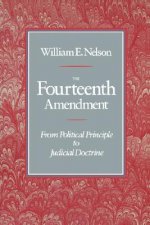
Fourteenth Amendment
41.56 € -

Colonial Origins of the American Constitution
16.24 € -

Magna Carta
13.92 € -24 % -

American Constitution and the Debate over Originalism
34.40 € -

Familiar Exposition of the Constitution of the United States
27.03 € -9 % -

European Convention on Human Rights
526.12 € -

Theory of Interpretation of the European Convention on Human Rights
51.86 € -

Administrative Law for the 21st Century
133.49 € -7 % -

Gabby Petito's Story
1.10 € -

Deciphering the Genome of Constitutionalism
135.41 € -

Statism
13.11 € -18 % -
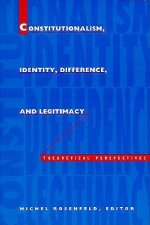
Constitutionalism, Identity, Difference, and Legitimacy
41.06 € -

Gunfight
14.02 € -25 % -

Proportionality
71.73 € -

Constitution of Romania
47.82 € -

View of the Constitution of the United States of America Second Edition
23.70 € -2 % -

Application of the Principle of Subsidiarity in Eu Law
48.83 € -2 % -

Pennsylvania & Federal Constitution, 1787-1788
12.81 € -12 % -

Raised Right
28.45 € -
First Amendment, Freedom of the Press
15.33 € -18 % -

Strategic Constitution
40.35 € -
Government by Judiciary
12.81 € -12 %
Collection points Bratislava a 12986 dalších
Copyright ©2008-26 najlacnejsie-knihy.sk All rights reservedPrivacyCookies

 25976 collection points
 Delivery 2.99 €
 02/210 210 99 (8-15.30h)