
Code: 09298869
der künstliche baum
by Ernst Jandl, Klaus Siblewski
Essay from the year 2004 in the subject English - Literature, Works, grade: Distinction, James Cook University (James Cook University), course: Strangers in the South Pacific, language: English, comment: Marker's comment: Excellen ... more


- Language:
 German
 - Binding: Hardback
- Number of pages: 768
Publisher: Luchterhand Literaturverlag, 2016
- More about this

17.25 €
RRP: 18.72 €
You save 1.47 €
Availability:
50/50 We think title might be available. Upon your order we will do our best to get it within 6 weeks.
We search the world
You might also like
-

Mala a její kočka
10.79 € -27 % -

Guide pratique des plantes sauvages - Les reconnaître et les utiliser facilement
24.01 € -

Kaguya-sama: Love is War 23
6.55 € -13 % -
Дом чудной на улице Лесной
18.26 € -12 % -

The School for Good and Evil: Movie Tie-In Edition: Now a Netflix Originals Movie
10.39 € -26 % -

Anthologie de la poesie francaise du XXe siecle vol.1
9.17 € -15 % -

C++ and Computer Hacking & Mobile Hacking 3 Bundle Manuscript Beginners Guide to Learn C++ Programming with Computer Hacking and Mobile Hacking
19.17 € -7 % -
L'ere du soupcon
13.11 € -

In Strength And Shadow
15.73 € -9 % -

Los de arriba y los de abajo
14.02 € -9 % -

Laut und Luise
14.73 € -14 % -
Effective Knowledge Work
99.20 € -

Phosphoinositides and Disease
154.01 € -7 % -

Female Force
18.26 € -7 % -

The Oil: Your Pain Has Purpose
8.67 € -6 % -

Elternarbeit in der Kita. Ein UEberblick uber Grundlagen, Bildungsangebote und Forschungsstand
16.14 € -10 % -

UN HOMBRE CON BUENA SUERTE
25.63 € -

Murder Most Royal
14.02 € -25 % -

Returns and Exchanges
18.36 € -

Solzhenitsyn's Traditional Imagination
28.15 € -

Nothing Last Forever
14.93 € -6 % -

Bloody War (Paperback)
14.32 € -2 % -
BEDERATZI ATEAK
19.77 € -

Eden's Reprisal
20.28 € -
Florian Grobian
8.97 € -4 % -

Wing & Claw #2: Cavern of Secrets
6.35 € -18 % -

Roi Qui s'Amusait Et La Cour de Westphalie de 1807 A 1813 (Ed.1888)
22.80 € -
Reluctant Tuscan, The
25.93 €
Give this book as a present today
- Order book and choose Gift Order.
- We will send you book gift voucher at once. You can give it out to anyone.
- Book will be send to donee, nothing more to care about.
Availability alert
Enter your e-mail address and once book will be available,
we will send you a message. It's that simple.
More about der künstliche baum
You get 42 loyalty points
 Book synopsis
Essay from the year 2004 in the subject English - Literature, Works, grade: Distinction, James Cook University (James Cook University), course: Strangers in the South Pacific, language: English, comment: Marker's comment: Excellent survey and very well researched., abstract: The tradition of island imaginings in European thought existed long before explorers were actually able to reach far away islands and give first-hand accounts of their encounters and observations. Myths of islands are of an extreme age and deeply rooted in European culture, where they were subjected to ongoing transformation by writers of various periods in history. Story telling about islands stretches back thousands of years: from early island myths in antiquity, to explorers, poets and philosophers in the Age of Discovery; from idealizing nature and islanders, to islands that acted as vehicles for social criticism and reflection on social conditions in Europe.§The island setting was originally employed as a site and inspiration for spiritual, emotional, or psychological transformation, as a kind of incubator for the initiation and fostering of an individual's growth. The specific workings of the archetypal place as an agent of change involved a morally challenging confrontation in a magical setting. Appropriate conduct and prudent behaviour opposite the unfamiliar, followed by the resolve of a potentially dangerous situation or conflict, enabled the shipwrecked to finally leave the island and return to their respective societies.§§This essay provides a historical overview of the island tradition in European literature and links it specifically to the islands of the imagination where the writer travels behind or in front of his or her time envisaging a better world - utopias often take the form of a subversive analysis of contemporary society. Islands and island dwellers were often envisaged as superior versions of the countries and peoples who imagined them, an idea that survived and came to the fore in the positivist scientific and rationalist discourse of the Enlightenment. Island-stories are always set distant in time and place and the remoteness and finite dimensions of islands seemed perfect for constructing a compressed and complete universe, a miniature world, solely governed by the poet's ideals and ideas.
Book details
Book category Books in German Belletristik Lyrik, Dramatik
17.25 €
- Full title: der künstliche baum
- Author: Ernst Jandl, Klaus Siblewski
- Language: German
- Binding: Hardback
- Number of pages: 768
- EAN: 9783630874821
- ISBN: 3630874827
- ID: 09298869
- Publisher: Luchterhand Literaturverlag
- Weight: 610 g
- Dimensions: 186 × 119 × 38 mm
- Date of publishing: 17. March 2016
Trending among others
-

The Art of Making a Forgotten Cup of Tea
17.65 € -23 % -
Save me an orange
11.90 € -21 % -

You're Going to Be Ok
12.81 € -27 % -

Poems & Prayers
18.56 € -24 % -

Faust I und II
8.37 € -19 % -
Dante's the Divine Comedy - Inferno, Purgatorio, Paradiso
21.69 € -24 % -
Twenty Something
13.41 € -24 % -

The Dark Enlightenment - Imperium Press
21.69 € -24 % -

Dear Dolly
10.79 € -29 % -

Milton's Paradise Lost
21.69 € -24 % -
Dante's The Divine Comedy - Inferno, Purgatorio, Paradiso
26.33 € -25 % -
Embrace
13.41 € -24 % -

A Room of One's Own
5.64 € -

The Love of My Life
14.83 € -24 % -
Galahad and the Grail
25.02 € -25 % -
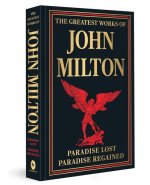
The Greatest Works of John Milton
10.59 € -25 % -

Poems of Robert Frost (Masterpiece Library Edition)
15.03 € -27 % -

The Possessed
12.71 € -25 % -

Changing My Mind
11.19 € -13 % -
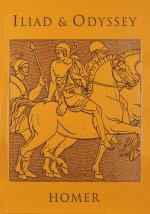
Iliad & Odyssey
21.89 € -24 % -

Shine, Darling
11.80 € -25 % -

Things in Nature Merely Grow
13.41 € -24 % -

Shakespeare's First Folio: 400th Anniversary Facsimile Edition: Mr. William Shakespeares Comedies, Histories & Tragedies, Published According to the O
93.85 € -24 % -

Divan of Hafiz
25.93 € -7 % -

Can Socialists be Happy?
6.05 € -22 % -

she followed the moon back to herself
14.42 € -29 % -

Tears of Chitrangada Thai Version
7.26 € -24 % -

Modern Poetry
12.71 € -25 % -

Paradise Regained
15.63 € -2 % -

Alle Sorten von Worten
14.42 € -10 % -

Made of Rivers
11.80 € -25 % -

Das lyrische Stenogrammheft / Kleines Lesebuch für Große
11.80 € -10 % -

these heavy lungs we breathe with
12.71 € -25 % -

Reading Log Journal For Adults
11.29 € -25 % -
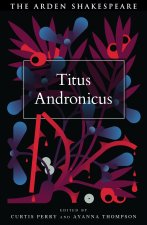
Titus Andronicus
14.52 € -9 % -

life after you
11.29 € -25 % -

Men Explain Things to Me
6.75 € -30 % -

Make Believe
13.11 € -31 % -
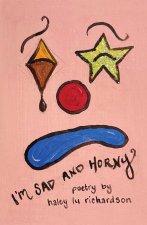
I'm Sad and Horny
15.94 € -25 % -

One Day, Everyone Will Have Always Been Against This
15.94 € -29 % -
Alphabetical Diaries
11.19 € -24 % -
Beautiful Chaos
13.41 € -24 % -

On Connection
10.89 € -11 % -
Caligula and Three Other Plays
14.02 € -25 % -

Crush
13.41 € -24 % -

Darby, Love...
14.02 € -28 % -

The Poetry of Chuya Nakahara
18.76 € -29 % -

You Better Be Lightning
13.41 € -24 % -
Encyclopedia of Mythical Creatures - Norse and Viking Mythology
30.37 € -18 %
Collection points Bratislava a 12833 dalších
Copyright ©2008-26 najlacnejsie-knihy.sk All rights reservedPrivacyCookies

 25670 collection points
 Delivery 2.99 €
 02/210 210 99 (8-15.30h)