Code: 35360245
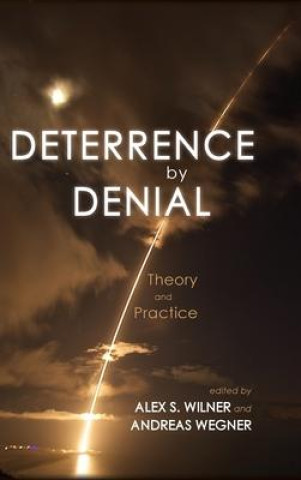
Deterrence by Denial
by Alex S. Wilner, Andreas Wegner
*This book is in the Rapid Communications in Conflict and Security (RCCS) Series (General Editor: Geoffrey R.H. Burn).Deterrence theory helps conceptualize how threats can be used and communicated to influence or alter an adversar ... more


- Language:
 English
 - Binding: Hardback
- Number of pages: 294
Publisher: Cambria Press, 2021
- More about this

100.34 €
RRP: 102.38 €
You save 2.04 €

In stock at our supplier
Shipping in 14 - 21 days
You might also like
-

Moonwalk
13.95 € -18 % -

The Score
13.65 € -11 % -

Berserk Deluxe Volume 1
35.70 € -25 % -

The Deal
12.23 € -10 % -

The Mistake
13.44 € -14 % -

Jujutsu Kaisen, Vol. 30
9.70 € -25 % -

Berserk Deluxe Volume 2
36.31 € -31 % -

Dancing The Dream
19.92 € -31 % -

Murdoku
14.05 € -25 % -

Berserk Deluxe Volume 3
55.22 € -

The Goal
14.56 € -5 % -

White Nights
4.54 € -14 % -

Chainsaw Man, Vol. 21
9.90 € -20 % -

Invincible Compendium Volume 2
45.81 € -24 % -

The Legacy
11.93 € -22 % -

Jujutsu Kaisen, Vol. 29
9.90 € -20 % -

Invincible Compendium Volume 3
45.81 € -24 % -

Lord of Mysteries, Vol. 3: The Clown, Part III
17.09 € -13 % -

Jujutsu Kaisen, Vol. 26
9.90 € -20 % -

Witch Hat Atelier: Grimoire Edition 1
34.99 € -29 % -

JoJo's Bizarre Adventure: Part 7--Steel Ball Run, Vol. 7
18.10 € -25 %
Give this book as a present today
- Order book and choose Gift Order.
- We will send you book gift voucher at once. You can give it out to anyone.
- Book will be send to donee, nothing more to care about.
More about Deterrence by Denial
You get 243 loyalty points
 Book synopsis
*This book is in the Rapid Communications in Conflict and Security (RCCS) Series (General Editor: Geoffrey R.H. Burn).
Deterrence theory helps conceptualize how threats can be used and communicated to influence or alter an adversary's behavior. In practice, deterrence works by weighing on an actor's perceived costs and benefits of pursuing an unwanted action. Deterrence-and its close relatives, coercion, compellence, dissuasion, and influence-can be accomplished by using threats of punishment (i.e., retaliation) or by denying adversaries the gains they seek (i.e., defense, resilience, and failure). During much of the Cold War deterrence by punishment largely overshadowed deterrence by denial. The proliferation of nuclear weapons, and later, of missile technology, tipped the deterrent calculus in favor of retaliation: the ultimate weapon epitomized the ultimate deterrent. Deterrence by denial largely fell to the wayside as a result and the logic of punishment came to pervade the classical literature on deterrence theory. Contemporary security dynamics, however, have changed dramatically. Security concerns are increasingly sub- and non-state in nature, and they are much more diffused. While nuclear weapons and deterrence by punishment still matter, the rise of sophisticated international terrorist organizations, conventional military challenges, digital-based threats, and threats short of open conflict have today cumulatively tipped the deterrent calculus in favor of denial.
Deterrence by denial reduces the perceived benefits an action is expected to provide an adversary. Decision making takes into account both costs and benefits, so while punishment manipulates behavior by augmenting costs, denial works by stripping away benefits. Unfortunately, given the field's longstanding focus on deterrence by punishment, very little research has systematically explored denial theory and strategy in contemporary security settings. And the limited denial scholarship that does exist rests largely on the dynamics inherent to the Cold War, like great power rivalry, strategic weapons, and military power.
Deterrence by Denial: Theory and Practice is the first study to focus exclusively on contemporary denial, bridging the theoretical gap that persists between classical deterrence theory and contemporary insecurity. The book significantly advances the scholarship on deterrence by denial with empirically driven and policy-relevant contributions written by leading international scholars of conventional military aggression, missile defense, terrorism and militancy, crime, and cybersecurity.
Deterrence by Denial: Theory and Practice is an important and unique book, of interest to scholars of international relations, political science, terrorism and intelligence studies, and cybersecurity, as well as to policy analysts, practitioners, and members of the armed forces and intelligence community.
Book details
100.34 €
- Full title: Deterrence by Denial
- Subtitle: Theory and Practice
- Author: Alex S. Wilner, Andreas Wegner
- Language: English
- Binding: Hardback
- Number of pages: 294
- EAN: 9781621965503
- ISBN: 1621965503
- ID: 35360245
- Publisher: Cambria Press
- Weight: 603 g
- Dimensions: 229 × 152 × 21 mm
- Date of publishing: 08. January 2021
Collection points Bratislava a 12830 dalších
Copyright ©2008-26 najlacnejsie-knihy.sk All rights reservedPrivacyCookies

 25664 collection points
 Delivery 2.99 €
 02/210 210 99 (8-15.30h)