Code: 04512617
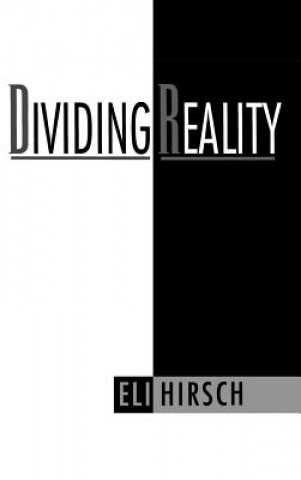
Dividing Reality
by Eli Hirsch
Why does our language divide up reality one way rather than another? On what rational basis does our language contain certain kinds of general words rather than others? Hirsch shows that a language can be constructed which describ ... more


- Language:
 English
 - Binding: Hardback
- Number of pages: 262
Publisher: Oxford University Press Inc, 1993
- More about this


You might also like
-

Let Us Now Praise Famous Men
16.86 € -24 % -

Exam Success in Business Studies for Cambridge IGCSE (R) & O Level
25.44 € -

The Unofficial Holy Bible for Minecrafters: Old Testament: Stories from the Bible Told Block by Block
14.74 € -25 % -

Kingdom of the Golden Dragon
15.75 € -9 % -

Popular Tales of the West Highlands
31.20 € -14 % -

Steck-Adventskalender 'Tiere im Winter'
14.84 € -16 % -

Der Eisbär und die Hoffnung auf morgen
12.62 € -10 % -
Stockholm School of Economics Revisited
207.26 € -

Archaeology of Ireland
81.81 € -

Conchologist
23.22 € -
Alexander Aphrodisias Analytics
199.18 € -
Plastics in the Circular Economy
104.33 € -10 % -

Understanding Anatomy and Physiology in Nursing
70.19 € -9 % -

Blessed Be
26.86 €
Give this book as a present today
- Order book and choose Gift Order.
- We will send you book gift voucher at once. You can give it out to anyone.
- Book will be send to donee, nothing more to care about.
More about Dividing Reality
You get 426 loyalty points
 Book synopsis
Why does our language divide up reality one way rather than another? On what rational basis does our language contain certain kinds of general words rather than others? Hirsch shows that a language can be constructed which describes reality in ways we would find absurdly irrational, for example by classifying normally disparate items under the same general term. The apparent irrationality of the new language does not depend on its impoverished fact-stating power, as this may be equivalent to the fact-stating power of ordinary language; the problem then is to explain exactly what is wrong with it. Various options are explored and criticized, such as the hypothesis that language must reflect an underlying objective distinction between 'natural' kinds; that there are pragmatic reasons for the way language functions as it does; and that, as a matter of 'metaphysical necessity,' strange ways of dividing up reality are constructions out of ordinary ways. Having demonstrated that this newly identified problem is in fact a serious one which cannot be easily solved or brushed aside, Hirsch offers his own suggestions for a possible solution.
Book details
Book category Books in English Language linguistics Philosophy of language
175.65 €
- Full title: Dividing Reality
- Author: Eli Hirsch
- Language: English
- Binding: Hardback
- Number of pages: 262
- EAN: 9780195057546
- ISBN: 0195057546
- ID: 04512617
- Publisher: Oxford University Press Inc
- Weight: 548 g
- Dimensions: 238 × 159 × 21 mm
- Date of publishing: 22. July 1993
Trending among others
-
Language Hoax
13.42 € -24 % -
Trivium
21.51 € -
Construction of Social Reality
14.13 € -23 % -
Making the Social World
14.64 € -9 % -
Practice Makes Perfect English Pronouns and Prepositions, Second Edition
14.64 € -18 % -

Rosicrucian Manual
13.02 € -
What Kind of Creatures Are We?
12.72 € -24 % -
Adam's Tongue
16.15 € -25 % -
Reference
58.37 € -
Language Instinct
13.02 € -29 % -
Semiotics and the Philosophy of Language
22.92 € -2 % -

Image Music Text
11 € -30 % -
Infancy and History
13.12 € -18 % -
How Language Works
12.92 € -30 % -
Atoms Of Language
14.74 € -25 % -
Introduction to Cognitive Linguistics
72.92 € -
Naming and Necessity
29.38 € -5 % -
Logic of Sense
19.59 € -24 % -

Making It Explicit
57.26 € -
Handbook of Semiotics
56.66 € -10 % -
Philosophy of Language
28.27 € -1 % -
Inquiry into Modes of Existence
21.71 € -24 % -

Language Animal
25.04 € -25 % -
When the Word Becomes Flesh
13.73 € -26 % -

Critical Introduction to the Philosophy of Language
58.88 € -
Philosophy of Language
58.88 € -

Rhetoric of Motives
33.42 € -
Language and Reality
19.48 € -22 % -
LOT 2
42.11 € -
Documentality
45.04 € -
Soul and Form
38.37 € -

The Natural History of the Sign
16.15 € -25 % -
Essential Chomsky
21.20 € -25 % -
Practice Makes Perfect English Articles and Determiners Up Close
12.11 € -20 % -
Philosophy of Language
44.64 € -
More than Cool Reason
31.91 € -

Lectures on Rhetoric & Belles Lettres
14.13 € -10 % -
Authority of Law
70.50 € -
Scandal of the Speaking Body
15.14 € -37 % -
Literary Mind
24.43 € -
Speaking from Elsewhere
36.76 € -

Practice Makes Perfect English Verb Tenses Up Close
16.96 € -17 % -

Latin
28.88 € -
Language, Proof, and Logic
100.09 € -

How to Do Things with Words
54.64 € -
Metaphor
39.18 € -
Signs
30.90 € -2 % -
Introduction to the Philosophy of Language
48.68 € -
Being Realistic about Reasons
29.08 €
Collection points Bratislava a 12873 dalších
Copyright ©2008-26 najlacnejsie-knihy.sk All rights reservedPrivacyCookies

 25750 collection points
 Delivery 2.99 €
 02/210 210 99 (8-15.30h)