Kód: 15839532
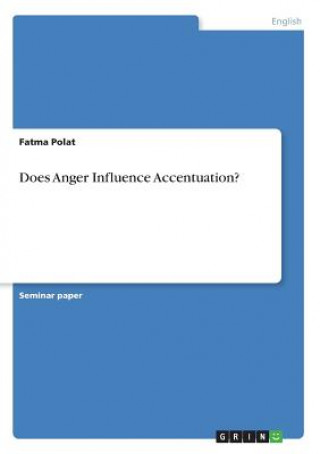
Does Anger Influence Accentuation?
Autor Fatma Polat
Seminar paper from the year 2016 in the subject English Language and Literature Studies - Linguistics, grade: 1,3, University of Tubingen, language: English, abstract: In linguistics, there are only few studies that investigate th ... celý popis


- Jazyk:
 Angličtina
 - Väzba: Brožovaná
- Počet strán: 36
Nakladateľ: Grin Publishing, 2017
- Viac informácií o knihe

16.08 €
Bežne: 18.86 €
Ušetríte 2.78 €

Skladom u dodávateľa
Odosielame za 5 - 8 dní
Mohlo by sa vám tiež páčiť
-

The Score
8.03 € -57 % -

Puzzle 104 elementów. Super color. Unicorn Academy
3.61 € -

Attack On Titan 6
8.54 € -24 % -
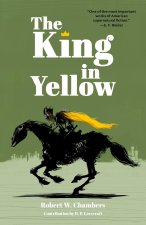
The King in Yellow (Warbler Classics Annotated Edition)
9.84 € -25 % -

The Sound and the Furry
13.97 € -25 % -

CCNA Routing and Switching 200-125 Official Cert Guide Library
49.76 € -14 % -

Oxford Service Music for Organ: Manuals only, Book 3
17.79 € -15 % -

Time Machine 1
9.84 € -25 % -

Liu Bin's Zhuang Gong Bagua Zhang, Volume One
22.11 € -25 % -

How to Love Animals
10.65 € -25 % -

Great Violin Solos
32.57 € -

Interviews mit Monster-Mädchen. Bd.4
7.83 € -
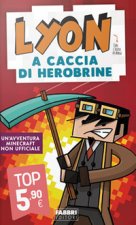
A caccia di Herobrine
7.23 € -

ASSESSING AGGRESSION THRESHOLD
18.09 € -25 % -

Beyond Powerful Radio
77.42 € -

Dickens and the Sentimental Tradition
120.15 € -

The Physical Environment of the Flyer
26.34 € -1 % -

Human Interface and the Management of Information: Information, Knowledge and Interaction Design
51.37 € -7 % -

Investor-State Dispute Settlement
47.75 € -

Open Letters and Letters Reprinted from Various Periodicals.
11.75 € -25 % -

The History of the Empire of Japan
7.23 € -6 % -

Game of My Life
22.72 € -9 % -

Handbook of Chicana/o Psychology and Mental Health
307.08 € -

La Petite voleuse de la Tour Eiffel - vol. 01
21.61 € -
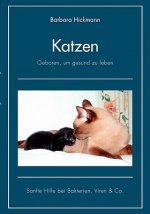
Katzen - geboren, um gesund zu leben
17.89 € -10 % -
Catalogue de Tableaux Anciens Et Modernes, Aquarelles, Gouaches, Pastels, Dessins Et Gravures
12.96 € -1 % -
Jus Romanum: de Emptione Et Venditione M. Badin. Code Civil: Des Donations. Pandectes:
12.06 € -1 % -

Lessons on Assurance
6.12 € -21 % -

CONSTRUCCIONES IDENTITARIAS. WORK IN PROGRESS
43.03 € -

Istruzione per tutti: problemi e sfide
39.01 € -14 % -
Filostrato
34.38 € -2 % -

Sissy's Memoirs
8.94 € -6 % -

Il cervello che impara. Neuropedagogia dall'infanzia alla vecchiaia
17.99 € -
Stories Of Old Greece (1894)
21.01 € -1 % -

Histoire du Nouveau Testament et de son siècle
33.27 €
Darčekový poukaz: Radosť zaručená
- Darujte poukaz v ľubovoľnej hodnote, a my sa postaráme o zvyšok.
- Poukaz sa vzťahuje na všetky produkty v našej ponuke.
- Elektronický poukaz si vytlačíte z e-mailu a môžete ho ihneď darovať.
- Platnosť poukazu je 12 mesiacov od dátumu vystavenia.
Viac informácií o knihe Does Anger Influence Accentuation?
Nákupom získate 39 bodov
 Anotácia knihy
Seminar paper from the year 2016 in the subject English Language and Literature Studies - Linguistics, grade: 1,3, University of Tubingen, language: English, abstract: In linguistics, there are only few studies that investigate the correlation between emotion and language since language and cognition were treated as autonomous systems. One of the few books that puts an emphasis on this topic and analyses it in detail is Monika Schwarz-Friesel's "Sprache und Emotion" published in 2012. The paper proves that in some situations, anger definitely influences accentuation. Hence, epithets which behave like a pronoun and therefore refer to a previously mentioned DP are accentuated in many cases, since it was uttered by an angry person. People are loving, suffering, and reflective human beings, because they have feelings. Emotions and feelings are reflected in all areas of existential human experience. With language, we express our subjective feelings. Thus, the relation between language and emotion is an important phenomenon, especially in the interpretation of the mediated. This area, however, has been excluded for long from linguistics and cognitive science investigation because they saw language and cognition as autonomous systems that were not heavily influenced by emotions. However, it is generally believed that the universal ability to primary emotions are innate. Basic emotions, such as happiness, anger, disgust, fear, contempt, and sadness can be recognized and expressed by people in all cultures. These emotions occur relatively short and intense . For some years now, as Schwarz-Friesel describes, there is an "emotional turn" (ibid.). Emotions are now regarded as determinative parts of cognitive states and processes. Particularly in the area of language processing -both production and reception of linguistic utterances- shows the influence of language on cognitive processes (cf. Schwarz-Friesel 2 ff.). With (linguistic) utterances, emotions are expressed and named, aroused or intensified (cf. Schwarz-Friesel 6). In this paper, I want to investigate the following hypothesis: When a speaker is angry, s/he puts an emphasis not only on the verb but also on the epithet which has a negative connotation (e.g. masseur - torturer) or even is an insult (e.g. boss - idiot). Hence, the aim of this paper is to show that in selected examples, the referential DP (the epithet), which is already given, is stressed.
Parametre knihy
Zaradenie knihy Books in English Language Language: reference & general
16.08 €
- Celý názov: Does Anger Influence Accentuation?
- Autor: Fatma Polat
- Jazyk: Angličtina
- Väzba: Brožovaná
- Počet strán: 36
- EAN: 9783668318465
- ISBN: 3668318468
- ID: 15839532
- Nakladateľ: Grin Publishing
- Hmotnosť: 59 g
- Rozmery: 210 × 148 × 2 mm
- Dátum vydania: 02. February 2017
Obľúbené z iného súdka
-

MI6 Spy Skills for Civilians
12.76 € -27 % -

Save the Cat! Writes a Novel
14.17 € -30 % -

Doing Time Like a Spy
13.77 € -29 % -

Remembering the Kanji 1
35.69 € -

Basics of Biblical Hebrew Grammar
42.32 € -24 % -

Merriam-Webster s Advanced Learner's English Dictionary
23.02 € -24 % -

Japanese Stories for Language Learners
13.36 € -24 % -
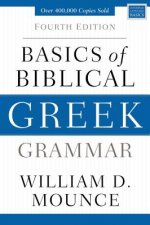
Basics of Biblical Greek Grammar
42.12 € -24 % -

Basics of Biblical Greek Workbook
17.69 € -26 % -

Merriam-Webster's Intermediate Visual Dictionary
14.67 € -25 % -

Hallo, Itt Magyarorszag! (Hungarian for Foreigners). by Direct Method
11.45 € -12 % -
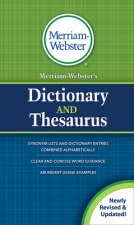
Merriam-Webster's Dictionary and Thesaurus
7.83 € -25 % -

Basics of Biblical Hebrew Workbook
19.50 € -25 % -
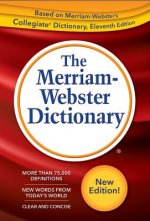
Merriam-Webster Dictionary
12.56 € -21 % -

Czech
59.62 € -
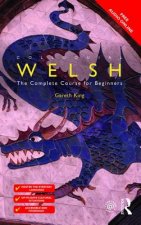
Colloquial Welsh
77.42 € -

Romanian Grammar
24.73 € -14 % -

Bildwörterbuch Deutsch - Ungarisch / Képes szótár német - magyar
18.29 € -

Routledge Advanced Persian Course
81.34 € -
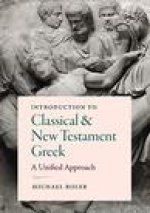
Introduction to Classical and New Testament Greek
42.73 € -

Colloquial Bengali
58.71 € -18 % -

Egy Szo Mint Szaz: Magyar-Angol Tematikus Szokincstar / Hungarian-English Vocabulary by Topic
10.65 € -10 % -

English Vocabulary Builder Workbook (200 Lessons)
16.58 € -6 % -

Routledge Introductory Course in Modern Hebrew
62.94 € -
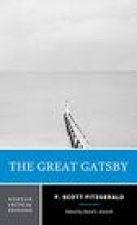
Great Gatsby
15.68 € -
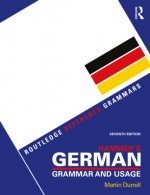
Hammer's German Grammar and Usage
55.70 € -

Nahuatl-English/English-Nahuatl Concise Dictionary
18.09 € -25 % -
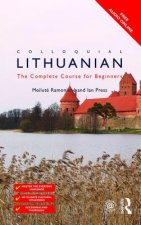
Colloquial Lithuanian
96.12 € -
Oxford A-Z of Grammar and Punctuation
10.65 € -25 % -

Mandarin Chinese for Beginners
13.97 € -25 % -

Don Quijote
27.34 € -

Colloquial Tibetan
111.91 € -

Intermediate Japanese Textbook
23.12 € -22 % -

Highway Code
4.31 € -18 % -
Colloquial Serbian
53.59 € -22 % -
Story of Yiddish
14.57 € -18 % -

Routledge Introductory Course in Moroccan Arabic
74.40 € -
Lithuanian Dictionary
120.76 € -
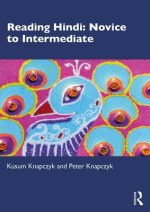
Reading Hindi: Novice to Intermediate
56.60 € -

The Various Roles of the Teacher in the English Classroom
20.40 € -6 % -

Perform Suzhou
59.62 € -

Translating and Reimagining - Recovering Pizarnik in her late Prose Works
42.52 € -14 % -

Pünktlich wie die Maurer
10.85 € -10 % -
Logic and Propositions
15.17 € -14 % -
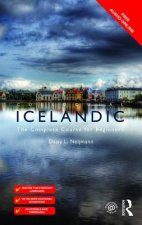
Colloquial Icelandic
83.15 € -
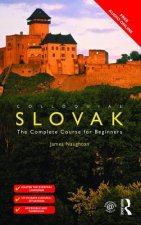
Colloquial Slovak
91.70 € -
New College Latin & English Dictionary, Revised and Updated
11.05 € -20 % -

Frequency Dictionary of German
60.02 € -
New Reference Grammar of Modern Spanish
65.45 €
Collection points Bratislava a 13398 dalších
Copyright ©2008-26 najlacnejsie-knihy.sk All rights reservedPrivacyCookies

 26800 collection points
 Delivery 2.99 €
 02/210 210 99 (8-15.30h)