Code: 02166280
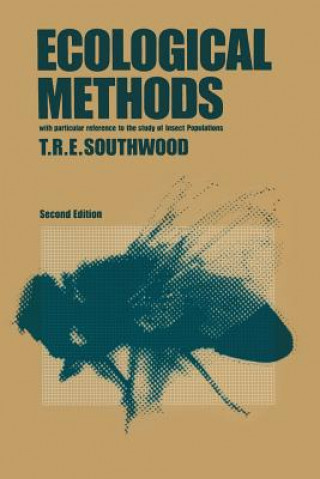
Ecological Methods
by T.R. Southwood
the virtual impossibility of extracting the many different species from a habitat with equal efficiency by a single method (e.g. Nef, 1960). 1.1 Population estimates Population estimates can be classified into a number of differen ... more


- Language:
 English
 - Binding: Paperback
- Number of pages: 548
Publisher: Chapman and Hall, 1987
- More about this

143.71 €
RRP: 155.75 €
You save 12.04 €

In stock at our supplier
Shipping in 5 - 8 days
You might also like
-

Biel. Kolory zła. Tom 3 wyd. 2025
12.40 € -

Blue Lock T29 - Édition collector
16.44 € -

Victorian Fashions
18.06 € -25 % -

Spelling and Vocabulary Workbook (Ages 7-8)
7.66 € -24 % -

Scientific Soapmaking
28.25 € -1 % -

Defence of Socrates, Euthyphro, Crito
9.28 € -24 % -

Bridž, Hombre - Pravidla
0.49 € -20 % -

Moleskine Peanuts Linus Cahier limitierte Ausgabe, XL, liniert, Kartoneinband, Hellblau
8.47 € -20 % -

Vegan Cakes
18.06 € -25 % -

500 Hidden Secrets of Rotterdam
19.77 € -17 % -

История без названия
24.31 € -12 % -

Cold the Night, Fast the Wolves
17.55 € -10 % -

mitoni niya nehiyaw / Cree is Who I Am
21.59 € -25 % -

Textile Messages
42.99 € -10 % -

O uso pedagogico do celular e o papel do Supervisor de ensino
44.40 € -14 % -

Envoys of abolition
174.60 € -

Kariera uciekiniera
3.42 € -20 % -
Grammar of Heraldry, Or, Gentleman's Vade Mecum, ... Together with Two Appendices
31.78 € -2 % -

Campagne de 1794 A l'Armee Du Nord. Tome 1-2
32.49 € -
L' Honneur des Funambules
10.99 € -

AUJOURD HUI JE SUIS... LIVRE DE BAIN
19.67 € -

Die Bauhof-Mappe, m. 1 Buch, m. 1 Beilage
142.60 € -7 % -

Bloody Battle for Tilly
21.18 € -25 % -

Rotten States?
41.07 € -

100 FIRST WORDS TO PROTECT OUR PLANET
10.79 € -24 % -

Ruf der Landstrasse
21.49 € -11 % -

How Saved are We?
15.73 € -1 % -
Prosateur a new york (un)
12.71 € -

Oliva Beaumont and Lord Latimer.
22.19 € -24 % -

Studi Interculturali 3-2015
30.17 € -10 % -

Mr-Tomographie Des Skeletts Und Der Peripheren Weichteile
76.90 € -7 % -

Saxophone Globetrotters, E flat edition + CD
18.96 € -15 % -

Abecedaire Des Petits Gourmands
17.45 € -6 % -

Miss Ivy's Tea Room
20.28 € -

Distributions in the Physical and Engineering Sciences
51.56 € -7 %
Give this book as a present today
- Order book and choose Gift Order.
- We will send you book gift voucher at once. You can give it out to anyone.
- Book will be send to donee, nothing more to care about.
More about Ecological Methods
You get 349 loyalty points
 Book synopsis
the virtual impossibility of extracting the many different species from a habitat with equal efficiency by a single method (e.g. Nef, 1960). 1.1 Population estimates Population estimates can be classified into a number of different types; the most convenient classification is that adopted by Morris (1955), although he used the terms somewhat differently in a later paper (1960). 1.1.1 Absolute and related estimates The animal numbers may be expressed as a density per unit area of the ground of the habitat. Such estimates are given by nearest neighbour and related techniques (Chapter 2), marking and recapture (Chapter 3), by sampling a known fraction of the habitat (Chapter 4-6) and by removal sampling and random walk techniques (Chapter 7). Absolute population The number of animals per unit area (e.g. hectare, acre). It is almost impossible to construct a budget or to study mortality factors without the conversion of population estimates to absolute figures, for not only do insects often move from the plant to the soil at different developmental stages, but the amount of plant material is itself always changing. The importance of obtaining absolute estimates cannot be overemphasized.
Book details
Book category Books in English Earth sciences, geography, environment, planning The environment Applied ecology
143.71 €
- Full title: Ecological Methods
- Subtitle: With Particular Reference to the Study of Insect Populations
- Author: T.R. Southwood
- Language: English
- Binding: Paperback
- Number of pages: 548
- EAN: 9780412307102
- ISBN: 0412307103
- ID: 02166280
- Publisher: Chapman and Hall
- Weight: 910 g
- Dimensions: 235 × 155 × 31 mm
- Date of publishing: 24. September 1987
Trending among others
-

Politics of Social Ecology
19.47 € -

Restoration Ecology - The New Frontier 2e
73.06 € -9 % -

One-Straw Revolution
12.81 € -25 % -

Permaculture Design
19.07 € -24 % -

Hand-Sculpted House
25.22 € -24 % -

Becoming Animal
14.93 € -24 % -

Mycelium Running
24.62 € -28 % -

Earth's Biosphere
52.67 € -
Conserving Forest Biodiversity
49.24 € -7 % -

Edible Forest Gardens, Volume 1
55.30 € -21 % -

Edible Forest Gardens, Volume II
55.30 € -21 % -

Gathering Moss
14.02 € -25 % -

All That the Rain Promises and More
13.41 € -24 % -

Forest Therapy
14.02 € -25 % -

Storms of My Grandchildren
13.92 € -24 % -

Cosmic Pulse of Life
21.59 € -25 % -

Deep Ecology for the Twenty-First Century
34.91 € -18 % -
Ages of Gaia
19.17 € -17 % -
Community Ecology
63.68 € -

Wild Idea
25.02 € -25 % -

SIXTH EXTINCTION
10.49 € -29 % -
Energy Evolution
34.71 € -24 % -
Natural Beekeeping with the Warre Hive
21.99 € -1 % -
Ecology Book
25.12 € -9 % -

Do We Need Pandas?
17.96 € -3 % -
Practice of Silviculture
124.84 € -
Biodiversity and Climate Change
32.19 € -20 % -

Agroecology
80.63 € -

Encyclopedia of Animals
22.80 € -9 % -
European Wood-pastures in Transition
72.36 € -
Applied Hierarchical Modeling in Ecology: Analysis of distribution, abundance and species richness in R and BUGS
79.62 € -

Integral Ecology
46.11 € -18 % -

Without Animals Life Is Not Worth Living
9.88 € -41 % -

Our Ecological Footprint
14.73 € -25 % -
Unlearn, Rewild
14.73 € -25 % -

Handbook of Climate Change and Biodiversity
164.20 € -7 % -
Land Use without Zoning
35.62 € -

Foundations of Ecology
55.90 € -

Carnivores of Australia
46.11 € -9 % -

Biodiversity - An Introduction 2e
55.50 € -

Horse Color Explained
25.52 € -2 % -
Ecologist-Developed Spatially-Explicit Dynamic Landscape Models
102.73 € -7 % -

Biodiversity of the Gulf of Guinea Oceanic Islands
51.56 € -7 % -

Adaptive Food Webs
116.56 € -

Driven to Extinction
14.83 € -9 % -
Cosmos, Earth and Nutrition
18.06 € -14 % -

Green Self-build Book
30.07 € -26 % -

From the Catchment to Coast in Japan – The Past, the Present, and the Future of Japanese Water Resources and Human Activities
174.70 € -9 % -

Biodiversity and the Law
117.07 €
Collection points Bratislava a 12948 dalších
Copyright ©2008-26 najlacnejsie-knihy.sk All rights reservedPrivacyCookies

 25900 collection points
 Delivery 2.99 €
 02/210 210 99 (8-15.30h)