Code: 02217189
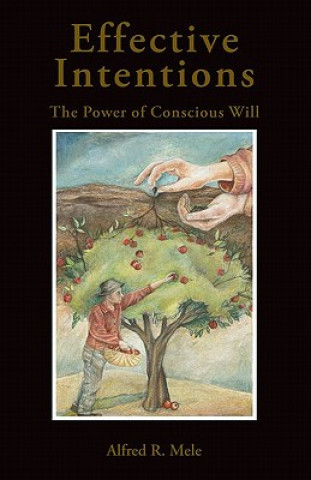
Effective Intentions
by Alfred R Mele
Each of the following claims has been defended in the scientific literature on free will and consciousness: your brain routinely decides what you will do before you become conscious of its decision; there is only a 100 millisecond ... more


- Language:
 English
 - Binding: Paperback
- Number of pages: 208
Publisher: Oxford University Press Inc, 2010
- More about this


You might also like
-

Larrikin Outsiders
57.60 € -28 % -

Csillagvarázs 4. - Sötét varázslat
5.74 € -11 % -

Martynka. Najlepsze przygody. Zbiór opowiadań wyd. 2023
10.99 € -15 % -

Flashky
6.95 € -15 % -

How To Read Hume
11.79 € -25 % -

Od tenkrát do teď tenkrát
4.13 € -16 % -

Floreana
10.48 € -26 % -

John Napier
6.35 € -14 % -

Directory of World Cinema: France
65.77 € -

Life and Times of Sir Thomas Malory
25.21 € -10 % -

Metabolic Control in Diabetes Mellitus Beta Adrenoceptor Blocking Drugs NMR Analysis of Cancer Cells Immunoassay in the Clinical Laboratory Cyclospori
102.69 € -7 % -

Oeuvres Completes de M. Le Vicomte de Chateaubriand. Tome 1 (Ed.1834)
45.99 € -

I Love Autumn (Hungarian Book for Kids)
24.71 € -1 % -

Korean Buddhism, History - Condition - Art
21.88 € -

Offender Rehabilitation
35.40 € -10 % -

Kortfattet Vejledning for Landvaesenslaerlinge Paa St Rre Gaarde
18.05 € -24 % -

Astrology
22.29 € -9 % -

What Dreams Have Come
12.30 € -7 % -

Du Principe Conservateur
25.01 € -

Roger Goes Back to the Desert
2.92 € -26 % -

Practice of Story
50.23 € -

Investigations On The Mechanisms Of Chemiluminescence in 1,2-Dioxetane
37.32 € -14 % -

Gute Fuhrung durch Yoga und Meditation
43.47 € -

grande impostore. La missione segreta che ha cambiato la nostra idea di malattia mentale
46.60 € -9 % -

Your Money Made Simple: The Key to Financial Freedom
11.29 € -25 % -

Meistbegünstigung und Zollunterscheidung.
23.60 € -6 % -
Narrative by Numbers
55.88 € -

Forbidden Attraction (Forbidden Trilogy)
14.01 € -7 %
Give this book as a present today
- Order book and choose Gift Order.
- We will send you book gift voucher at once. You can give it out to anyone.
- Book will be send to donee, nothing more to care about.
More about Effective Intentions
You get 88 loyalty points
 Book synopsis
Each of the following claims has been defended in the scientific literature on free will and consciousness: your brain routinely decides what you will do before you become conscious of its decision; there is only a 100 millisecond window of opportunity for free will, and all it can do is veto conscious decisions, intentions, or urges; intentions never play a role in producing corresponding actions; and free will is an illusion. In Effective Intentions Alfred Mele shows that the evidence offered to support these claims is sorely deficient. He also shows that there is strong empirical support for the thesis that some conscious decisions and intentions have a genuine place in causal explanations of corresponding actions. In short, there is weighty evidence of the existence of effective conscious intentions or the power of conscious will. Mele examines the accuracy of subjects' reports about when they first became aware of decisions or intentions in laboratory settings and develops some implications of warranted skepticism about the accuracy of these reports. In addition, he explores such questions as whether we must be conscious of all of our intentions and why scientists disagree about this. Mele's final chapter closes with a discussion of imaginary scientific findings that would warrant bold claims about free will and consciousness of the sort he examines in this book.
Book details
Book category Books in English Humanities Philosophy Philosophy: metaphysics & ontology
36.31 €
- Full title: Effective Intentions
- Author: Alfred R Mele
- Language: English
- Binding: Paperback
- Number of pages: 208
- EAN: 9780199764686
- ISBN: 0199764689
- ID: 02217189
- Publisher: Oxford University Press Inc
- Weight: 268 g
- Dimensions: 215 × 142 × 13 mm
- Date of publishing: 11. November 2010
Trending among others
-

Convoluted Universe: Book One
14.82 € -24 % -
Metaphysics
12.30 € -27 % -
Finite and Infinite Games
14.01 € -25 % -

Being and Time
20.77 € -10 % -
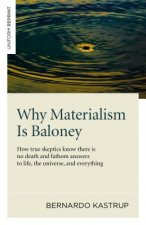
Why Materialism is Baloney
15.73 € -15 % -

Neville Goddard
26.12 € -
Kant's Prolegomena to any Future Metaphysics
10.28 € -2 % -

Life Of The Mind
16.33 € -24 % -

Tertium Organum
14.82 € -1 % -

Quadruple Object, The
14.62 € -

Scholastic Metaphysics
23.60 € -9 % -

Scent of Time - A Philosophical Essay on the Art of Lingering
15.73 € -6 % -

Divine Blueprint
23.40 € -3 % -

Fundamental Concepts of Metaphysics
22.89 € -2 % -

Psychology and the Soul
12.90 € -

Object-Oriented Ontology
13.41 € -23 % -
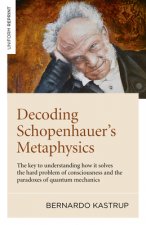
Decoding Schopenhauer's Metaphysics
11.29 € -24 % -

Kemetic Tree of Life Ancient Egyptian Metaphysics and Cosmology for Higher Consciousness
26.42 € -1 % -
Ultimate Questions
9.88 € -25 % -

Chronopoetics
76.06 € -

Theory of the Subject
76.06 € -

Oz Factors
24.61 € -2 % -

Sovereignty of Good
18.65 € -6 % -

Idea of the World, The - A multi-disciplinary argument for the mental nature of reality
18.15 € -14 % -

Body in Pain
17.54 € -24 % -

Sum
9.78 € -29 % -

Self-Aware Universe
14.01 € -25 % -
Metaphysics: A Very Short Introduction
9.68 € -29 % -

Multiple States of the Being
17.44 € -2 % -

De Anima (On the Soul)
12.70 € -25 % -

Rationalist Spirituality - An exploration of the meaning of life and existence informed by logic and science
13.21 € -10 % -

On Human Nature
22.69 € -28 % -

Brief Peeks Beyond - Critical essays on metaphysics, neuroscience, free will, skepticism and culture
16.64 € -10 % -

On Being a Pagan
22.29 € -

Magic of the Mind
26.12 € -

Beyond Biocentrism
11.59 € -26 % -
Evolutionary Mind
14.01 € -25 % -

Production of Space
42.56 € -5 % -
States of Consciousness
14.01 € -25 % -
Veil of Isis
31.77 € -13 % -

Logic Manual
16.23 € -6 % -

Symbol and the Symbolic
9.88 € -25 % -
Creative Mind
9.88 € -25 % -
Groundwork for the Metaphysics of Morals
13 € -

Christ Returns, Speaks His Truth
29.45 € -

Perfect Crime
16.13 € -17 % -

Night
13 € -23 % -

Supreme Identity
19.26 € -2 % -

Analogia Entis
48.42 € -24 %
Collection points Bratislava a 12666 dalších
Copyright ©2008-26 najlacnejsie-knihy.sk All rights reservedPrivacyCookies

 25336 collection points
 Delivery 2.99 €
 02/210 210 99 (8-15.30h)