Code: 04728140
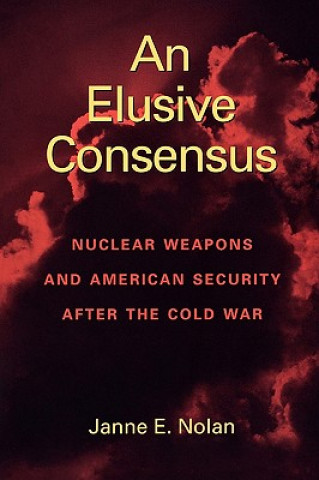
Elusive Consensus
by Janne E. Nolan
The United States continues to maintain a large nuclear arsenal guided by a deterrence strategy little changed since the collapse of the Warsaw Pact. Notwithstanding changes in the size and composition of nuclear forces brought ab ... more


- Language:
 English
 - Binding: Paperback
- Number of pages: 139
Publisher: Brookings Institution, 1999
- More about this


You might also like
-

Sergei Prokofiev
32.64 € -2 % -

Oxford English for Careers:: Finance 1: Class CD
52.70 € -

Shrilok Homeless: The Ultimate Adventures Volume 2
8.66 € -10 % -

Lessons Learned from the Fukushima Nuclear Accident for Improving Safety of U.S. Nuclear Plants
72.25 € -15 % -

Object-Based Image Analysis and Treaty Verification
102.59 € -7 % -

Empire State-building
36.47 € -

Black Pepper in the Mashed Potatoes
14.91 € -6 %
Give this book as a present today
- Order book and choose Gift Order.
- We will send you book gift voucher at once. You can give it out to anyone.
- Book will be send to donee, nothing more to care about.
More about Elusive Consensus
You get 66 loyalty points
 Book synopsis
The United States continues to maintain a large nuclear arsenal guided by a deterrence strategy little changed since the collapse of the Warsaw Pact. Notwithstanding changes in the size and composition of nuclear forces brought about since 1991, the fundamental rationales and planning principles which informed U.S. nuclear policy for decades remain in place--despite the disappearance of a superpower nuclear enemy. In this work, Janne E. Nolan traces the effort to articulate a post-cold war nuclear doctrine through decisions taken in the Bush and Clinton administrations, focusing on the leadership styles of presidents, bureaucratic politics, and broader foreign policy objectives. Based on in-depth interviews with policy participants, this study illuminates in detail the dynamics by which the U.S. government has tried to reflect the dramatically altered international arena in its nuclear policies. In two major policy developments--the 1994 Nuclear Posture Review and the decision to sign the African Nuclear Weapons Free Zone Treaty--U.S. policy makers sought to define the utility of nuclear weapons after the cold war and to gain broad-based consensus. For many reasons, these efforts were largely unsuccessful in developing coherent policies, with the absence of sustained presidential leadership proving most decisive.
Book details
Book category Books in English Humanities History History: earliest times to present day
27.10 €
- Full title: Elusive Consensus
- Subtitle: Nuclear Weapons and American Security after the Cold War
- Author: Janne E. Nolan
- Language: English
- Binding: Paperback
- Number of pages: 139
- EAN: 9780815761013
- ISBN: 0815761015
- ID: 04728140
- Publisher: Brookings Institution
- Weight: 258 g
- Dimensions: 155 × 239 × 14 mm
- Date of publishing: 01. June 1999
Trending among others
-

Tuesdays With Morrie
9.67 € -34 % -

From Third World to First
19.74 € -7 % -

Peloponnesian War
14.10 € -23 % -

Fall of Yugoslavia
10.98 € -30 % -

Tuesdays With Morrie
11.38 € -27 % -

Gallic War
7.85 € -24 % -

Fall of Carthage
14.81 € -30 % -

Alexander the Great
10.67 € -24 % -

Histories
8.56 € -24 % -

Rise and Fall of Ancient Egypt
18.23 € -24 % -

Age Of Capital
15.21 € -28 % -

Creation of Patriarchy
22.16 € -

Life in a Medieval Village
11.78 € -25 % -

1453
14.70 € -25 % -
Ancient Greece
25.39 € -
Ancient Greece: A Very Short Introduction
9.87 € -25 % -

Book of Contemplation
13.90 € -24 % -

Annals and Histories
21.15 € -25 % -
Ancient City
36.67 € -

Alexander the Great
13.90 € -24 % -

History of the Ancient World
25.19 € -26 % -

Fear and Loathing on the Campaign Trail '72
12.99 € -29 % -

Transformation of the World
34.16 € -15 % -

Medieval Europe
13.80 € -29 % -

Histories
11.98 € -24 % -

Chickenhawk
10.98 € -30 % -

Medici
14.40 € -29 % -

Lives of the Caesars
23.57 € -29 % -

Keys of This Blood: Pope John Paul II Versus Russia and the West for Control of the New World Order
32.64 € -17 % -

Anunnaki Homeworld
14.70 € -25 % -

Paris 1919
15.41 € -27 % -

Historical and Chronological Context of the Bible
32.64 € -2 % -

Russia Against the Rest
34.36 € -

Nostradamus and the Planets of Apocalypse
11.28 € -24 % -

Blanche of Castile, Queen of France
47.66 € -20 % -

Exodus
17.63 € -17 % -

Origins of Classical Architecture
57.84 € -20 % -

Delphi
33.95 € -

Before Religion
21.86 € -20 % -

Mongol Empire
12.89 € -21 % -

The Origins of Totalitarianism
13.29 € -28 % -

Guns, Germs, and Steel
15.91 € -21 % -

Medieval Costume and How to Make It
11.18 € -2 % -

Deng Xiaoping and the Transformation of China
25.69 € -25 % -

Augustus
18.03 € -25 % -

Landmark Arrian
24.98 € -25 % -

The Art of Combat
26.29 € -25 % -

King's Two Bodies
21.56 € -25 % -

Nixonland
20.75 €
Collection points Bratislava a 12772 dalších
Copyright ©2008-26 najlacnejsie-knihy.sk All rights reservedPrivacyCookies

 25548 collection points
 Delivery 2.99 €
 02/210 210 99 (8-15.30h)