Code: 04031793
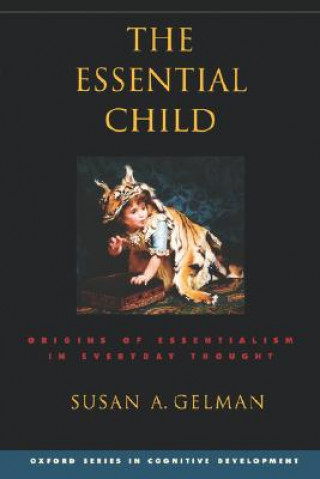
Essential Child
by Susan A. Gelman
Essentialism is the idea that certain categories, such as "dog," "man," or "intelligence," have an underlying reality or true nature that gives objects their identity. Where does this idea come from? In this book, Susan Gelman arg ... more


- Language:
 English
 - Binding: Paperback
- Number of pages: 392
Publisher: Oxford University Press Inc, 2005
- More about this

42.66 €
RRP: 42.70 €
You save 0.04 €

In stock at our supplier
Shipping in 10 - 18 days
You might also like
-

Horus Rising
9.78 € -6 % -

The Pumpkin Spice Café
11.29 € -42 % -

Best of Children's Classics
18.25 € -24 % -

Never Too Small
28.54 € -24 % -

Ferdydurke
10.18 € -8 % -
Wuthering Heights
15.32 € -34 % -

Warriors Super Edition: Tallstar's Revenge
9.27 € -25 % -

Awakening
8.77 € -

Espana: A Brief History of Spain
15.53 € -16 % -

Celebrating the Egyptian Gods
21.48 € -2 % -

Sein und Zeit
29.85 € -25 % -

Son odeur apr?s la pluie
9.68 € -29 % -
History of Mathematics
29.85 € -25 % -

Witch's Guide to Fake Dating a Demon
10.28 € -25 % -

Die 5 Sprachen der Liebe
10.68 € -29 % -

GOULA - XXL-Weltraum-Puzzle - 25 Teile
10.48 € -9 % -

Cabins
20.07 € -28 % -

DK Eyewitness Florence and Tuscany
18.25 € -8 % -

English File: Upper-Intermediate: Student's Book with Oxford Online Skills
61.33 € -

Anne of Green Gables Quotes to Color: Coloring Book Featuring Quotes from L.M. Montgomery
8.97 € -6 % -

På vej til dansk - Trin for trin
88.87 € -12 % -

Stop Being Niggardly
13.11 € -18 % -

Four Classic Albums, 2 Audio-CDs
6.65 € -
Stories of the Sea
18.55 € -26 % -

Zbędni
10.48 € -15 % -
Materialist Phenomenology
26.83 € -14 % -

Questioning Evangelism, Third Edition: Engaging People's Hearts the Way Jesus Did
20.17 € -10 % -

A Cultural History of Scottish Officers and Highland Regiments
157.98 € -

Illustrated Encyclopedia of Hinduism
8.67 € -25 % -

Anbruch der neuen Zeit
28.54 € -16 % -

Мертвые души
9.68 € -12 % -

Mistykę trzeba ROBIĆ.
11.79 € -20 % -

Le concile de Trente (1551-1563)
62.74 € -

Principles of Talmudic Logic
22.39 € -2 % -
Introduction to Teaching Physical Education
106.42 € -

Weather Myths, Busted!
38.23 € -

Great House
36.31 € -2 % -

Two Dissertations
30.86 € -2 % -
Childhood Cognitive Development
1149.89 € -9 % -

COMENTARIOS DE JURISPRUDENCIA TRIBUTARIA CONSTITUCIONAL. AÑO
40.55 € -

Beam's Eye View Imaging in Radiation Oncology
263.61 € -
![Beyond the Church. [A Novel. by Frederick William Robinson.]](https://media.libris.to/jacket/08048162t.jpg "Beyond the Church. [A Novel. by Frederick William Robinson.]")
Beyond the Church. [A Novel. by Frederick William Robinson.]
23.50 € -25 % -

Deleuze: A Philosophy of the Event
135.98 € -15 % -

JEUX ET COLORIAGES T2 LITTLEST
7.86 € -

BiSL Pocket Guide
24.71 € -

International Directory of Company Histories
488.58 € -
History of Science Technology, and Philosophy in the 16th & 17th Centuries
326.46 € -

Paul
47.10 € -

Gastric Cancer Prewarning and Early Diagnosis System
153.94 € -7 % -

Barrier Quest
12.70 € -24 % -

Seabee Book, The U.S. Navy Seabee Alaskan Oil Expedition 1944: With Additional Alaskan World War Two History, Construction Battalion Detachment 1058,
13.21 € -6 % -
Los Cuentos de Hadas, Laura Y La Sirena Asustada
14.72 € -
Making of a Soul
17.85 € -14 % -

Le carnet de Liam - Lignes, 96p, A5 - Motifs Violet Gris Taupe
10.78 € -

Natural Spirituality
30.05 € -2 % -

Bluebeard (Simplified Chinese): 06 Paperback Color
33.58 € -6 %
Give this book as a present today
- Order book and choose Gift Order.
- We will send you book gift voucher at once. You can give it out to anyone.
- Book will be send to donee, nothing more to care about.
More about Essential Child
You get 104 loyalty points
 Book synopsis
Essentialism is the idea that certain categories, such as "dog," "man," or "intelligence," have an underlying reality or true nature that gives objects their identity. Where does this idea come from? In this book, Susan Gelman argues that essentialism is an early cognitive bias. Young children's concepts reflect a deep commitment to essentialism, and this commitment leads children to look beyond the obvious in many converging ways: when learning words, generalizing knowledge to new category members, reasoning about the insides of things, contemplating the role of nature versus nurture, and constructing causal explanations. Gelman argues against the standard view of children as concrete or focused on the obvious, instead claiming that children have an early, powerful tendency to search for hidden, non-obvious features of things. She also attacks claims that children build up their knowledge of the world based on simple, associative learning strategies, arguing that children's concepts are embedded in rich folk theories. Parents don't explicitly teach children to essentialize; instead, during the preschool years, children spontaneously construct concepts and beliefs that reflect an essentialist bias. Essentialist accounts have been offered, in one form or another, for thousands of years, extending back at least to Aristotle and Plato. Yet this book is the first to address the issues surrounding essentialism from a psychological perspective. Gelman synthesizes over 15 years of empirical research on essentialism into a unified framework and explores the broader lessons that the research imparts concerning, among other things, human concepts, children's thinking, and the ways in which language influences thought. This volume will appeal to developmental, cognitive, and social psychologists, as well as to scholars in cognitive science and philosophy.
Book details
Book category Books in English Society & social sciences Psychology Child & developmental psychology
42.66 €
- Full title: Essential Child
- Author: Susan A. Gelman
- Language: English
- Binding: Paperback
- Number of pages: 392
- EAN: 9780195181982
- ISBN: 0195181980
- ID: 04031793
- Publisher: Oxford University Press Inc
- Weight: 572 g
- Dimensions: 158 × 234 × 22 mm
- Date of publishing: 12. May 2005
Trending among others
-

Interpersonal World of the Infant
31.57 € -

Highly Sensitive Child
15.32 € -28 % -
Playing and Reality
32.07 € -4 % -
Understanding Human Nature
12 € -
Neurobiology and the Development of Human Morality
43.17 € -17 % -

Range
21.38 € -27 % -

Uses of Enchantment
12.60 € -23 % -
Free to Learn
14.72 € -25 % -

Affect Regulation, Mentalization, and the Development of the Self
36.31 € -2 % -

End of Average
13.41 € -27 % -

Secure Base
26.22 € -
Mothers, Sons, and Lovers
27.33 € -18 % -

Conscious Parent
17.65 € -26 % -
How Children Fail
14.72 € -25 % -
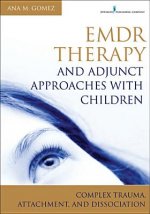
EMDR Therapy and Adjunct Approaches with Children
72.22 € -

Developmental Neuropsychology
62.84 € -

Sandtray Play in Education
17.75 € -

Attachment and Bonding
52.05 € -

Holodynamic State of Being
23.60 € -18 % -

Presence in a Conscious Universe
23.60 € -18 % -

Identity and the Life Cycle
13.11 € -22 % -
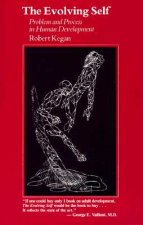
Evolving Self
63.14 € -13 % -
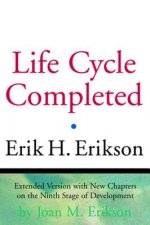
Life Cycle Completed
12.40 € -21 % -

Integrating Play Therapy and Emdr with Children
13.91 € -1 % -

Bright Kids Who Can't Keep Up
11.29 € -24 % -

Attachment
30.76 € -
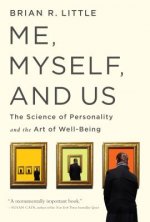
Me, Myself, and Us
14.72 € -25 % -

Early Trauma
28.24 € -1 % -
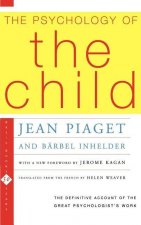
The Psychology of the Child
24.30 € -

Conscious Femininity
17.04 € -24 % -
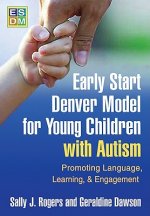
Early Start Denver Model for Young Children with Autism
77.87 € -
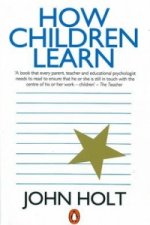
How Children Learn
13.41 € -27 % -
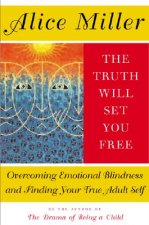
Truth Will Set You Free
13.11 € -26 % -
Tree of Knowledge
17.44 € -55 % -
Teachings of Dora Kalff
17.75 € -

Maturity
9.57 € -48 % -

Development of Children
100.67 € -1 % -

Fire Child, Water Child
16.74 € -25 % -

Disappearance of Childhood
12 € -25 % -

Bilingual
30.15 € -
NurtureShock
14.72 € -25 % -
Supporting the Highly Sensitive Child: Making Sense of Meltdowns
6.35 € -7 % -
Brain Child
17.04 € -24 % -
Understanding Deeper Developmental Needs
27.43 € -17 % -
Young Children's Drawings as a Mirror of Development
19.16 € -10 % -

ADHD
12.70 € -24 % -

Vygotsky for Educators
42.87 € -

Play in Childhood
55.58 € -

Curse of the Good Girl
13.11 € -26 %
Collection points Bratislava a 12730 dalších
Copyright ©2008-26 najlacnejsie-knihy.sk All rights reservedPrivacyCookies

 25464 collection points
 Delivery 2.99 €
 02/210 210 99 (8-15.30h)