Code: 06621627
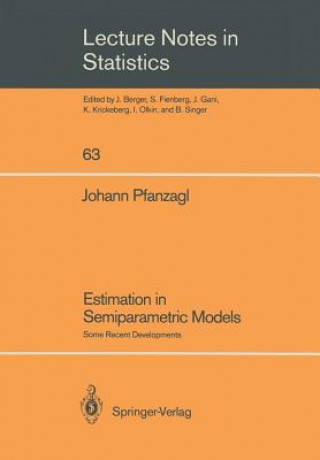
Estimation in Semiparametric Models
by Johann Pfanzagl
Assume one has to estimate the mean J x P( dx) (or the median of P, or any other functional t;;(P)) on the basis ofi.i.d. observations from P. Ifnothing is known about P, then the sample mean is certainly the best estimator one ca ... more


- Language:
 English
 - Binding: Paperback
- Number of pages: 112
Publisher: Springer-Verlag New York Inc., 1990
- More about this

55.81 €

Low in stock at our supplier
Shipping in 13 - 18 days
Potřebujete více kusů?Máte-li zájem o více kusů, prověřte, prosím, nejprve dostupnost titulu na naši zákaznické podpoře.
Add to wishlist
You might also like
-

Footwear Pattern Making and Last Design
41.14 € -

Ella auf Klassenfahrt
13.13 € -9 % -

Cesta za mistrovským doublem
5.96 € -27 % -

¡ME ABURRO!
7.27 € -9 % -

10 Minutes A Day Times Tables, Ages 9-11 (Key Stage 2)
7.67 € -24 % -

Analysis through Action for Actors and Directors
47.01 € -

The Spokane Killer: The Life of Serial Killer Robert Lee Yates Jr.
9.80 € -6 % -

Le Monstre
14.05 € -7 % -

Pinewood
11.72 € -

We Gon' Be Alright
15.76 € -9 % -

L'indagine. I casi di Theodore Boone. Vol 1
12.93 € -

Campagnes d'Egypte et de Syrie
46.50 € -

Academic Betrayal
7.88 € -24 % -

Muslim Education in the 21st Century
214.15 € -

Discourses on the Book of Ruth, and Other Important Subjects
24.97 € -24 % -

DE LUXE
34.87 € -

Birds
79.77 € -4 % -

Gözyasimin Agidiydi Seni Beklemek
20.11 € -4 % -

Mathematical Models in Contact Mechanics
92.21 € -

Kiddy Ditties 1
15.16 € -
Développer son autonomie affective
15.97 € -

Verständnis des Carbon Footprint
39.22 € -11 % -

Logan's Run
18.29 € -7 % -

Der Magnetmotor
30.93 € -4 % -

Private Cloud Computing
52.47 € -

My Heart I Give to Children
19.30 € -2 % -

How Not to Be Just Another Freelancer
9.80 € -6 % -

Un Petit Monde, Un Monde Parfait
22.84 € -

TIME WHISPERS
18.29 € -

Ask & Receive
36.39 € -
Annuaire de l'économie politique et de la statistique
88.77 € -14 % -

Best Man Speaker
19.20 € -7 % -

Description of the New Village of Waterloo ... Contiguous to the Regent's Park, Near Primrose Hill, in the County of Middlesex.
11.82 € -25 % -

Mandalas góticos y florales: Láminas antiestrés para colorear para adultos
8.99 € -7 % -

LIFE IN GOD'S FAVOUR, THE SUBSTANCE OF S
31.84 € -2 % -

Brother Love Runs Deep In These San Jose Streets
20.31 € -24 % -

High Flyer
17.08 € -24 % -

A Class of Leaders
13.94 € -9 % -

Examination Papers in Arithmetic
30.02 € -2 % -

Agatha and Agnes
28.30 € -1 % -

Der Einzelhandel im ländlichen Kirgistan
49.94 € -3 % -

Bigfoots in Paradise
12.02 € -24 % -
DANSE VILLAG. VL-PIANO VIOLON
11.82 € -
Day One: A Rom Com Feel Good Quarantine Romance
9.80 € -6 % -

Healing HIS Way
18.39 € -2 % -

A History Of The Early Settlement Of Highland County, Ohio (1890)
26.48 € -1 % -

A New World Arising
14.75 € -2 % -

ESCRITURA CON LETRA DE IMPRENTA +4 AÑOS VOLUMEN 2 A4 RUBIO
5.25 € -10 % -

The Pied Piper of Hamelin (Traditional Chinese): 01 Paperback Color
15.76 € -6 %
Give this book as a present today
- Order book and choose Gift Order.
- We will send you book gift voucher at once. You can give it out to anyone.
- Book will be send to donee, nothing more to care about.
More about Estimation in Semiparametric Models
You get 135 loyalty points
 Book synopsis
Assume one has to estimate the mean J x P( dx) (or the median of P, or any other functional t;;(P)) on the basis ofi.i.d. observations from P. Ifnothing is known about P, then the sample mean is certainly the best estimator one can think of. If P is known to be the member of a certain parametric family, say {Po: {) E e}, one can usually do better by estimating {) first, say by {)(n)(.~.), and using J XPo(n)(;r.) (dx) as an estimate for J xPo(dx). There is an "intermediate" range, where we know something about the unknown probability measure P, but less than parametric theory takes for granted. Practical problems have always led statisticians to invent estimators for such intermediate models, but it usually remained open whether these estimators are nearly optimal or not. There was one exception: The case of "adaptivity", where a "nonparametric" estimate exists which is asymptotically optimal for any parametric submodel. The standard (and for a long time only) example of such a fortunate situation was the estimation of the center of symmetry for a distribution of unknown shape.
Book details
Book category Books in English Mathematics & science Mathematics Probability & statistics
55.81 €
- Full title: Estimation in Semiparametric Models
- Subtitle: Some Recent Developments
- Author: Johann Pfanzagl
- Language: English
- Binding: Paperback
- Number of pages: 112
- EAN: 9780387972381
- ISBN: 9780387972381
- ID: 06621627
- Publisher: Springer-Verlag New York Inc.
- Weight: 223 g
- Dimensions: 242 × 170 × 7 mm
- Date of publishing: 07. March 1990
Trending among others
-

Naked Statistics
12.63 € -29 % -

Cambridge International AS & A Level Mathematics Probability and Statistics 1 Student's Book
32.65 € -

Statistical Thermodynamics
7.88 € -24 % -
An Introduction to Statistical Learning
120.42 € -

Probability and Computing
78.15 € -
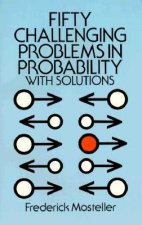
Fifty Challenging Problems in Probability with Solutions
8.58 € -24 % -

How to Lie with Statistics
10.61 € -25 % -

How to Lie with Statistics
12.93 € -30 % -
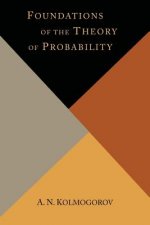
Foundations of the Theory of Probability
9.90 € -
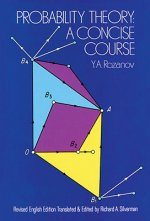
Probability Theory
7.88 € -24 % -
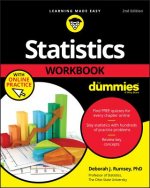
Statistics Workbook For Dummies, 2nd Edition with Online Practice
17.38 € -28 % -

Statistics Done Wrong
23.85 € -5 % -

Manga Guide To Statistics
18.29 € -24 % -
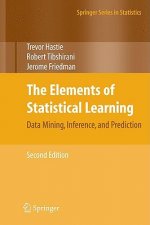
Elements of Statistical Learning
86.54 € -

Manga Guide To Regression Analysis
18.49 € -26 % -

Theory That Would Not Die
18.49 € -
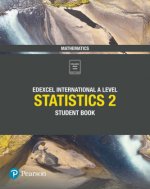
Pearson Edexcel International A Level Mathematics Statistics 2 Student Book
39.53 € -

Collected Works of C.G. Jung
20.31 € -24 % -

Probability Theory
143.27 € -
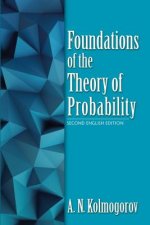
Foundations of the Theory of Probability: Second English
11.82 € -25 % -

Unfinished Game
23.25 € -

Probability Essentials
70.57 € -9 % -

Philosophy and Probability
28.71 € -

Multivariate Analysis of Ecological Data with ade4
90.69 € -9 % -
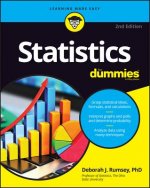
Statistics For Dummies, 2nd Edition
18.29 € -24 % -
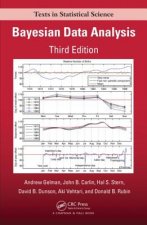
Bayesian Data Analysis
116.48 € -
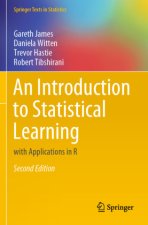
Introduction to Statistical Learning
60.56 € -9 % -

Introduction to Probability, Second Edition
107.58 € -
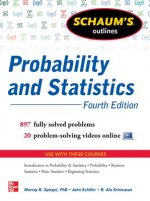
Schaum's Outline of Probability and Statistics
18.90 € -25 % -
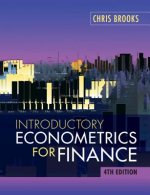
Introductory Econometrics for Finance
73.20 € -
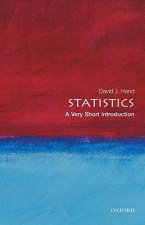
Statistics: A Very Short Introduction
10 € -24 % -

First Course in Probability, Global Edition
87.96 € -7 % -
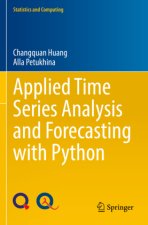
Applied Time Series Analysis and Forecasting with Python
80.58 € -9 % -
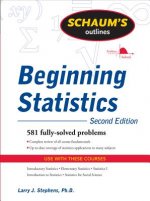
Schaum's Outline of Beginning Statistics, Second Edition
30.53 € -17 % -
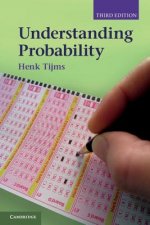
Understanding Probability
73.30 € -
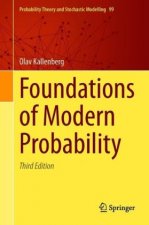
Foundations of Modern Probability
100.70 € -9 % -
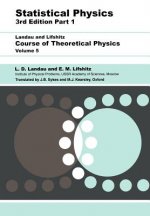
Statistical Physics
83.31 € -
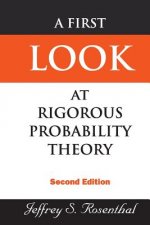
First Look At Rigorous Probability Theory, A (2nd Edition)
34.17 € -
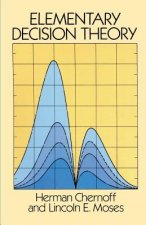
Elementary Decision Theory
16.78 € -25 % -
Basic Probability Theory
16.78 € -25 % -
Modern Statistics
80.58 € -9 % -
Practice of Statistics for Business and Economics
99.89 € -1 % -
Analytic Combinatorics
115.56 € -

Choosing and Using Statistics - A Biologists' Guide 3e
43.98 € -5 % -
Practical Nonparametric Statistics 3e
277.75 € -
Probability with R - An Introduction with Computer Science Applications, Second Edition
111.01 € -2 % -

Intermediate Probability - A Computational Approach
151.87 € -10 % -
Bayesian Analysis with Python
53.58 € -1 % -
Discovering Statistics Using R
68.04 € -10 %
Collection points Bratislava a 12839 dalších
Copyright ©2008-26 najlacnejsie-knihy.sk All rights reservedPrivacyCookies

 25682 collection points
 Delivery 2.99 €
 02/210 210 99 (8-15.30h)