Code: 05136617
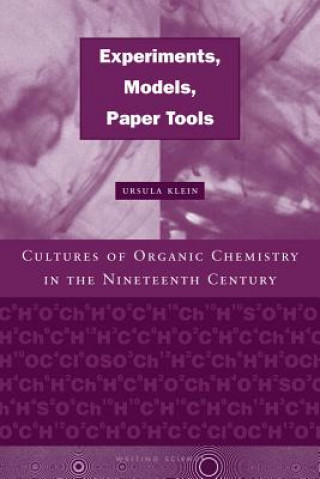
Experiments, Models, Paper Tools
by Ursula Klein
In the early nineteenth century, chemistry emerged in Europe as a truly experimental discipline. What set this process in motion, and how did it evolve? Experimentalization in chemistry was driven by a seemingly innocuous tool: th ... more


- Language:
 English
 - Binding: Hardback
- Number of pages: 320
Publisher: Stanford University Press, 2002
- More about this


You might also like
-
Therapeutic Interventions for Musculoskeletal Conditions
130.58 € -

5 perc angol nyelvtan
27.71 € -

Chemistry Lessons
16.68 € -1 % -

Applied Anatomy for Anaesthesia and Intensive Care
121.78 € -

Friends 1 (Global) Activity Book
36.20 € -
Combined-Cycle Gas & Steam Turbine Power Plants
147.88 € -

Wilderness Pleasures: A Practical Guide to Camping Bliss
22.85 € -9 % -

La Stratonice, Ou Le Malade d'Amour: Tragi-Comedie
16.58 € -

Emotional Inflammation: Discover Your Triggers and Reclaim Your Equilibrium During Anxious Times
21.94 € -26 % -

Boa's Bad Birthday
7.68 € -24 % -
Discovery of Small-Molecule Modulators of Protein-RNA Interactions for Treating Cancer and COVID-19
174.89 € -7 % -

Gabriel Warlock: Book I of the Warlock Mysteries
9.80 € -6 % -

Old and New London: The Southern Suburbs
39.14 € -1 % -

La soledad
21.84 € -

Rantzau
15.26 € -10 % -

Bug Independent Fiction Year Two Orange B Adventure Kids: Escape in Egypt
10.71 € -

Inquiry Into the Nature and Causes of the Wealth of Nations
28.31 € -2 % -

Pat Thomas & Kwashibu Area Band
12.94 € -28 % -

Ernährungstrends
15.97 € -16 % -
Examen chartaceae Lutheranorum Concordiae
59.27 € -5 % -

Innovation in Law Firms
199.47 € -10 %
Give this book as a present today
- Order book and choose Gift Order.
- We will send you book gift voucher at once. You can give it out to anyone.
- Book will be send to donee, nothing more to care about.
More about Experiments, Models, Paper Tools
You get 230 loyalty points
 Book synopsis
In the early nineteenth century, chemistry emerged in Europe as a truly experimental discipline. What set this process in motion, and how did it evolve? Experimentalization in chemistry was driven by a seemingly innocuous tool: the sign system of chemical formulas invented by the Swedish chemist Jacob Berzelius. By tracing the history of this "paper tool," the author reveals how chemistry quickly lost its orientation to natural history and became a major productive force in industrial society. These formulas were not merely a convenient shorthand, but productive tools for creating order amid the chaos of early nineteenth-century organic chemistry. With these formulas, chemists could create a multifaceted world on paper, which they then correlated with experiments and the traces produced in test tubes and flasks. The author's semiotic approach to the formulas allows her to show in detail how their particular semantic and representational qualities made them especially useful as paper tools for productive application.
Book details
Book category Books in English Mathematics & science Chemistry Organic chemistry
94.98 €
- Full title: Experiments, Models, Paper Tools
- Subtitle: Cultures of Organic Chemistry in the Nineteenth Century
- Author: Ursula Klein
- Language: English
- Binding: Hardback
- Number of pages: 320
- EAN: 9780804743594
- ISBN: 0804743592
- ID: 05136617
- Publisher: Stanford University Press
- Weight: 574 g
- Dimensions: 158 × 236 × 32 mm
- Date of publishing: 30. December 2002
Trending among others
-
Organic Chemistry
88.40 € -11 % -

Organic Chemistry
111.77 € -
Molecular Model Set for Organic Chemistry
33.68 € -

Strategic Applications of Named Reactions in Organic Synthesis
119.36 € -5 % -
Injection Molding Handbook
82.43 € -7 % -
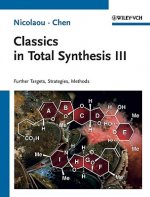
Classics in Total Synthesis III - Further Targets, Strategies, Methods
114.80 € -

Aromatic Heterocyclic Chemistry
28.52 € -
Solutions Manual to accompany Organic Chemistry
69.18 € -11 % -

Advanced Organic Chemistry
100.64 € -
Organic Chemistry: A Very Short Introduction
10 € -24 % -
3000 Solved Problems in Organic Chemistry
40.25 € -18 % -

Modern Physical Organic Chemistry
171.45 € -
Molecular Orbitals and Organic Chemical Reactions - Student Edition
62 € -
Schaum's Outline of Organic Chemistry
25.38 € -19 % -

Organic Chemistry of Biological Pathways
124.51 € -

Atmospheric Chemistry and Physics: From Air Pollut ion to Climate Change, Third Edition
150.01 € -
Heterocyclic Chemistry 5e
64.63 € -
Advanced Organic Chemistry
111.47 € -

Organ Music for Manuals Only
15.77 € -9 % -
How to Succeed in Organic Chemistry
38.03 € -
pKa Prediction for Organic Acids and Bases
55.83 € -
Molymod MMS-003
53.40 € -
Advanced Organic Chemistry
70.80 € -8 % -
Organic Chemistry I For Dummies, 2nd Edition
18.30 € -24 % -
March's Advanced Organic Chemistry - Reactions, Mechanisms, and Structure, Eighth Edition
224.15 € -
Organic Synthesis - The Disconnection Approach 2e
47.33 € -4 % -

Organic Synthesis - Strategy and Control
77.48 € -

Workbook for Organic Synthesis: The Disconnection Approach
55.42 € -10 % -
Organic Chemistry: 100 Must-Know Mechanisms
64.43 € -24 % -

Fundamentals of Organic Chemistry, International Edition
112.98 € -
Way of Synthesis - Evolution of Design and Methods for Natural Products
110.35 € -
Organic Chemistry Fundamentals
12.94 € -
Student Solutions Manual for Modern Physical Organic Chemistry
75.35 € -
Polymer Chemistry
80.61 € -9 % -
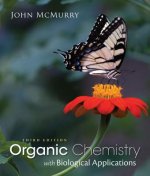
Organic Chemistry with Biological Applications
123.20 € -

Workbook for Organic Synthesis - Strategy and Control
67.16 € -

Organometallics and Catalysis: An Introduction
66.45 € -

CCEA AS Unit 2 Chemistry Student Guide: Further Physical and Inorganic Chemistry and an Introduction to Organic Chemistry
17.39 € -
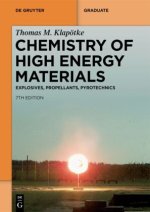
Chemistry of High Energy Materials
74.04 € -24 % -
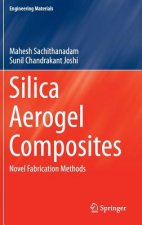
Silica Aerogel Composites
102.97 € -7 % -

Organic Stereochemistry
46.32 € -
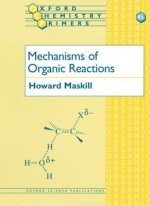
Mechanisms of Organic Reactions
46.32 € -

Nonlinear Optical Effects and Materials
51.68 € -7 % -

Amino Acids and Proteins for the Athlete: The Anabolic Edge
254.40 € -
Process Development
38.13 € -
Study Guide and Solutions Manual for Organic Chemistry, Global Edition
98.72 € -
Side Reactions in Peptide Synthesis
107.52 € -
Organic Chemistry
138.58 € -
Organotransition Metal Chemistry: From Bonding to Catalysis
148.29 €
Collection points Bratislava a 12880 dalších
Copyright ©2008-26 najlacnejsie-knihy.sk All rights reservedPrivacyCookies

 25764 collection points
 Delivery 2.99 €
 02/210 210 99 (8-15.30h)