Code: 04866879
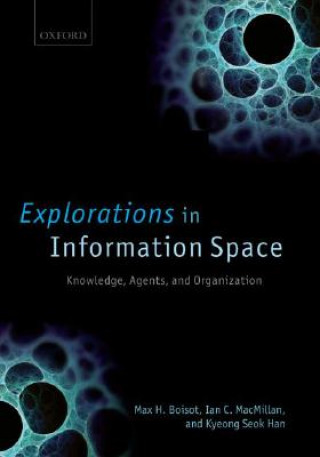
Explorations in Information Space
by Max Boisot, Ian C. MacMillan, Kyeong Seok Han
With the rise of the knowledge economy, the knowledge content of goods and services is going up just as their material content is declining. Economic value is increasingly seen to reside in the former - that is, in intangible asse ... more


- Language:
 English
 - Binding: Hardback
- Number of pages: 242
Publisher: Oxford University Press, 2007
- More about this


You might also like
-

Murdoku
10.53 € -31 % -

Threshing Day (Wing and Claw Collection)
17.83 € -29 % -

Berserk Deluxe Volume 1
39.01 € -26 % -

Threshing Day (Limited Deluxe Edition)
21.07 € -29 % -

White Nights
4.55 € -14 % -

Berserk Deluxe Volume 2
36.37 € -31 % -
The Odyssey
14.99 € -20 % -

What Happened Yesterday
15.70 € -27 % -

Kid's Box New Generation Level 2 Activity Book with Digital Pack British English
10.83 € -9 % -
Onyx Storm (Deluxe Limited Edition) (The Empyrean, 3)
24.21 € -25 % -

Berserk Deluxe Volume 3
55.53 € -

Dancing The Dream
21.58 € -25 % -

The Count of Monte Cristo
13.87 € -
Kid's Box New Generation Level 1 Activity Book with Digital Pack British English
11.24 € -5 % -

Jojo's Bizarre Adventure: Part 7--Steel Ball Run, Vol. 8
18.13 € -25 % -

Kid's Box New Generation Level 2 Pupil's Book with eBook British English
20.36 € -

Iron Flame
24.82 € -23 % -

Fourth Wing
23.81 € -26 % -

The Score
12.35 € -9 % -

Yesteryear
16.10 € -13 % -
Kid's Box New Generation Level 3 Activity Book with Digital Pack British English
11.24 € -5 %
Give this book as a present today
- Order book and choose Gift Order.
- We will send you book gift voucher at once. You can give it out to anyone.
- Book will be send to donee, nothing more to care about.
More about Explorations in Information Space
You get 280 loyalty points
 Book synopsis
With the rise of the knowledge economy, the knowledge content of goods and services is going up just as their material content is declining. Economic value is increasingly seen to reside in the former - that is, in intangible assets - rather than in the latter. Yet we keep wanting to turn knowledge back into something tangible, something with definite boundaries which can be measured, manipulated, appropriated, and traded. In short, we want to reify knowledge. Scholars have been debating the nature of knowledge since the time of Plato. Many new insights have been gained from these debates, but little theoretical consensus has been achieved. Through six thematically linked chapters, the book articulates the theoretical approach to the production and distribution of knowledge that underpins Max Boisot's conceptual framework, the Information Space or I-Space. In this way the book looks to provide theoretical and practical underpinnings to Boisot's book Knowledge Assets (OUP, 1998). Following an introductory chapter, how knowledge relates to data and information is first examined in chapter 1, and how different economic actors - entrepreneurs, managers, etc - use knowledge as a basis for action is explored in chapter 2. Chapter 3 looks at how the heterogeneity of economic actors arises naturally from their respective data processing strategies in spite of any similarities in the data that they might share. Chapter 4 argues, contra much transaction-based economics, that an organizational order must have preceded a market order, something that should be reflected in any knowledge-based theory of the firm. Chapter 5 discusses the cultural and institutional significance of different kinds of knowledge flows. Finally, chapter 6 presents an agent-based simulation model, SimISpace, that illustrates how the I-Space might be applied to concrete problems such those of intellectual property rights. A concluding chapter proposes a research agenda based on the theorizing developed in the book. The approach the book sets out is used by a whole range of organizations to issues of knowledge management, policy, economics, and organizational and cultural change.
Book details
Book category Books in English Humanities Philosophy Philosophy: epistemology & theory of knowledge
115.93 €
- Full title: Explorations in Information Space
- Subtitle: Knowledge, Agents, and Organization
- Author: Max Boisot, Ian C. MacMillan, Kyeong Seok Han
- Language: English
- Binding: Hardback
- Number of pages: 242
- EAN: 9780199250875
- ISBN: 0199250871
- ID: 04866879
- Publisher: Oxford University Press
- Weight: 502 g
- Dimensions: 242 × 165 × 16 mm
- Date of publishing: 27. December 2007
Collection points Bratislava a 13292 dalších
Copyright ©2008-26 najlacnejsie-knihy.sk All rights reservedPrivacyCookies

 26588 collection points
 Delivery 2.99 €
 02/210 210 99 (8-15.30h)