Code: 04035038
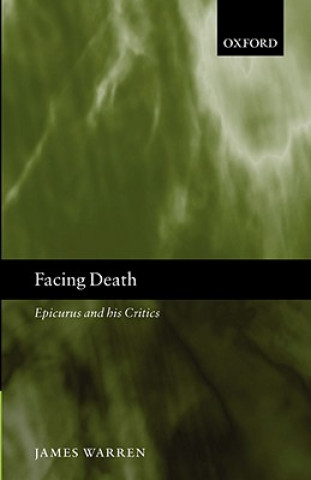
Facing Death
by James Warren
The ancient philosophical school of Epicureanism tried to argue that death is 'nothing to us'. Were they right? James Warren provides a comprehensive study and articulation of the interlocking arguments against the fear of death f ... more


- Language:
 English
 - Binding: Paperback
- Number of pages: 252
Publisher: Oxford University Press, 2006
- More about this


You might also like
-

Cambridge Lower Secondary English Workbook 7 with Digital Access (1 Year)
19.14 € -

The $12 Million Stuffed Shark
11.14 € -29 % -

A Lady of Persuasion
7.29 € -24 % -

Na úsvite
13.47 € -21 % -

Сорока 2. Русский язык для детей. Книга для учителя / Soroka 2. Russian for Kids. Teacher's Book.
29.58 € -12 % -

Valentine Day Coloring Book
10.02 € -24 % -

Zuckerman Unbound
21.68 € -

The Breastfeeding Relationship and Children's Social and Emotional Development
45.90 € -
Polynomial and Rational Matrices
216.87 € -

English Defence
15.80 € -20 % -

A Treatise on Good Works
9.52 € -7 % -
Elements of Marine Ecology
103.16 € -7 % -

Acromial Morphology and Development of Subacromial Lesions
49.04 € -2 % -

Mercadeo de Bibliotecas Universitarias
49.95 € -14 % -

Uterine Endometrial Function
100.93 € -9 % -

Helmet Man
12.15 € -2 % -

Ruffly Speaking
6.37 € -25 % -
Information and Knowledge
185.96 € -

General Boulanger: Reflexions Et Pensees: Extraites de Ses Papiers (Ed.1891)
22.89 € -5 % -

Psyche and the Social World
72.15 € -

Londonopolis
14.38 € -9 % -

Trafficking Women in Korea
234 € -

Ethical Space Vol. 21 Issue 1
31.31 € -

Site and Vegetation Development after Coal Mine Reclamation in Kalimantan, Indonesia
62.32 € -14 % -

Annual Review of Health Care Management
144.91 € -

Wartime and Peacetime Inflation in Austria-Hungary and Italy (1914-1925)
46.81 € -

Tug Is the Drug
22.89 € -9 % -

New air lift System for waters desalination
55.22 € -14 % -

NO MORIRE CAZADO
20.36 € -

Before the Committee on Judiciary United States House of Representatives
13.27 € -25 % -

Complete Latin Grammar
41.85 € -2 % -

Feminism and the Classroom Teacher
73.97 € -

When Katrina Stood Down We Came Running, But Rita Tripped Us
13.06 € -1 % -

Bulletin
48.23 € -1 % -

It Happened on Purpose: Value Yourself Without Being Full of Yourself
14.08 € -6 %
Give this book as a present today
- Order book and choose Gift Order.
- We will send you book gift voucher at once. You can give it out to anyone.
- Book will be send to donee, nothing more to care about.
More about Facing Death
You get 235 loyalty points
 Book synopsis
The ancient philosophical school of Epicureanism tried to argue that death is 'nothing to us'. Were they right? James Warren provides a comprehensive study and articulation of the interlocking arguments against the fear of death found not only in the writings of Epicurus himself, but also in Lucretius' poem "De rerum natura" and in Philodemus' work "De morte". These arguments are central to the Epicurean project of providing ataraxia (freedom from anxiety), and therefore central to an understanding of Epicureanism as a whole. They also offer significant resources for modern discussions of the value of death - one which stands at the intersection of metaphysics and ethics. If death is the end of the subject, and the subject can not be benefited nor harmed after death, is it reasonable nevertheless to fear the ceasing-to-be? If the Epicureans are not right to claim that the dead can neither be benefited nor harmed, what alternative models might be offered for understanding the harm done by death and do these alternatives suffer from any further difficulties? The discussion involves consideration of both ethical and metaphysical topics, since it requires analysis not only of the nature of a good life, but also the nature of personal identity and time. A number of modern philosophers have offered criticisms or defences of the Epicureans' views. Warren explores and evaluates these in the light of a systematic and detailed study of the precise form and intention of the Epicureans' original arguments. Warren argues that the Epicureans also were interested in showing that mortality is not to be regretted and that premature death is not to be feared. Their arguments for these conclusions are to be found in their positive conception of the nature of a good and complete life, which divorce the completeness of a life as far as possible from considerations of its duration. Later chapters investigate the nature of a life lived without the fear of death and pose serious problems for the Epicureans being able to allow any concern for the post mortem future and being able to offer a positive reason for prolonging a life which is already complete in their terms.
Book details
Book category Books in English Humanities Philosophy History of Western philosophy
97.18 €
- Full title: Facing Death
- Author: James Warren
- Language: English
- Binding: Paperback
- Number of pages: 252
- EAN: 9780199297696
- ISBN: 019929769X
- ID: 04035038
- Publisher: Oxford University Press
- Weight: 306 g
- Dimensions: 217 × 143 × 14 mm
- Date of publishing: 18. May 2006
Trending among others
-

Meditations
8.40 € -28 % -

The Republic
10.63 € -20 % -

Nausea
11.75 € -14 % -

Why I Am so Clever
3.74 € -24 % -

Discourses and Selected Writings
14.18 € -4 % -

Beyond Good and Evil
10.02 € -24 % -

Ride the Tiger
18.94 € -22 % -
Letters from a Stoic
13.16 € -8 % -

The Myth of Sisyphus
9.92 € -9 % -

Aphorisms on Love and Hate
4.65 € -14 % -
Phenomenology of Spirit
17.62 € -24 % -

The Sickness Unto Death
11.54 € -26 % -

Either/Or
16 € -25 % -
Plato: Five Dialogues
16.71 € -10 % -

Fear and Trembling
12.05 € -23 % -

Think
13.47 € -27 % -

Leviathan
6.58 € -25 % -
Simulacra and Simulation
21.07 € -

Human, All Too Human & Beyond Good and Evil
6.17 € -30 % -

Intellectual Life
16.81 € -25 % -

Aquinas
11.04 € -30 % -
The Symposium
8.81 € -28 % -

Human Condition
23.40 € -7 % -

Beyond Good and Evil
15.70 € -30 % -
Nicomachean Ethics
6.17 € -30 % -
Last Days of Socrates
11.85 € -24 % -

Dialogues and Essays
10.43 € -24 % -
Existentialism and Humanism
11.54 € -19 % -
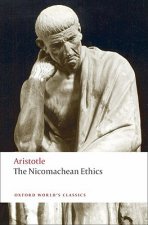
Nicomachean Ethics
11.34 € -12 % -

Enquiry concerning Human Understanding
10.53 € -29 % -

Beyond Good & Evil
11.34 € -25 % -
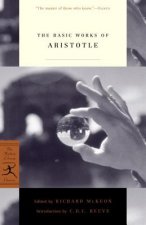
Basic Works of Aristotle
18.94 € -25 % -

Essays and Aphorisms
16 € -29 % -
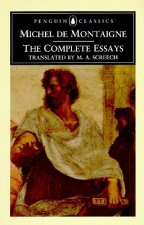
Complete Essays
20.66 € -26 % -

Meditations
8.10 € -30 % -

On Liberty, Utilitarianism and Other Essays
10.43 € -24 % -

Essays and Aphorisms
12.86 € -24 % -

New History of Western Philosophy
23.50 € -24 % -

Fragments
12.05 € -25 % -

Art of Travel
15.70 € -10 % -

Fear and Trembling
8.50 € -
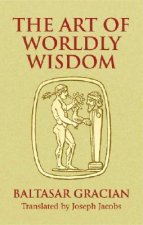
Art of Worldly Wisdom
8.60 € -24 % -

Thus Spoke Zarathustra
10.63 € -29 % -

Gorgias
7.19 € -25 % -

Existentialism Is a Humanism
9.92 € -19 % -
Letters on Ethics - To Lucilius
48.94 € -

Being and Event
32.22 € -4 % -
Language, Truth and Logic
9.31 € -30 % -

Works of Love
11.85 € -24 %
Collection points Bratislava a 13299 dalších
Copyright ©2008-26 najlacnejsie-knihy.sk All rights reservedPrivacyCookies

 26602 collection points
 Delivery 2.99 €
 02/210 210 99 (8-15.30h)