
Code: 06821776
Failed Transition?
by Artashes Boyajian
Using the two-level game model first proposed by §Robert Putnam in 1988, this book analyzes the impact §of domestic variables (ethnic composition, §institutional constraints, economic development, and §the civil society) on shapin ... more


- Language:
 English
 - Binding: Paperback
- Number of pages: 60
Publisher: VDM Verlag, 2009
- More about this

48.89 €
RRP: 49.91 €
You save 1.02 €

In stock at our supplier
Shipping in 9 - 15 days
You might also like
-

Decameron
17.06 € -24 % -

Dragon Ball Ultimate nº 09/34
13.73 € -4 % -

Věštění pro začátečníky
10.09 € -33 % -

Objavovanie s baterkou Divé zvieratá
6.25 € -37 % -

Pastele olejne 36 kolorów
6.15 € -7 % -

Ejercicios apra la recuperación de la dislexia-3
32.83 € -

Protocols for Multislice CT
160.83 € -9 % -
![And They Two. [A Novel.]](https://media.libris.to/jacket/08005052t.jpg "And They Two. [A Novel.]")
And They Two. [A Novel.]
24.24 € -25 % -

Soigner par la mort est-il encore un soin ?
22.92 € -

Teletrabajar bien
15.45 € -

BOOSEY WOODWIND METHOD VOL B
21 € -

Institutional Imperative
146.69 € -

The Impostures of Scapin
15.65 € -2 % -

THE GARDEN OF VISION: A STORY OF GROWTH
48.08 € -1 % -

The Ancient Isle
8.88 € -6 % -

Focus on Bio-Image Informatics
102.84 € -7 % -

Intelligent Computing Systems and Applications
133.66 € -7 % -
![Kleine Erzählungen (Hörbuch [MP3])](https://media.libris.to/jacket/45295295t.jpg "Kleine Erzählungen (Hörbuch [MP3])")
Kleine Erzählungen (Hörbuch [MP3])
7.67 € -

US Foreign Policy since 1945
199.53 € -

L’atomium français
10.09 € -

Los derechos sociales en el constitucionalismo de mercado : aporías de la dimensión social en la Unión Europea
21.31 € -

Agrar-Rebellion Jetzt
22.52 € -14 % -

Boswell's Life of Johnson
36.36 € -2 % -

Teaching, Research and Academic Careers
41.31 € -7 % -

The Saint's Magic Power is Omnipotent: The Other Saint 04
6.56 € -13 % -

EL SEGURO DE RENTA VITALICIA Y LA HERENCIA 2 EDICION
22.01 € -

Pusher and the Sufferer
53.94 € -

Histoire Generale Des Voyages V23 (1777)
39.09 € -1 % -

Cornell Notes: Fashion Plaid Cover - Best Note Taking System for Students, Writers, Conferences. Cornell Notes Notebook. Large 8.5 x
6.36 € -7 % -

Understanding Ripeness in Kashmir
49.90 € -3 % -

Beckett Baseball Almanac #29
35.35 € -25 % -

Les Medications Thyroidiennes
20.20 € -2 % -

Hitler Youth, Gristle for the Reich's Mill
43.33 € -

Effectiveness of a First-Year Learning Strategies Seminar
53.33 € -14 % -

L'automobile et le défi électrique
25.25 € -

Pain de Paris, pain de Gonesse - La boulangerie foraine en pays de France sous l'Ancien Régime
34.44 € -

Nada tan amargo : seis poetas inglesas de la Primera Guerra Mundial
22.52 € -

Stromhandel und staatliche Ordnungspolitik
84.86 € -

Oeuvres completes. Tome 2
33.53 € -

A Series of Pamphlets on the Doctrines of the Gospel (Deseret Alphabet edition)
14.03 € -7 % -

Tragic Joy
20.30 € -

Advances in Materials Science Research
244.29 € -9 %
Give this book as a present today
- Order book and choose Gift Order.
- We will send you book gift voucher at once. You can give it out to anyone.
- Book will be send to donee, nothing more to care about.
More about Failed Transition?
You get 118 loyalty points
 Book synopsis
Using the two-level game model first proposed by §Robert Putnam in 1988, this book analyzes the impact §of domestic variables (ethnic composition, §institutional constraints, economic development, and §the civil society) on shaping the policy of §intervention in the Nagorno-Karabakh conflict in the §early 1990s by Armenia s first democratically §elected leaders. Then it looks at how the conflict §in Nagorno-Karabakh, in turn, affected the §trajectory of Armenia s transition to democracy. The §discussion of a number of domestic factors §contributing to the failure of democratic §consolidation in post-Soviet Armenia follows. §Parallels are drawn between Armenia and two other §post-socialist countries in the conflict situation, §Yugoslavia and Czechoslovakia, with specific §emphasis on quality of leadership of the elites. §Finally, two early successful anti-communist §democratizers, Armenia and Poland, are compared, and §the later divergence of their political paths is §analyzed.
Book details
Book category Books in English Society & social sciences Politics & government Comparative politics
48.89 €
- Full title: Failed Transition?
- Subtitle: The Nagorno-Karabakh Conflict and Armenia's Transition to Democracy
- Author: Artashes Boyajian
- Language: English
- Binding: Paperback
- Number of pages: 60
- EAN: 9783639130379
- ISBN: 3639130375
- ID: 06821776
- Publisher: VDM Verlag
- Weight: 108 g
- Dimensions: 228 × 157 × 5 mm
- Date of publishing: 26. February 2009
Trending among others
-

Narrow Corridor
12.21 € -30 % -

Origins of Political Order
14.44 € -29 % -

Caucasus
17.57 € -24 % -

Compleat Anti-Antifa Handbook
17.27 € -2 % -

New Silk Roads
15.35 € -6 % -

Politics of the European Union
33.94 € -16 % -
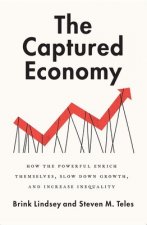
Captured Economy
16.86 € -24 % -

Principles of Roman Law and Their Relation to Modern Law
41.72 € -2 % -

Rule of the Clan
16.16 € -25 % -

An Abandoned Past
43.13 € -4 % -

Understanding Third World Politics
60.61 € -

Don't Burn This Book
16.05 € -24 % -

Encyclopedic Dictionary of Roman Law
55.25 € -1 % -

Salafism in the Maghreb
34.34 € -

India-Pakistan Conflict
42.02 € -

Public Management Reform
76.37 € -

Comparative Politics
52.43 € -

Left and Right in Global Politics
38.28 € -

Chronicles of the Egyptian Revolution and its Aftermath: 2011-2016
42.93 € -

'68
13.12 € -25 % -

Language of Contention
33.53 € -

Cities, Business, and the Politics of Urban Violence in Latin America
79.30 € -

Europeanization of Politics
42.02 € -

Faith in Moderation
45.86 € -
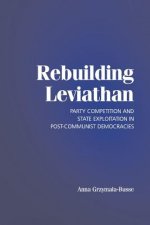
Rebuilding Leviathan
39.70 € -

Beyond the Nation-State
59.70 € -2 % -

Encyclopedic Dictionary of Roman Law
42.93 € -

Principles of Roman Law and Their Relation to Modern Law
59.70 € -2 % -

Law Collections from Mesopotamia and Asia Minor
29.59 € -

Contemporary France
21.41 € -55 % -

National Origins of Policy Ideas
45.56 € -

Foundations of Comparative Politics
142.44 € -

Global Rise of Populism
110.42 € -

Honest Broker
128.40 € -

Politics of the European Union
122.84 € -

Quest for Good Governance
34.44 € -

European Politics
48.08 € -

Honest Broker
53.33 € -

Democracy's Resilience to Populism's Threat
38.28 € -

Power-sharing in the Divided Asian Societies
62.63 € -

Governance, Politics and the State
50.40 € -

Principles of Comparative Politics (International Student Edition)
87.48 € -9 % -

Exploring Ukrainian Politics
130.73 € -9 % -

Foundations of Comparative Politics
57.58 € -

Justice of Constantine
95.26 € -

Logic of Violence in Civil War
43.94 € -

Tocqueville
66.77 € -

What's the Matter with Liberalism?
94.86 € -9 % -

Politics and Society in Hungary
92.64 € -7 %
Collection points Bratislava a 12770 dalších
Copyright ©2008-26 najlacnejsie-knihy.sk All rights reservedPrivacyCookies

 25544 collection points
 Delivery 2.99 €
 02/210 210 99 (8-15.30h)