Code: 08138219
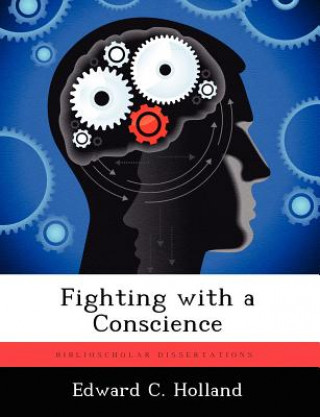
Fighting with a Conscience
by Edward C Holland
In the 1930s air leaders and theorists at the Air Corps Tactical School developed a new concept for strategic bombing that sought victory through attacks on an enemy's war-making potential instead of its deployed forces. School of ... more


- Language:
 English
 - Binding: Paperback
- Number of pages: 48
Publisher: Biblioscholar, 2012
- More about this

13.82 €
RRP: 14.14 €
You save 0.33 €

In stock at our supplier
Shipping in 14 - 21 days
You might also like
-
W lesie. Moje pierwsze słowa
2.51 € -11 % -
Feedback Control for Computer Systems
39.15 € -
Moderní indická kuchařka
16.14 € -20 % -
Linguistics For Dummies
14.73 € -25 % -
League Of Extraordinary Gentlemen: Century 1910
6.55 € -25 % -
Arracourt 1944
19.47 € -22 % -
Quella stratopica vacanza alla pensione Mirasorci...
11.70 € -

Sirene
32.59 € -9 % -
Human Group
527.24 € -

What Every Manager Should Know about Big Data and Data Science
12.30 € -7 % -

Wives and Daughters: An Every-Day Story
12.30 € -7 % -

Multitalent Zink
7.36 € -8 % -

Esoterismo Gitano
7.26 € -

Tres historias y tres microrrelatos sorprendentes de música y músicos (segunda edición)
16.95 €
Give this book as a present today
- Order book and choose Gift Order.
- We will send you book gift voucher at once. You can give it out to anyone.
- Book will be send to donee, nothing more to care about.
More about Fighting with a Conscience
You get 34 loyalty points
 Book synopsis
In the 1930s air leaders and theorists at the Air Corps Tactical School developed a new concept for strategic bombing that sought victory through attacks on an enemy's war-making potential instead of its deployed forces. School officials believed such attacks directed against a country's economic "vital centers" or "industrial web" would destroy not only the ability to wage war but the will to fight as well. The concept also reflected a uniquely American sense of morality, as it included the notion that capability and will could be destroyed without directly attacking civilians. Those ideas coalesced into the doctrine for the strategic bombing campaigns of World War II. That doctrine influenced both strategy and tactics and in the process made the American air effort predictable. The bombing campaigns against Germany and Japan were remarkably similar, although conducted in different areas of the world under unique circumstances. Air leaders in both theaters initially relied on high-altitude, daylight precision attacks directed at the enemy's industrial web. When faced with similar problems of poor weather, inaccurate bombing, deadly defenses, and surprisingly resilient enemies, they resorted to less precise bombing methods. Even then air commanders refused to abandon their humanitarian principles. The attacks continued against industrial web targets, but with more indiscriminate methods that were nonetheless motivated by the desire to shorten the war and save lives on both sides. The emphasis on morality remained part of America's strategic bombing doctrine after the war. Air leaders directing bombing campaigns against North Korea, North Vietnam, and Iraq faithfully ascribed to the industrial web theory, attacking similar targets in each conflict in predictable fashion--with bombing methods designed to avoid civilian casualties. Each campaign appeared successful, employing increasingly accurate bombing methods that improved effectiveness while reducing civilian cas
Book details
Book category Books in English Society & social sciences Education
13.82 €
- Full title: Fighting with a Conscience
- Author: Edward C Holland
- Language: English
- Binding: Paperback
- Number of pages: 48
- EAN: 9781249450795
- ISBN: 9781249450795
- ID: 08138219
- Publisher: Biblioscholar
- Weight: 104 g
- Dimensions: 246 × 189 × 3 mm
- Date of publishing: 20. September 2012
Trending among others
-
Oxford IB Diploma Programme: IB Theory of Knowledge Course Book
68.52 € -
Cambridge IGCSE (R) & O Level Complete Physics: Student Book Fourth Edition
46.92 € -
Imagine If...
12.30 € -29 % -
Deutsch Ferienhefte - 2. Klasse - Volksschule
10.08 € -8 % -
Oxford International Primary Maths Second Edition: Student Book 5
31.58 € -
KS3 Maths 10-Minute Weekly Workouts - Year 7
8.97 € -15 % -

Mathematik Ferienhefte - Volksschule - 2. Klasse
9.88 € -10 % -
Cambridge IGCSE (R) & O Level Complete Chemistry: Student Book Fourth Edition
46.92 € -
Blue Book of Grammar and Punctuation: An Easy- to-Use Guide with Clear Rules, Real-World Examples , and Reproducible Quizzes, Twelfth Edition
14.83 € -24 % -
Maria Montessori's Erdkinder
40.36 € -5 % -
Oxford IB Diploma Programme: IB Economics Course Book
71.75 € -4 % -

Oet Pharmacy Prep: Speaking Sub-Test
21.89 € -1 % -
geog.2 Workbook
13.11 € -
KS3 Maths 10-Minute Weekly Workouts - Year 8
8.97 € -15 % -
Pearson Edexcel AS and A level Mathematics Statistics & Mechanics Year 1/AS Textbook + e-book
21.69 € -
Pearson Edexcel International GCSE (9-1) English Language B Student Book
58.83 € -
Richard NongardOs Big Book of Hypnosis Scripts
27.34 € -2 % -
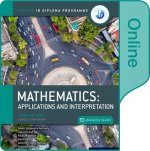
Oxford IB Diploma Programme: Oxford IB Diploma Programme: IB Mathematics: applications and interpretation Standard Level Enhanced Online Course Book
94.56 € -
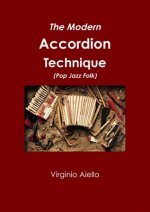
Modern Accordion Technique (Pop Jazz Folk)
18.66 € -2 % -
The Jazz Accordion Complete Book
28.86 € -1 % -
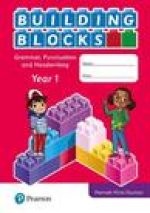
iPrimary Building Blocks: Spelling, Punctuation, Grammar and Handwriting Year 1
16.74 € -
Writing Sci-Fi, Fantasy, & Horror For Dummies
18.26 € -24 % -
Identifying Japanese Seal Script
34.51 € -9 % -

Abenaki Dictionary
16.54 € -2 % -
Slanguage Dictionary: Caribbean and Latin American Slang Words and Phrases
17.05 € -2 % -

English for Medical Purposes: Spelling and Vocabulary
14.62 € -2 % -
Fokus DaF/DaZ
69.93 € -5 % -
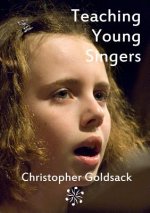
Teaching Young Singers
9.38 € -1 % -
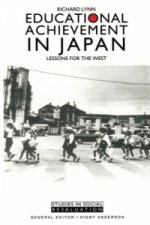
Educational Achievement in Japan
60.55 € -
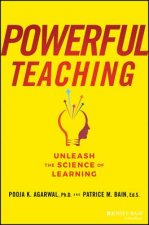
Powerful Teaching: Unleash the Science of Learning
24.01 € -28 % -
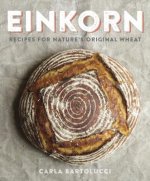
Einkorn
18.26 € -24 % -
Business Partner B2 Workbook
18.76 € -3 % -
Oxford International Primary Maths Second Edition: Practice Book 2
18.16 € -

MOWIE PO POLSKU DWICZENIA POZIOM B1 I B2
16.54 € -
Cambridge IGCSE (R) & O Level Complete Biology: Student Book Fourth Edition
44.60 € -5 % -
Business Partner B1 Workbook
18.76 € -1 % -
OET Preparation
9.28 € -

Deep Healing and Transformation
41.67 € -2 % -
Read Write Inc. Phonics: Red Ditty Book Bag Books (Mixed Pack of 10)
64.38 € -
Oxford International Primary Maths Second Edition: Practice Book 1
18.16 € -
Growth Mindset Classroom-ready Resource Book
12.10 € -27 % -
Speed and Accuracy: Multiplication
6.15 € -27 % -
Freedom Writers Diary Teacher's Guide
17.55 € -24 % -
Oxford International Primary Maths Second Edition: Practice Book 5
18.16 € -
Education
10.79 € -18 % -
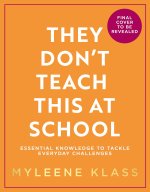
They Don't Teach This at School
21.18 € -25 % -
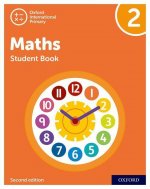
Oxford International Primary Maths Second Edition: Student Book 2
31.58 € -
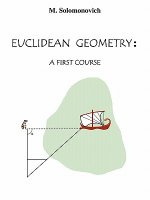
Euclidean Geometry
27.75 € -25 % -
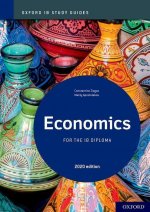
Oxford IB Study Guides: Economics for the IB Diploma
55.70 €
Collection points Bratislava a 12948 dalších
Copyright ©2008-26 najlacnejsie-knihy.sk All rights reservedPrivacyCookies

 25900 collection points
 Delivery 2.99 €
 02/210 210 99 (8-15.30h)