Code: 01611746
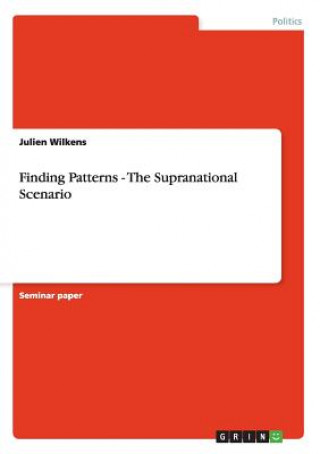
Finding Patterns - The Supranational Scenario
by Julien Wilkens
Seminar paper from the year 2007 in the subject Politics - International Politics - Topic: European Union, printed single-sided, grade: 1,7, University of Mannheim, 10 entries in the bibliography, language: English, abstract: When ... more


- Language:
 English
 - Binding: Paperback
- Number of pages: 40
Publisher: Grin Publishing, 2008
- More about this

16.17 €
RRP: 18.97 €
You save 2.80 €

In stock at our supplier
Shipping in 5 - 8 days
You might also like
-

DELE escolar - Preparación al Diploma de Español - A1
16.88 € -14 % -

Tears and Tantrums
12.03 € -24 % -

Vets Might Fly
13.14 € -20 % -

Betlém Vánoční příběhy pro děti
6.36 € -22 % -

From Warsaw with Love
16.17 € -25 % -

Mind within the Net
36.80 € -

Zenith (R) TRANS-OCEANIC
25.27 € -26 % -

Schoßgebete
11.82 € -

UNTITLED MERCY THOMPSON NOVEL 15
21.23 € -25 % -

The primordial universe's matrix
14.65 € -

Hunting Big Game, V2: An Anthology of True and Thrilling Adventures, the Americas
33.67 € -2 % -
Vitamin Chart
8.08 € -20 % -

Niko Sprachbuch 2
15.06 € -

JCMS Annual Review of the European Union in 2020
22.14 € -10 % -

Scandals and Scoundrels
39.53 € -
Komp'yuter
25.78 € -14 % -

Cudownie, że jesteśmy przyjaciółmi. Mała jednorożka
7.78 € -3 % -
Cognition and Intelligence
54.40 € -

Old Times in Old Monmouth. Historical Reminiscences of Monmouth County, New Jersey
54.91 € -10 % -

Charlie Harte and His Two Wheeled Tiger
10.61 € -9 % -

A Kalota partján
4.74 € -8 % -

London Labour and the London Poor
23.86 € -1 % -
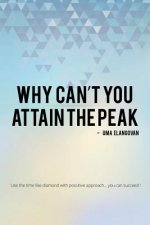
Why Can't You Attain the Peak
9.90 € -

Cooking with Cory: Inspirational Recipes for the Fearless Cook
23.05 € -22 % -

DIDACTICA DE LA EDUCACION FISICA POR MODELOS ED.PRIMARIA
36.40 € -

Pendragon 1
14.05 € -

Ich schenk dir eine Blume
5.65 € -

Cambridge Introduction to Shakespeare's Tragedies
103.55 € -

Das Alte Testament, Interlinearübersetzung, Hebräisch-Deutsch, Neuausgabe. Bd.2
80.09 € -6 % -

La Vaccination Et La Revaccination: Lecon Professee Au Museum
12.43 € -9 % -
Kultura organizacyjna i zmiana spoleczna z biblioteki Normalista
53.39 € -14 % -

Discrete and Computational Geometry
51.67 € -7 % -

Bible Gems from Jerusalem
22.85 € -
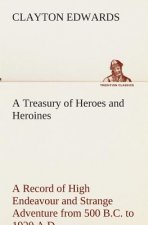
Treasury of Heroes and Heroines A Record of High Endeavour and Strange Adventure from 500 B.C. to 1920 A.D.
17.89 € -14 % -
Czar
53.39 € -14 % -

How to Be Exceptional: Drive Leadership Success By Magnifying Your Strengths
25.98 € -18 % -

Trial, Commonwealth, vs. Henry Daniel. on an Indictment for Murder
11.82 € -25 % -

Human Gravity
11.62 € -18 % -

Authentic Designs from the American Arts and Crafts Movement
14.76 € -25 % -

Advances in the Geological Storage of Carbon Dioxide
216.32 € -

Concepts of Matter in Science Education
154.32 € -7 % -

Gladys Aylward
9.19 € -9 % -

RETURNING
14.86 € -7 % -

Introduction to Shakespeare
22.85 € -2 % -

Dust
23.76 € -25 % -

Sur les Chemins de la Sérénité
24.16 € -

Les vies multiples d'Henry Quantum
22.54 € -

Carnal Aesthetics – The Art of Living in Latinidad
34.38 € -5 % -

Dead on Arrival?
17.49 € -2 %
Give this book as a present today
- Order book and choose Gift Order.
- We will send you book gift voucher at once. You can give it out to anyone.
- Book will be send to donee, nothing more to care about.
More about Finding Patterns - The Supranational Scenario
You get 39 loyalty points
 Book synopsis
Seminar paper from the year 2007 in the subject Politics - International Politics - Topic: European Union, printed single-sided, grade: 1,7, University of Mannheim, 10 entries in the bibliography, language: English, abstract: When studying the European Union, one will find references to the supranational scenario quite soon. In current literature, there is a trend to think about an integration dimension in the European Union. According to this idea, the Status Quo is located at one end of the integration continua, the supranational actors, that is, the Commission and the European Parliament, at the other one. The Status Quo is assumed to be formed under the Luxemburg Compromise and therefore to be at the point of the least integrationist member state. Contrary to this, the Commission and the European Parliament are more pro-integrationist than all member states of the Council of Ministers. One of the most well-know theorists in the analysis on European Union in an institutionalist way is George Tsebelis. My research question will be: Is there empirical evidence that one can easily assume that the European Parliament and the Commission are (a) located closely together in their preferences for concrete policies? Are (b) these positions generally opposite from the Status Quo? And are there (c) some factors which influence the likelihood that EP and EC will be positioned more closely together and at the same time far away from the Status Quo? Does (d) the supranational scenario influence the outcome?The quantitative check of Tsebelis assumption will be made with the Decision-Making in the European Union Dataset. This database includes the position, the salience and the power of all (for the moment) 15 members of the Council, the outcome after the bargaining process, the reference point, and the two relevant actors in my study: the European Parliament and the Commission. To proceed, I will use the statistic program Stata 9.1, and run statistical tests on the data. The goal of this paper is to provide further insights into the positioning of the Parliament and the Commission and to see if the supranational scenario survives a quantitative analysis. As my goal is to find patterns, I will emphasize on an explorative study, without, however, undermining the principles of a social inquiry.
Book details
Book category Books in English Society & social sciences Politics & government
16.17 €
- Full title: Finding Patterns - The Supranational Scenario
- Author: Julien Wilkens
- Language: English
- Binding: Paperback
- Number of pages: 40
- EAN: 9783640114726
- ISBN: 3640114728
- ID: 01611746
- Publisher: Grin Publishing
- Weight: 64 g
- Dimensions: 210 × 148 × 4 mm
- Date of publishing: 30. July 2008
Trending among others
-

The Wretched of the Earth
10.41 € -30 % -

Flash Boys - A Wall Street Revolt
12.53 € -29 % -
Lee Kuan Yew
17.99 € -28 % -

Palestine Peace Not Apartheid. Palästina, Frieden, nicht Apartheid, English Edition
14.05 € -25 % -

Patriarchy Of The Wage
12.03 € -25 % -

Case Against the Sexual Revolution
14.76 € -25 % -

Master of the Senate
18.30 € -24 % -

Workers' Councils
13.44 € -24 % -

Tocqueville: Democracy in America
30.33 € -24 % -

Politics: A Very Short Introduction
10 € -24 % -

Sandworm
23.35 € -25 % -

My Autobiography
11.32 € -24 % -

Yoga of Eating
10.61 € -25 % -

Against Civilization
12.03 € -25 % -

Alien Agenda
14.05 € -28 % -

STRANGE DEATH OF EUROPE
15.16 € -26 % -
Lineages of Modernity - A History of Humanity from the Stone Age to Homo Americanus
72.50 € -4 % -

Critique of Hegel's 'Philosophy Of Right'
21.73 € -24 % -

Fire and Fury
14.55 € -22 % -

Reflections of a Nonpolitical Man
17.18 € -25 % -

All Lara's Wars
22.34 € -7 % -

Political Writings
25.78 € -5 % -

Rise and Fall of the Brezhnev Doctrine in Soviet Foreign Policy
49.55 € -

Takeover
19.91 € -18 % -

Woman's Work
13.95 € -24 % -

Otto Bauer (1881-1938)
37.92 € -20 % -

How Capitalism Underdeveloped Black America
18.19 € -25 % -

International Relations: The Basics
35.19 € -
Children of the Matrix
21.33 € -28 % -

The Trigger
21.33 € -28 % -

Xi Jinping: The Governance of China
25.17 € -14 % -

City of Quartz
15.77 € -14 % -

Time for a Turning Point
21.03 € -24 % -

Politically Incorrect Guide to Islam (And the Crusades)
16.17 € -25 % -
State and Revolution
7.27 € -24 % -

Maestro
15.36 € -18 % -
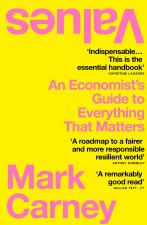
Values
16.17 € -7 % -

Xi Jinping: The Governance of China II
25.17 € -15 % -

Report From Iron Mountain
11.62 € -18 % -

Without You, There Is No Us
15.77 € -30 % -

Into The Buzzsaw
17.69 € -17 % -

Undercommons
19.10 € -25 % -

Devil's Knot
14.05 € -25 % -

Political Brain
15.97 € -25 % -

The Lords of Poverty: The Power, Prestige, and Corruption of the International Aid Business
12.73 € -25 % -

Powershift
7.68 € -25 % -

Every Man A King
19.91 € -18 % -

Nuclear Weapons and Foreign Policy
18.40 € -18 % -

Goliath
20.72 € -17 %
Collection points Bratislava a 13080 dalších
Copyright ©2008-26 najlacnejsie-knihy.sk All rights reservedPrivacyCookies

 26164 collection points
 Delivery 2.99 €
 02/210 210 99 (8-15.30h)