Code: 08239620
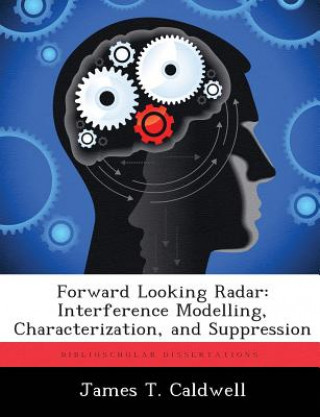
Forward Looking Radar
by James T Caldwell
This research characterizes forward looking radar performance while noting differences with traditionally examined side looking radar. The target detection problem for forward looking radar is extremely difficult due to the severe ... more


- Language:
 English
 - Binding: Paperback
- Number of pages: 116
Publisher: Biblioscholar, 2012
- More about this

17.49 €
RRP: 17.85 €
You save 0.36 €

In stock at our supplier
Shipping in 14 - 21 days
You might also like
-

Warriors: The Rise of Scourge: Warriors
9.29 € -30 % -

Penguin Readers Level 4: Les Misérables (ELT Graded Reader)
7.37 € -

Izakaya: The Japanese Pub Cookbook
32.05 € -9 % -

BRICS
50.86 € -1 % -

Activity, Champion
39.33 € -7 % -

Stara flota Tom 3 Wiktoria
7.78 € -12 % -

Scotland and Its First American Colony, 1683-1765
183.05 € -

Wariackie papiery
7.47 € -13 % -

Guitar Tabs: Guitar Chord and Tablature Staff Music Paper for Musicians, Teachers and Students (8.5x11 - 150 Pages)
7.27 € -6 % -

L'Artillerie A l'Exposition de 1878 (Ed.1879)
14.76 € -8 % -

British Pacific Fleet in World War II
19.21 € -

Chinese Grammar Made Easy
63.50 € -

Sistema de Monitorizacion Ambiental Con Redes Inalambricas de Sensores
34.88 € -14 % -

Pink House
25.27 € -10 % -

My Name Is Prince Albert
27.90 € -

theory and practice of commerce and maritime affairs. Written originally in Spanish, by Don Geronymo de Uztariz, ... Translated ... by John Kippax, ..
30.03 € -2 % -

Advanced Chinese
84.74 € -

Hump Hairpin Mfg Co V. Emmerson U.S. Supreme Court Transcript of Record with Supporting Pleadings
24.46 € -24 % -

From Trials To Triumph
31.44 € -

El ideal del bodhisatva
13.74 € -22 % -

Female Wits
18.19 € -2 % -

Globalization for All
14.65 € -

Inspired Sleep
12.94 € -9 % -

Rifle in Cashmere
25.78 € -9 % -

Stay in Your Own Lane
20.22 € -22 % -

Le Cicr Et Les Conflits tatiques Internes
49.24 € -

Temple de l'Humanite
13.04 € -1 % -

inquiry into the nature and causes of the wealth of nations. By Adam Smith, ... In three volumes ... The eighth edition. Volume 1 of 3
25.58 € -2 %
Give this book as a present today
- Order book and choose Gift Order.
- We will send you book gift voucher at once. You can give it out to anyone.
- Book will be send to donee, nothing more to care about.
More about Forward Looking Radar
You get 42 loyalty points
 Book synopsis
This research characterizes forward looking radar performance while noting differences with traditionally examined side looking radar. The target detection problem for forward looking radar is extremely difficult due to the severe, heterogeneous, and range dependent ground clutter. Consequently, forward looking radar detection represents an important but overlooked topic because of the increased difficulty compared to side looking radar. This void must be filled since most fighter aircraft use forward looking radar, making this topic intensely interesting to the Air Force. After characterizing forward looking radar performance, basic radar concepts along with advanced adaptive interference suppression techniques improve the output Signal-to-Interference-plus-Noise Ratio (SINR) and target detection rates using fixed false alarm for linear arrays. However, target detection probabilities and output SINR do not improve enough. Although the methods considered are adaptive in azimuth and Doppler, effective range ambiguous clutter mitigation requires elevation adaptivity, a feature not offered by linear arrays. The research continues by examining planar arrays. Elevation adaptivity combined with azimuth and Doppler adaptivity allows suppressing range ambiguous clutter and significantly increasing output SINR, detection probability, and max-imum detection range. Specifically, three-dimensional Space-Time Adaptive Processing (3DSTAP) techniques with adaptivity in elevation, azimuth, and Doppler achieve detection probability improvements of over 10 dB in required input SINR compared to two-dimensional (2D) STAP processing. Additionally, 3D STAP improves detection probability versus input SINR curves over 30 dB when compared to 2D conventional processing techniques. As a result, forward looking radars using 3D STAP have the capacity to detect targets that conventional processing might miss.
Book details
Book category Books in English Society & social sciences Education
17.49 €
- Full title: Forward Looking Radar
- Subtitle: Interference Modelling, Characterization, and Suppression
- Author: James T Caldwell
- Language: English
- Binding: Paperback
- Number of pages: 116
- EAN: 9781288228560
- ISBN: 9781288228560
- ID: 08239620
- Publisher: Biblioscholar
- Weight: 222 g
- Dimensions: 246 × 189 × 6 mm
- Date of publishing: 01. October 2012
Trending among others
-

Cambridge IGCSE (R) & O Level Complete Physics: Student Book Fourth Edition
47.02 € -

Cambridge IGCSE (R) & O Level Complete Chemistry: Student Book Fourth Edition
47.12 € -

Cambridge IGCSE (R) & O Level Complete Biology: Student Book Fourth Edition
43.98 € -

101 Wege in der Kita nicht völlig durchzudrehen - Das ultimative Anti-Stress-Mitmachbuch für Erzieherinnen zwischen Bastelkleber, Bauklotzkrieg & Beru
14.45 € -10 % -

Business Partner B1+ Workbook
18.19 € -6 % -

Oxford IB Diploma Programme: IB Economics Course Book
71.80 € -5 % -

Oxford IB Diploma Programme: IB Theory of Knowledge Course Book
76.25 € -

KS3 Maths 10-Minute Weekly Workouts - Year 7
9.50 € -10 % -

English for Medical Purposes: Spelling and Vocabulary
14.65 € -2 % -

Read Write Inc. Phonics: Red Ditty Book Bag Books (Mixed Pack of 10)
83.73 € -

geog.2 Workbook
13.14 € -

They Don't Teach This at School
21.23 € -25 % -

Mathematik Ferienhefte - Volksschule - 2. Klasse
9.90 € -10 % -

Embodied Teen
18.50 € -26 % -

Power of Making Thinking Visible - Practices to Engage and Empower All Learners
23.25 € -31 % -

KS3 Maths 10-Minute Weekly Workouts - Year 8
9.50 € -10 % -

Richard NongardOs Big Book of Hypnosis Scripts
27.40 € -2 % -

Oxford IB Diploma Programme: Oxford IB Diploma Programme: IB Mathematics: applications and interpretation Standard Level Enhanced Online Course Book
94.75 € -

OET Speaking For Nurses Book 1
11.72 € -2 % -

geog.1 5th edition Workbook Answer Book
56.12 € -

iPrimary Building Blocks: Spelling, Punctuation, Grammar and Handwriting Year 4
18.30 € -

OET Writing for Nurses Book 1
10.20 € -2 % -

Oxford IB Diploma Programme: IB Course Preparation Economics Student Book
47.32 € -5 % -

Modern Accordion Technique (Pop Jazz Folk)
18.70 € -2 % -

The Jazz Accordion Complete Book
28.91 € -1 % -

Englisch-Stars - Allgemeine Ausgabe 2025 - 3. Schuljahr
8.89 € -

Writing Sci-Fi, Fantasy, & Horror For Dummies
18.80 € -30 % -

This Is My Body and These Are My Parts
11.32 € -

Technical Surveillance Countermeasures
25.27 € -24 % -

Slanguage Dictionary: Caribbean and Latin American Slang Words and Phrases
17.08 € -2 % -

Übergänge verstehen und begleiten
33.06 € -

Qualitative Research in the Post-Modern Era
61.89 € -7 % -

Fokus DaF/DaZ
70.08 € -

Powerful Teaching: Unleash the Science of Learning
25.07 € -25 % -

Einkorn
18.30 € -24 % -

Imagine If...
12.63 € -27 % -

MOWIE PO POLSKU DWICZENIA POZIOM B1 I B2
16.58 € -

Deutsch Ferienhefte - 2. Klasse - Volksschule
8.49 € -23 % -

Oxford International Primary Maths Second Edition: Student Book 5
31.65 € -

Business Partner B2 Workbook
18.09 € -7 % -

Growth Mindset Classroom-ready Resource Book
12.03 € -28 % -

Speed and Accuracy: Multiplication
5.86 € -24 % -

Oxford International Primary Maths Second Edition: Practice Book 2
18.19 € -

Oxford International Primary Maths Second Edition: Practice Book 5
15.56 € -5 % -

Maria Montessori's Erdkinder
40.44 € -4 % -

Oxford International Primary Maths Second Edition: Student Book 2
31.65 € -
Euclidean Geometry
27.80 € -25 % -

Blue Book of Grammar and Punctuation: An Easy- to-Use Guide with Clear Rules, Real-World Examples , and Reproducible Quizzes, Twelfth Edition
14.86 € -24 % -

Business Partner B1 Workbook
18.70 € -2 %
Collection points Bratislava a 13174 dalších
Copyright ©2008-26 najlacnejsie-knihy.sk All rights reservedPrivacyCookies

 26352 collection points
 Delivery 2.99 €
 02/210 210 99 (8-15.30h)