Code: 01414769
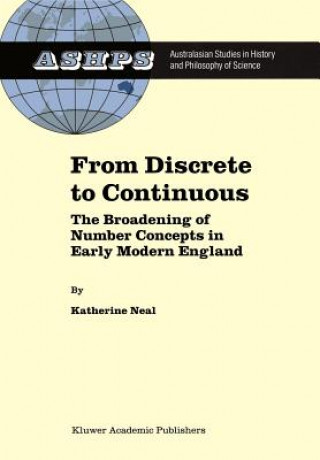
From Discrete to Continuous
by K. Neal
In the early modern period, a crucial transformation occurred in the classical conception of number and magnitude. Traditionally, numbers were merely collections of discrete units that measured some multiple. Magnitude, on the oth ... more


- Language:
 English
 - Binding: Hardback
- Number of pages: 175
Publisher: Springer-Verlag New York Inc., 2002
- More about this

102.69 €
RRP: 111.29 €
You save 8.60 €

In stock at our supplier
Shipping in 10 - 13 days
You might also like
-
Vow of Deception
15.32 € -22 % -
Larousse Gastronomique
86.85 € -25 % -

Francis Bacon
39.03 € -17 % -

Moses in the Basket
4.43 € -25 % -

Complete Works of Zhuangzi
82.72 € -

In a Shallow Grave (Valancourt 20th Century Classics)
19.16 € -
Feminine Appeal
14.01 € -25 % -

Learn to Read Sanskrit Easily!
15.73 € -7 % -

ARIOL
21.38 € -

Murder on the Flying Scotsman
11.79 € -24 % -

Traditional Fairy Tales from Hans Christian Anderson & the Brothers Grimm
10.78 € -24 % -

Psychology for Teachers
35.60 € -10 % -

The Earth Gives More
9.68 € -9 % -
Kilvert's Diary
13.81 € -25 % -

Tři kroky od pekla
8.46 € -31 % -

Stockhausen on Music
19.66 € -4 % -

Neurocriminology
97.35 € -

Aufstell-Adventskalender - Happy Christmas Home (mit LED)
15.12 € -16 % -

Industrial Ventilation Design Guidebook: Volume 1
271.78 € -
The Healing Power of Korean Letter Writing
15.93 € -25 % -

Grid
11.79 € -24 % -

Zarzuela
36.51 € -
Works of Charles Darwin, Volume 5
41.96 € -

Gestalt meines Herrn aus dem Psalm 110
16.13 € -10 % -

Buchmendel
9.07 € -10 % -

Memoirs, Journal, and Correspondence of Thomas Moore
42.16 € -
Mathematics of Program Construction
51.54 € -7 % -

Better Regulation: Bessere Institutionen und Normen als Voraussetzung für erfolgreiches Regieren
49.83 € -11 % -

Lex Mosaica; or, The Law of Moses and the Higher Criticism
29.95 € -2 % -

Cartas Familiares Del P. Joseph Francisco De Isla, Volume 6
22.79 € -2 % -
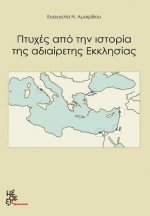
Aspects of the Undevided Church: Ptyhes Apo Tin Istoria Tis Adiairetis Ekklisias
35.30 € -7 % -
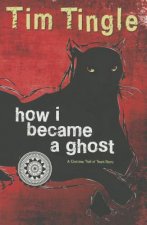
How I Became a Ghost: A Choctaw Trail of Tears Story
7.15 € -25 % -

Stem: Building Tiny Houses: Compose and Decompose Shapes (Grade 2)
9.57 € -21 % -

Linguistic Approach to English Language
124.48 € -12 % -

Verderner
4.53 € -

Preserving a Reformed Heritage
22.89 € -1 % -
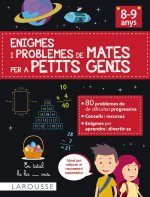
Enigmes i problemes de mates per a petits genis (8-9 anys)
9.07 € -10 % -

Diplomacia hispano-indígena en las fronteras de América.
25.01 € -

Invisible Handcuffs of Capitalism
25.31 € -

Jewish Music and Modernity
102.19 € -

¡psicoptico!
30.66 € -
Works of Orestes A. Brownson, Volume 10
39.03 € -1 % -

A Story and a Smile
12 € -24 % -

Introduction to Aristotle's Ethics Books IIV book X. Ch. VI.IX.
24.10 € -14 % -

Grimm's Fairy Tales - Illustrated by Ada Dennis and Others
40.75 € -9 % -
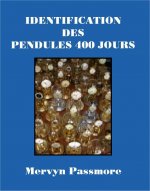
IDENTIFICATION DES PENDULES 400 JOURS
35.20 € -

Lanna Song
21.88 € -

Civil Liabilities and Other Legal Issues for Probation/Parole Officers and Supervisors
23.50 € -2 % -

I Remember
18.25 € -7 % -

Endangered
14.01 € -6 % -

In My Shoes
15.73 € -1 % -

Untersuchung von Absorptionspektren mittels UV-VIS Spektroskopie
9.07 € -10 % -

Advances in Robot Kinematics
153.94 € -7 % -

Gentle Craft
35.10 € -
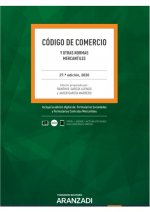
Código de Comercio (Papel + e-book)
91.49 € -
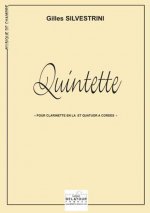
QUINTETTE POUR CLARINETTE ET QUATUOR A CORDES
43.77 € -

Kyle's Army
14.01 € -7 % -

Solar Drying Technology
235.86 € -7 % -

Vom anderen Ufer
16.54 € -10 % -
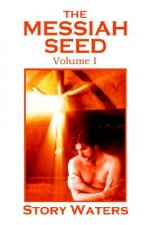
Messiah Seed Volume I
17.44 € -2 % -

Business Ethics in the 21st Century
243.83 € -10 % -

Wplyw dawek nawozow NPSB
33.79 € -14 % -
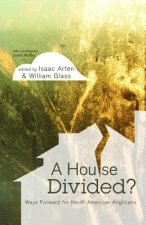
House Divided
15.43 € -25 %
Give this book as a present today
- Order book and choose Gift Order.
- We will send you book gift voucher at once. You can give it out to anyone.
- Book will be send to donee, nothing more to care about.
More about From Discrete to Continuous
You get 249 loyalty points
 Book synopsis
In the early modern period, a crucial transformation occurred in the classical conception of number and magnitude. Traditionally, numbers were merely collections of discrete units that measured some multiple. Magnitude, on the other hand, was usually described as being continuous, or being divisible into parts that are infinitely divisible. This traditional idea of discrete number versus continuous magnitude was challenged in the early modern period in several ways.§This detailed study explores how the development of algebraic symbolism, logarithms, and the growing practical demands for an expanded number concept all contributed to a broadening of the number concept in early modern England. An interest in solving practical problems was not, in itself, enough to cause a generalisation of the number concept. It was the combined impact of novel practical applications together with the concomitant development of such mathematical advances as algebraic notation and logarithms that produced a broadened number concept.
Book details
Book category Books in English Society & social sciences Society & culture: general Cultural studies
102.69 €
- Full title: From Discrete to Continuous
- Subtitle: The Broadening of Number Concepts in Early Modern England
- Author: K. Neal
- Language: English
- Binding: Hardback
- Number of pages: 175
- EAN: 9781402005657
- ISBN: 1402005652
- ID: 01414769
- Publisher: Springer-Verlag New York Inc.
- Weight: 960 g
- Dimensions: 234 × 156 × 15 mm
- Date of publishing: 01. April 2002
Trending among others
-
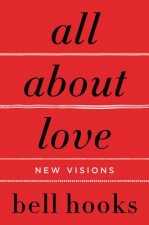
All About Love
15.93 € -6 % -
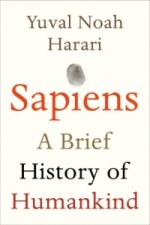
Sapiens
15.02 € -13 % -

Pihkal
24.30 € -27 % -
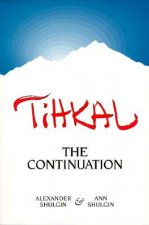
Tihkal
23.70 € -25 % -
How to Invent Everything
26.93 € -18 % -
The Chalice and the Blade
14.01 € -25 % -
Notes on Camp
4.23 € -29 % -
Telling Lies
13.31 € -25 % -
Cosmos and Psyche
16.13 € -25 % -
Medieval Costume and How to Recreate it
10.68 € -28 % -

Deschooling Society
16.94 € -
Origins and History of Consciousness
20.07 € -25 % -

Tudor Tailor
26.32 € -25 % -

The Year of Living Danishly
11.69 € -26 % -

Otaku
13.31 € -25 % -

Butter
12.70 € -25 % -

Self-Made Man
12.20 € -30 % -

Communion
11.79 € -24 % -

Mongolia - Culture Smart!
12.40 € -22 % -

Spirit in Man, Art and Literature
25.21 € -

Passionate Friendships
26.93 € -5 % -
Coffee
15.43 € -26 % -

Oranges
10.68 € -25 % -

Goodbye 20th Century
19.86 € -18 % -

Ghosts of My Life
15.93 € -19 % -
The Conquest of Bread
11.79 € -24 % -

Japanese Tattoos
13.31 € -25 % -

Studio 54
64.15 € -28 % -

Wabi-Sabi for Artists, Designers, Poets & Philosophers
16.03 € -43 % -

Berserk: With Darkness Ink
21.58 € -25 % -

Origin of the Family, Private Property and the State
13.91 € -22 % -

Gilmore Girls: Stars Hollow Light-Up Sign
14.11 € -19 % -

Liquid Modernity
20.37 € -9 % -
Art of Memory
20.07 € -25 % -
Ways of Curating
11.19 € -28 % -
Money
6.14 € -32 % -

Why We Love Dogs, Eat Pigs and Wear Cows
14.32 € -23 % -
Posthuman
19.26 € -5 % -

Energy Flash
21.18 € -24 % -

Danse Macabre
13.91 € -6 % -

Kimono Design
30.56 € -24 % -

Speed and Politics
12 € -24 % -

Cultural Studies
44.88 € -10 % -

Balenciaga
30.86 € -24 % -
Costume Making Guide
26.02 € -

Omnivore's Dilemma
16.23 € -19 % -
Hobbes: Leviathan
28.04 € -
Locke: Two Treatises of Government Student edition
26.83 € -

Egregores
12.70 € -25 %
Collection points Bratislava a 13350 dalších
Copyright ©2008-26 najlacnejsie-knihy.sk All rights reservedPrivacyCookies

 26704 collection points
 Delivery 2.99 €
 02/210 210 99 (8-15.30h)