
Code: 04546522
God Owes Us Nothing
by Leszek Kolakowski
This volume presents a new interpretation of a centuries-long debate in Christianity: how to reconcile the existence of evil in the world with the goodness of an omnipotent God. In Augustinian doctrine, evil is the absence of good ... more


- Language:
 English
- Binding: Hardback
- Number of pages: 248
Publisher: University of Chicago Press, 1995
- More about this


You might also like
-
Tarot de Marseille
27.11 € -

One Piece, Vol. 18
9.67 € -25 % -

After Dinner Amusements: Name that Word!
7.85 € -26 % -

Chicka Chicka Boom Boom
6.75 € -24 % -

Jedna rzecz
3.12 € -74 % -

Behavior Adjustment Training 2.0
18.64 € -24 % -

The Lost Hero
15.11 € -25 % -

Mobilisace 1938
62.90 € -9 % -

Ouran High School Host Club Complete Box Set
135.09 € -25 % -
The Starless Sea
9.97 € -30 % -

Harry Potter and the Chamber of Secrets - Hufflepuff Edition
9.06 € -38 % -

Tales From Moominvalley
14.81 € -19 % -

Speakout 3ed A2 Teacher's Book with Teacher's Portal Access Code
55.85 € -

Avatar: The Last Airbender Imbalance - Library Edition
36.29 € -25 % -

KJV MINI PCKT /E
15.11 € -25 % -

Pomocná a modální slovesa v angličtině
1 € -26 % -

To Love Ru Vol. 13-14
15.11 € -25 % -

The House in the Cerulean Sea
22.17 € -25 % -

Eat for Life: The Breakthrough Nutrient-Rich Program for Longevity, Disease Reversal, and Sustained Weight Loss
21.16 € -27 % -

Krieg dem Kriege
17.94 € -11 % -

Secret Lake
9.37 € -18 % -

Thou Shall Prosper
23.58 € -25 % -

DBT For Dummies
22.17 € -25 % -

Ganz schön clever
13.20 € -12 % -

Sashiko Stencils, Traditional Collection
23.58 € -22 % -

Enchanted Forest
12.49 € -5 % -

Chronicles of Chrestomanci, Vol. I
8.76 € -25 % -

Kuroko No Basket: Extra Game 02
12.90 € -9 % -

Six Crimson Cranes
15.82 € -25 % -

Empath's Empowerment Deck
9.97 € -48 % -

Majstrovstvá Európy vo futbale - spoločenská hra
26 € -26 % -

Untitled PK 3
11.18 € -26 % -

Giulio Coniglio
5.54 € -4 % -

Ghost In The Shell: Stand Alone Complex 4
14.61 € -4 % -

A Flicker in the Dark
23.58 € -25 % -

MARVEL MULTIVERSE ROLE-PLAYING GAME: THE CATACLYSM OF KANG
35.38 € -27 % -

Horse and His Boy
9.37 € -5 % -

Time Paradox
15.11 € -25 % -

Mystics and Zen Masters
13 € -25 % -

Long Term Evolution IN BULLETS, 2nd Edition
67.04 € -7 % -

Oxford Bookworms Library Factfiles: Level 1:: Japan
13.80 € -

Nesmrtelný Cheops
14.81 € -23 % -

7 Principles of Transformational Leadership
14.41 € -24 % -

Grasshopper: Visual Scripting for Rhinoceros 3D
71.27 € -6 % -

Collies - Langhaarcollie 2026 - 16-Monatskalender
10.17 € -45 % -

Distributed Tracing in Practice
57.46 € -25 % -

Failing Forward
13.81 € -9 % -

The Penguin State of the World Atlas
16.83 € -26 % -

Zippo the Super Hippo
8.66 € -24 % -

A History of Art
34.67 € -10 % -

Human Memory
40.12 € -

Alien in Antarctica
22.17 € -25 % -

Making History with Manuscripts in Medieval and Early Modern Europe
118.26 € -

Directives in EC Law
77.12 € -

Handbook of Micro/Nano Tribology
97.49 € -

Rhymes in Red
15.21 € -14 % -

Textile Book
145.68 € -

Formative Classroom Assessment
30.84 € -4 % -

History of Cartography, Volume 3
666.84 € -5 % -

Handbook of Bilingual and Multilingual Education
203.25 € -2 % -

Full Throttle
17.23 € -24 % -

Kid Hero
15.11 € -25 % -

Keys to Curriculum Mapping
26.41 € -10 % -

Video Games
15.72 € -15 % -

The Proceedings of 2024 International Conference on Artificial Intelligence and Autonomous Transportation
307.40 € -7 % -

Introduction to Rpa
7.45 € -6 % -

stainless Steel Rat and The Misplaced Battleship
10.58 € -1 % -

End Times Made Simple
15.11 € -25 % -

Animal Mandalas Adult Coloring Book, Volume 3
16.12 € -7 % -

Ontario since Confederation
110.49 € -

Dynamics of Crank-Piston Mechanisms
102.63 € -7 % -

Love in Xxchange
14.91 € -9 % -

G Is for Gecko: An Alphabet Adventure in Hawai'i
13.81 € -9 % -

Let's Play Chess: A Step-By-Step Guide for New Players
18.04 € -9 % -

History of Freemasonry
37.19 € -10 % -

State of Fear
25.11 € -9 % -

Rainbow Valley
26.20 € -2 % -

Understanding War in Afghanistan
14 € -7 % -

From Nightmares to Reality
10.17 € -

Belforest V2: A Tale Of English Country Life
32.66 € -1 % -

Place of History and Government
173.51 € -14 % -

Long As You Know Who You Belong To 3
14.41 € -7 % -

Triangulation
14.41 € -7 % -

CRIMCOMICS ISSUE 3
20.15 €
Give this book as a present today
- Order book and choose Gift Order.
- We will send you book gift voucher at once. You can give it out to anyone.
- Book will be send to donee, nothing more to care about.
Availability alert
Enter your e-mail address and once book will be available,
we will send you a message. It's that simple.
More about God Owes Us Nothing
You get 269 loyalty points
 Book synopsis

This volume presents a new interpretation of a centuries-long debate in Christianity: how to reconcile the existence of evil in the world with the goodness of an omnipotent God. In Augustinian doctrine, evil is the absence of good, God is omnipotent, and individuals are predestined to salvation or damnation. We are powerless to influence God's bestowal of grace by either word or deed: in short, God owes us nothing. Augustine's view was attacked as unduly harsh by the 4th-century monk Pelagius, whose followers believed that humans can earn grace through good acts. The Church condemned this teaching as heresy, but controversies concerning evil, free will, divine omnipotence, grace, and predestination continued over the centuries. In the 17th century, the theologian Jansenius returned to Augustinian doctrine and created his own heresy: he repudiated free will, accepted predestination and taught that God is free to bestow grace upon the wicked and withhold it from the good; because of original sin, no one is deserving of grace. Renowned as a philosopher with deep religious sensitivities, Kolakowski confronts this controversy. He argues that the teachings of Jansenius and Augustine both reflect the very principles and spirit upon which the Church was founded, and to reject one is to reject the other. His central thesis is that by condemning Jansenism, the Church also found a way to abandon its 1000-year adherence to the doctrines of Saint Augustine. Kolakowski continues this critical encounter with an examination of Pascal, whose powerful moral philosophy has roots in Jansenism. Pascal affirmed the divine omnipotence of God in his famous Wager: if God does not exist, nothing is lost by not having faith; if God does exist, the believer gains eternal life through faith. Kolakowski interprets the Wager as a sign of the limitations of reason and a necessity for a mystical faith. Pascal's religion is thus true both to the spirit of Jansenius and of Augustine.
Book details
Book category Books in English Humanities Religion & beliefs Religion: general
110.80 €
- Full title: God Owes Us Nothing
- Subtitle: Brief Remarks on Pascal's Religion and on the Spirit of Jansenism
- Author: Leszek Kolakowski
- Language: English
- Binding: Hardback
- Number of pages: 248
- EAN: 9780226450513
- ID: 04546522
- Publisher: University of Chicago Press
- Weight: 440 g
- Dimensions: 220 × 145 × 25 mm
- Date of publishing: 09. November 1995
Trending among others
-

The Righteous Mind
16.42 € -22 % -

The Screwtape Letters
11.79 € -24 % -

A History of Christianity
19.15 € -29 % -
Sacred and the Profane
13.70 € -25 % -
Illustrated Picatrix: the Complete Occult Classic of Astrological Magic
65.12 € -10 % -

Knowing God
13.90 € -24 % -

The Psychology of Selling
18.04 € -10 % -
Seeking Allah, Finding Jesus
19.05 € -25 % -
Lost Scriptures
14.91 € -24 % -

Good Morning, Holy Spirit
15.11 € -25 % -

Education and the Significance of Life
11.89 € -18 % -

Dialogues Concerning Natural Religion, and The Natural History of Religion
8.06 € -24 % -

Reality: A Synthesis Of Thomistic Thought
20.66 € -10 % -

Nine Doors of Midgard
22.88 € -1 % -

Future of an Illusion
7.15 € -

Great Goddess
14.41 € -24 % -

Big Gods
27.11 € -1 % -

Ordinarily Sacred
31.04 € -

Hittite Prayers
24.89 € -7 % -

Essential Writings
13.90 € -24 % -

Theological Highlights of Vatican II
14.41 € -24 % -

Movements That Change the World - Five Keys to Spreading the Gospel
18.64 € -25 % -

Aramaic
10.58 € -35 % -

Weighing the Word
9.06 € -20 % -

A Secular Age
19.35 € -25 % -
The Perennial Philosophy
13.50 € -29 % -
Wisdom Of Insecurity
13.20 € -28 % -

Early History of God
29.23 € -25 % -
Waking Up
11.99 € -21 % -
Goddesses
21.36 € -22 % -
The Happiness Hypothesis: Finding Modern Truth in Ancient Wisdom
15.11 € -25 % -

The Courage to Be
14.81 € -22 % -
Can Science Explain Everything?
9.67 € -25 % -

Apotheosis - The Ultimate Beginner's Guide to Luciferianism & the Left-Hand Path
23.99 € -2 % -
Nature of the Psyche
18.14 € -17 % -
Tao Te Ching
6.24 € -29 % -
Dialogues Concerning Natural Religion
9.87 € -30 % -
Reign of Quantity and the Signs of the Times
21.87 € -
Beginning Luciferian Magick
16.53 € -9 % -

Practicing the Power of Now
13 € -25 % -

Awakening
13.50 € -17 % -

Knowledge of the Higher Worlds and Its Attainment
9.57 € -2 % -
Homilies of S. John Chrysostom, Archbishop of Constantinople, on the Acts of the Apostles, Volume 1
37.29 € -1 % -

History of the Waldenses
16.12 € -10 % -
Bhagavad Gita
7.35 € -24 % -
Return of the God Hypothesis
23.89 € -25 % -
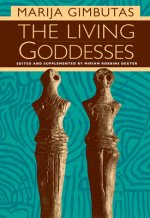
Living Goddesses
35.78 € -12 % -
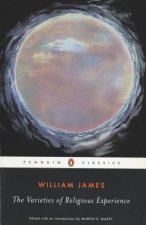
Varieties of Religious Experience
13.90 € -24 % -

Art of Worldly Wisdom
8.66 € -2 %
Collection points Bratislava a 13582 dalších
Copyright ©2008-26 najlacnejsie-knihy.sk All rights reservedPrivacyCookies

 27168 collection points
 Delivery 2.99 €
 02/210 210 99 (8-15.30h)
