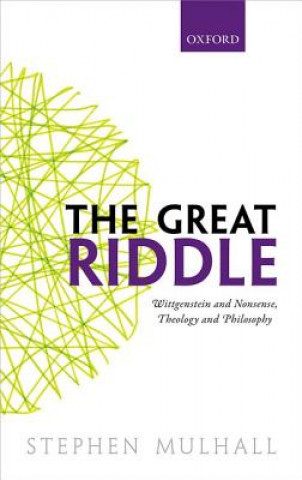
Code: 09360448
Great Riddle
by Stephen Mulhall
Can we talk meaningfully about God? The theological movement known as Grammatical Thomism affirms that religious language is nonsensical, because the reality of God is beyond our capacity for expression. Stephen Mulhall criticall ... more


- Language:
 English
 - Binding: Hardback
- Number of pages: 160
Publisher: Oxford University Press, 2015
- More about this


You might also like
-
King Lear (No Fear Shakespeare)
6.29 € -30 % -

Jesus von Nazareth - Die Miniserie, 1 Blu-ray
23.20 € -
Приключения Оливера Твиста
9.59 € -12 % -
Training Horses
11.69 € -

Team Topologies
34.90 € -

Необыкновенные приключения Карика и Вали
13.90 € -11 % -
Ravenna: Capital of Empire, Crucible of Europe
16 € -24 % -

Classical Hits For Children
13.60 € -

Democracy
33.90 € -17 % -
English in South Africa
16 € -14 % -
Guide to Southern Temperate Seagrasses
22.80 € -7 % -

Growth of the British Empire
15.50 € -2 % -
Second Epistle to the Corinthians
78.22 € -9 % -
Normative Ethics
25.80 € -

Kinderspiele aus der guten alten Zeit
6.79 € -14 % -
Wild Swimmer Logbook For Swimming Adventures
9.89 € -24 % -

Four Years Behind the Bars of Bloomingdale, Or, the Bankruptcy of Law in New York.
25.30 € -2 % -

Kein Kinderkram!
41.51 € -

Дневник будущего. Том 10
12.19 € -11 % -
Tourism in Northeastern Argentina
120.34 € -4 % -

Work and Education in America
101.83 € -7 % -

Bad Moms, 1 DVD
10.39 € -

Im Land Der Musikerlchen: Eine Geschichte Zum Lauschen Fur Grosse Und Kleine Ohren
26.40 € -

ShAKe, écosystème tertiaire au coeur d'Euralille
28.30 € -
Daily Phonics, Grade 4-6+
21.70 € -25 % -

Joseph Beuys: Das Wirtschaftswertprinzip (2002)
31.70 € -24 % -
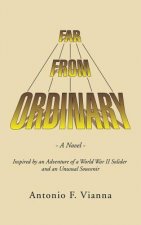
Far from Ordinary
18.50 € -

Beyond The Tiny Window: Winter
14.80 € -6 %
Give this book as a present today
- Order book and choose Gift Order.
- We will send you book gift voucher at once. You can give it out to anyone.
- Book will be send to donee, nothing more to care about.
More about Great Riddle
You get 161 loyalty points
 Book synopsis
Can we talk meaningfully about God? The theological movement known as Grammatical Thomism affirms that religious language is nonsensical, because the reality of God is beyond our capacity for expression. Stephen Mulhall critically evaluates the claims of this movement (as exemplified in the work of Herbert McCabe and David Burrell) to be a legitimate inheritor of Wittgenstein's philosophical methods as well as Aquinas's theological project. The major obstacle to this claim is that Grammatical Thomism makes the nonsensicality of religious language when applied to God a touchstone of Thomist insight, whereas 'nonsense' is standardly taken to be solely a term of criticism in Wittgenstein's work. Mulhall argues that, if Wittgenstein is read in the terms provided by the work of Cora Diamond and Stanley Cavell, then a place can be found in both his early work and his later writings for a more positive role to be assigned to nonsensical utterances-one which depends on exploiting an analogy between religious language and riddles. And once this alignment between Wittgenstein and Aquinas is established, it also allows us to see various ways in which his later work has a perfectionist dimension-in that it overlaps with the concerns of moral perfectionism, and in that it attributes great philosophical significance to what theology and philosophy have traditionally called 'perfections' and 'transcendentals', particularly concepts such as Being, Truth, and Unity or Oneness. This results in a radical reconception of the role of analogous usage in language, and so in the relation between philosophy and theology.
Book details
Book category Books in English Humanities Religion & beliefs Religion: general
65.82 €
- Full title: Great Riddle
- Subtitle: Wittgenstein and Nonsense, Theology and Philosophy
- Author: Stephen Mulhall
- Language: English
- Binding: Hardback
- Number of pages: 160
- EAN: 9780198755326
- ISBN: 0198755325
- ID: 09360448
- Publisher: Oxford University Press
- Weight: 288 g
- Dimensions: 227 × 164 × 22 mm
- Date of publishing: 17. December 2015
Trending among others
-
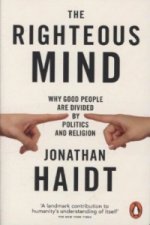
The Righteous Mind
16.50 € -21 % -
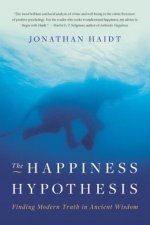
The Happiness Hypothesis: Finding Modern Truth in Ancient Wisdom
14.60 € -25 % -
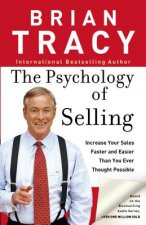
The Psychology of Selling
17.90 € -8 % -
The Greatness of Saturn
11.19 € -24 % -
Lost Scriptures
18.10 € -24 % -
More Than Allegory - On religious myth, truth and belief
15.60 € -15 % -
Illustrated Picatrix: the Complete Occult Classic of Astrological Magic
63.82 € -10 % -

Mary Magdalene
11.69 € -2 % -
Nine Doors of Midgard
22.90 € -1 % -
Congregations in Europe
51.01 € -7 % -
Nature of the Gods
21.90 € -
Wisdom Of Insecurity
13.20 € -28 % -
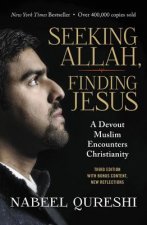
Seeking Allah, Finding Jesus
18.90 € -25 % -
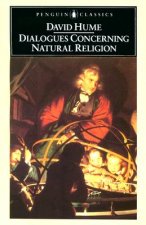
Dialogues Concerning Natural Religion
9.79 € -29 % -

Padre Candido Amantini, CP
9.39 € -
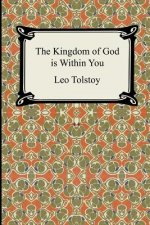
Kingdom of God Is Within You
11.09 € -2 % -
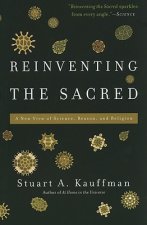
Reinventing the Sacred
25.20 € -
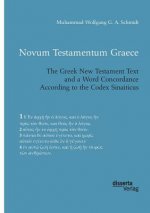
Novum Testamentum Graece. The Greek New Testament Text and a Word Concordance According to the Codex Sinaiticus
52.91 € -14 % -
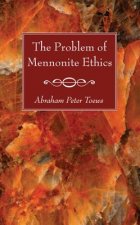
Problem of Mennonite Ethics
21.50 € -24 % -
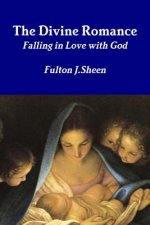
Divine Romance
14.70 € -2 % -
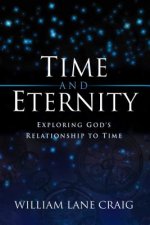
Time and Eternity
20.10 € -24 % -
Knowledge of the Higher Worlds and Its Attainment
9.29 € -2 % -
Book of Enoch
8.49 € -1 % -
Power of Tarot
21.70 € -2 % -
A History of Christianity
18.60 € -29 % -

The Screwtape Letters
11.89 € -23 % -

A Secular Age
18.70 € -25 % -
The Perennial Philosophy
13.40 € -27 % -
Sacred and the Profane
13.30 € -24 % -
Knowing God
13.80 € -24 % -
The Courage to Be
14.40 € -21 % -
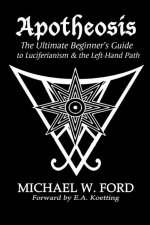
Apotheosis - The Ultimate Beginner's Guide to Luciferianism & the Left-Hand Path
23.20 € -1 % -
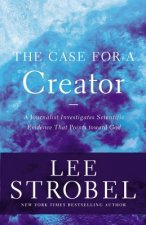
Case for a Creator
13.10 € -20 % -
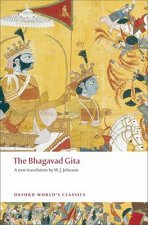
Bhagavad Gita
7.09 € -25 % -
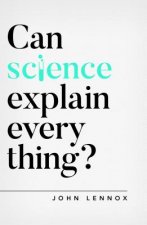
Can Science Explain Everything?
9.59 € -25 % -
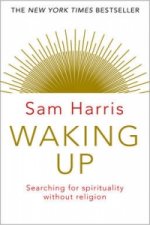
Waking Up
12 € -18 % -
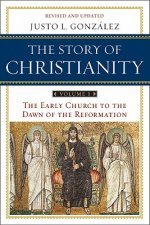
Story of Christianity Volume 1
20.30 € -26 % -
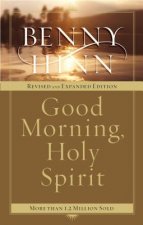
Good Morning, Holy Spirit
14.60 € -25 % -
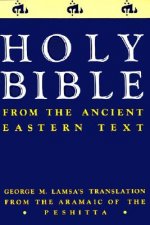
Holy Bible
35.10 € -24 % -
Beginning Luciferian Magick
16.30 € -10 % -
Grief Observed
12.40 € -29 % -

Sekhem Apep
19.60 € -1 % -
On the Incomprehensible Nature of God
47.71 € -
Homilies of S. John Chrysostom, Archbishop of Constantinople, on the Acts of the Apostles, Volume 1
36 € -2 % -

History of the Waldenses
16.50 € -6 % -
Gerus Guide - The Step By Step Guide to Conversion to Orthodox Judaism
43.41 € -7 % -
Return of the God Hypothesis
22.80 € -27 % -
Varieties of Religious Experience
13.80 € -24 % -
Living Goddesses
35.50 € -11 %
Collection points Bratislava a 13474 dalších
Copyright ©2008-26 najlacnejsie-knihy.sk All rights reservedPrivacyCookies

 26952 collection points
 Delivery 2.99 €
 02/210 210 99 (8-15.30h)