
Code: 03196994
Grid Computing
by Ines Dutra, Jorge G Barbosa
In the past two decades, grid computing have fostered advances in several scientific domains by making resources available to a wide community and bridging scientific gaps. Grid infrastructures have been harnessing computational r ... more


- Language:
 English
 - Binding: Hardback
- Number of pages: 219
Publisher: Nova Science Publishers Inc, 2015
- More about this

305.01 €
RRP: 338.88 €
You save 33.88 €
Availability:
50/50 We think title might be available. Upon your order we will do our best to get it within 6 weeks.
We search the world
You might also like
-

Healing Herbal Teas
14.01 € -25 % -

Don´t Look Now
13.30 € -25 % -

Wildflower Folk Coloring Book
22.89 € -9 % -

Always a Catch! 01
9.98 € -24 % -

Puzzle 1000 Premium Plus Kopciuszek 10829
8.56 € -7 % -

Kamoš obor
9.57 € -15 % -

Der Himmel unter Berlin
10.88 € -10 % -

Turkish Gambit
11.79 € -25 % -

Puzzle 500 cubes Anime One piece 35136
10.48 € -10 % -

War of the World
21.17 € -25 % -

Brancusi
30.85 € -2 % -

EL INFINITO EN UN JUNCO EDICION GRAFICA
19.15 € -25 % -

MetaMaus
58.29 € -15 % -

Bombing to Win
36 € -5 % -

Tearmoon Empire (Manga) Volume 2
15.73 € -15 % -

Magical Garden of Claude Monet
16.53 € -

Legacy(The Very Best of David Bowie)
26.22 € -

Principles of Modern Radar
162.38 € -11 % -

Jon Sable Freelance Omnibus 1
38.62 € -18 % -

HINTERKAIFECK
13.40 € -24 % -

Sky Wept Fire
15.93 € -25 % -

Veselá čítanka o zvieratkách
9.27 € -35 % -

With Fire and Sword
15.02 € -1 % -

Asthma Prevention
189.31 € -

Art of Clinical Practice in Optometry
26.01 € -6 % -

Lion Feuchtwanger, 7 DVDs
43.46 € -

Bigger Splash: Painting After Performance
23.19 € -9 % -

Introduction to Estimating for Construction
74.63 € -

Untersuchung zur Bedeutung der Begriffe Achtung, Gunst und Neigung
16.13 € -10 % -

John Trumbull
50.93 € -

Buddhism and Women
35.39 € -24 % -

Embodiment and Virtue in Gregory of Nyssa
125.26 € -

Childhood Without a Mum in Africa
10.58 € -25 % -

Children Of The Revolution
19.05 € -25 % -

Au pays de Cîteaux
36.50 € -

Gutglaubiger Erwerb und Ersitzung von Kunstgegenstanden
94 € -

Ashes to Gold: Story of A Sinner: God's Healing Power Over Addiction
14.82 € -7 % -

Release Me!
39.13 € -

Welchen Anforderungen, Chancen und Konfliktfeldern sind die Studierenden in Pflege dual ausgesetzt? Ein Einblick
22.38 € -11 % -

Account of the Nature and medicinal Virtues of the principal Mineral Waters
23.19 € -14 % -

Vendiamogli un pezzo di cielo blu - Hubbard, Dianetica e Scientology
22.58 € -6 % -

Bezopasnost' Informatsionno-Upravlyayushchikh Sistem I Infrastruktur
110.74 € -14 % -

History of the Philippine Islands Volume 1 and 2
34.49 € -2 % -

Finding Family
8.56 € -18 % -

Hplc Method for Determination of Apis in Pharmaceutical Formulation
17.04 € -2 % -

Die Zur Union Fuhrende Mission, Nebst Ehrenrettung. Zweite Auflage.
23.69 € -2 % -

Herr Parent
11.69 € -10 % -

Love Wins in Berlin
8.97 € -5 % -

Dardashah Ma'a Jarrah
42.25 € -

Globalisierung versus Fragmentierung
16.23 € -10 % -

Origine Etymologique Et Signification Du Nom de Gap
11.29 € -9 % -

Szenen aus Schottland
17.14 € -10 % -

Teaching Mathematics in the Block
41.04 € -

Whither the Black Press?
20.26 € -

Brainstorming in Gruppen und die Auswirkungen auf die Kreativitat
15.22 € -10 % -

Eastern Mediterranean in Transition
232.89 € -

The Courage Of Grace: One Family's Journey Through Teenage Pregnancy
14.01 € -7 % -

Stability and Transport in Magnetic Confinement Systems
153.91 € -7 % -

Rompre avec le capitalisme en construisant la société de demain
17.84 € -11 % -

AVE MARIA TROMPETTE -PARTITION+PARTIES SEPAREES
135.25 € -

The Adventures of Tess: The New Sister
9.77 € -6 % -

Embriones y muerte cerebral : desde una fenomenología de la persona
25.11 € -9 % -

Visions in Global Education
44.17 € -4 %
Give this book as a present today
- Order book and choose Gift Order.
- We will send you book gift voucher at once. You can give it out to anyone.
- Book will be send to donee, nothing more to care about.
Availability alert
Enter your e-mail address and once book will be available,
we will send you a message. It's that simple.
More about Grid Computing
You get 740 loyalty points
 Book synopsis
In the past two decades, grid computing have fostered advances in several scientific domains by making resources available to a wide community and bridging scientific gaps. Grid infrastructures have been harnessing computational resources all around the world allowing all kinds of parallelisms to be explored. Other approaches to parallel and distributed computing still exist like the use of dedicated high-performance (HPC) infrastructures, and the use of clouds for computing and storage, but grid computing continues to be the predominant technology used for scientific computing in Europe, through the European Grid Infrastructure (EGI) and the European Middleware Initiative (EMI). Currently, there is a trend towards the use of cloud technologies for computing and storage. In Europe, this trend is being followed by taking advantage of all the experiences gained from building grid infrastructures and the technologies developed around them (resource management orchestration, unified job description languages, security, user interfaces, programming models, and scheduling policies, among others). As a result, the European Grid Infrastructure Federated Cloud is being built on top of the grid infrastructure already available. After almost two decades of the development of grid software and components and the emergence of competing technologies, now is the time to discuss current trends and to assess future prospects. When organising this book, the authors considered contributions that would review the current grid computing scenario as well as contributions that would summarise the main tools and technologies used so far. The chapters in this book provide reviews for the following topics: a) performance prediction for parallel and distributed computing systems, b) resource sharing on computational grids, c) economic models for resource management, and d) programming frameworks. The chapters address grid issues such as a) the challenges of designing efficient job schedulers for production grids, b) scalability analysis of bag-of-tasks applications, c) the energy efficiency of resource reservation-based scheduling, and d) the development of parallel applications using the grid environment. Additionally, the following tools are presented: a) a programming framework based on the concept of a pluggable grid service that avoids explicit calls to grid services in scientific code and b) a desktop grid framework that runs on top of a cloud and can be deployed on the fly. The authors were each invited to contribute a chapter to this book, which were carefully revised and selected based on their originality and the value of their contribution to the overall discussion on grid computing and its future prospects.
Book details
Book category Books in English Computing & information technology Computer networking & communications Grid computing
305.01 €
- Full title: Grid Computing
- Subtitle: Techniques and Future Prospects
- Author: Ines Dutra, Jorge G Barbosa
- Language: English
- Binding: Hardback
- Number of pages: 219
- EAN: 9781631177040
- ISBN: 9781631177040
- ID: 03196994
- Publisher: Nova Science Publishers Inc
- Weight: 572 g
- Dimensions: 265 × 183 × 20 mm
- Date of publishing: 01. June 2015
Trending among others
-
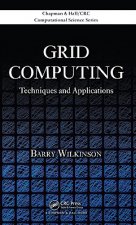
Grid Computing
308.03 € -

Grid and Cloud Database Management
102.67 € -7 % -

Guide to e-Science
153.91 € -7 % -

Grid Computing
326.39 € -

Grid Computing
104.39 € -

Computational Intelligence Applications In Smart Grids: Enabling Methodologies For Proactive And Self-organizing Power Systems
98.43 € -

Fundamentals of Grid Computing
171.16 € -

Handbook of Research on Grid Technologies and Utility Computing
274.24 € -

Grid Computing
102.67 € -7 % -

Mobile Clouds - Exploiting Distributed Resources in Wireless, Mobile and Social Networks
89.26 € -2 % -

Fundamentals of Grid Computing
88.45 € -

Production Grids in Asia
167.22 € -

Multi-Discipline Virtual Prototype Modeling & Simulation Theory & Application
243.88 € -9 % -

Data Management in Grid and Peer-to-Peer Systems
51.53 € -7 % -
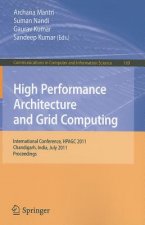
High Performance Architecture and Grid Computing
108.92 € -
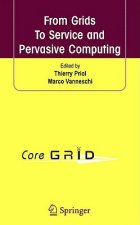
From Grids To Service and Pervasive Computing
108.92 € -

Grid Economics and Business Models
51.53 € -7 % -

Grid Computing
153.91 € -7 % -

Grid and Cloud Database Management
102.67 € -7 %
Collection points Bratislava a 13225 dalších
Copyright ©2008-26 najlacnejsie-knihy.sk All rights reservedPrivacyCookies

 26454 collection points
 Delivery 2.99 €
 02/210 210 99 (8-15.30h)