Code: 04047847
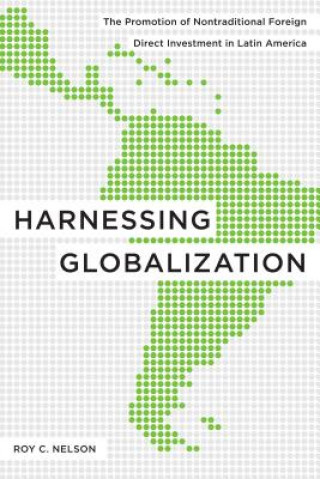
Harnessing Globalization
by Roy C. Nelson
How can countries in the underdeveloped world position themselves to take best advantage of the positive economic benefits of globalization? One avenue to success is the harnessing of foreign direct investment (FDI) in the "nontra ... more


- Language:
 English
 - Binding: Paperback
- Number of pages: 280
Publisher: Pennsylvania State University Press, 2007
- More about this


You might also like
-

180 Days of Problem Solving for Fourth Grade
18.10 € -22 % -

Tolkien and the Great War
11.83 € -25 % -

Schummel Hummel
12.43 € -12 % -

Opuštěná zahrada
6.36 € -29 % -

New Headway: Advanced C1: iTools
257.94 € -

Methods in Computational Chemistry
167.71 € -

Great Meadow
21.23 € -

Thomas Merton
21.23 € -

Q Pootle 5
7.68 € -24 % -

History Pockets, Ancient Egypt
13.44 € -24 % -

Osteopathy
14.76 € -14 % -

Agenda de Las Hadas 2026
12.03 € -10 % -

Team Tal: An Inside Story
23.86 € -1 % -

Jason Fulford
33.47 € -14 % -

Einstein, Hilbert, and The Theory of Gravitation
87.59 € -7 % -

History and Ideology in the Old Testament
54.92 € -

Sette
18.40 € -1 % -

The Truth about Fairies
21.94 € -26 % -

Land Use - Handbook of the Anthropocene in Latin America I
66.65 € -

MyMaths for Key Stage 3: Student Book 2A
31.75 € -

Jeremiah
29.93 € -25 % -

Life of Stephen Lawrence
8.69 € -25 % -

100 Worksheets - Finding Place Values with 10 Digit Numbers: Math Practice Workbook
8.99 € -6 % -

Afghanistan in Ink
40.25 € -15 % -

Re-Engineering Water Storage in the Everglades
48.14 € -

Derrière les masques de Persona
48.14 € -

In Search of Pinot Noir
36.41 € -9 % -

North Carolina Troops, 1861-1865: A Roster, Volume 14
51.07 € -

Zivilprozess und Zwangsvollstreckung in Frankreich und Italien.
84.96 € -

Stoicism
14.05 € -25 % -
Թվային տեխնոլոգիաների կ&
40.86 € -4 % -

Father Christmas' ABC
8.08 € -15 % -

Backstage Pass to the Flipside Book Two
19.11 € -9 % -

Preussens Pressepolitik Zwischen Abschaffung Der Zensur Und Reichspressgesetz (1848 Bis 1874)
228.71 € -9 % -

Wylde Ride
23.86 € -1 %
Give this book as a present today
- Order book and choose Gift Order.
- We will send you book gift voucher at once. You can give it out to anyone.
- Book will be send to donee, nothing more to care about.
More about Harnessing Globalization
You get 96 loyalty points
 Book synopsis
How can countries in the underdeveloped world position themselves to take best advantage of the positive economic benefits of globalization? One avenue to success is the harnessing of foreign direct investment (FDI) in the "nontraditional" forms of the high-technology and service sectors, where an educated workforce is essential and the spillover effects to other sectors are potentially very beneficial. In this book, Roy Nelson compares efforts in three Latin American countries-Brazil, Chile, and Costa Rica-to attract nontraditional FDI and analyzes the reasons for their relative success or failure. As a further comparison, he uses the successes of FDI promotion in Ireland and Singapore to help refine the analysis. His study shows that two factors, in particular, are critical. First is the government's autonomy from special interest groups, both domestic and foreign, arising from the level of political security enjoyed by government leaders. The second factor is the government's ability to learn about prospective investors and the inducements that are most important to them-what he calls "transnational learning capacity." Nelson draws lessons from his analysis for how governments might develop more effective strategies for attracting nontraditional FDI.
Book details
Book category Books in English Society & social sciences Society & culture: general Social issues & processes
39.54 €
- Full title: Harnessing Globalization
- Author: Roy C. Nelson
- Language: English
- Binding: Paperback
- Number of pages: 280
- EAN: 9780271035147
- ISBN: 0271035145
- ID: 04047847
- Publisher: Pennsylvania State University Press
- Weight: 408 g
- Dimensions: 229 × 152 × 20 mm
- Date of publishing: 15. September 2007
Trending among others
-

Pedagogy of the Oppressed
10.51 € -29 % -

The Second Sex
7.48 € -33 % -

The Feminine Mystique
12.03 € -19 % -

Regarding the Pain of Others
13.04 € -23 % -

Women & Power
8.59 € -30 % -

Pleasure Activism
14.96 € -25 % -

Rebel Witch
18.10 € -25 % -

Bodies That Matter
32.16 € -4 % -

The Divide
11.62 € -29 % -

Blitzed
12.63 € -29 % -

Psychopath Free
15.06 € -23 % -

Everyday Sexism
12.74 € -11 % -

Fourth Political Theory
28.31 € -1 % -

Systems Thinking For Social Change
18.20 € -25 % -

Third Wave
7.88 € -25 % -

Sadeian Woman
13.95 € -24 % -

Art of Conversation
12.94 € -30 % -

Reefer Madness
23.05 € -25 % -

Feminist Theory
31.05 € -2 % -

Who Stole Feminism?: How Women Have Betrayed Women
15.47 € -25 % -

Misogynation
11.83 € -25 % -

Girl Up
14.15 € -23 % -

Superforecasting
11.32 € -23 % -

Violence
10.71 € -34 % -

Leisure: The Basis of Culture
14.05 € -25 % -

Staying with the Trouble
27.40 € -6 % -

The Beauty Myth
8.69 € -10 % -

Zeros and Ones
10.21 € -17 % -

Shock Doctrine
15.37 € -33 % -

Alone Together
16.38 € -24 % -

Toxic Parents
14.15 € -23 % -

No Logo
10.41 € -30 % -

Animal Liberation
17.39 € -32 % -

Reclaiming Conversation
13.95 € -28 % -

Food Of The Gods
18.50 € -24 % -

Perfect Daughters
12.74 € -24 % -

Living in the End Times
18.40 € -29 % -

Golden Cage
35.19 € -

Development as Freedom
16.28 € -24 % -

Conflict Is Not Abuse
16.18 € -24 % -

Heart of Social Change
6.67 € -21 % -

Second Sex
21.23 € -25 % -

Soft Power
14.05 € -25 % -

Chronology of Water
11.22 € -24 % -

The Lucifer Effect
16.88 € -30 % -

Sitting in the Fire
16.88 € -

Miami
11.83 € -25 % -

Alcoholics Anonymous Big Book
25.99 € -

Silently Seduced
11.32 € -24 %
Collection points Bratislava a 12830 dalších
Copyright ©2008-26 najlacnejsie-knihy.sk All rights reservedPrivacyCookies

 25664 collection points
 Delivery 2.99 €
 02/210 210 99 (8-15.30h)