Code: 10011918
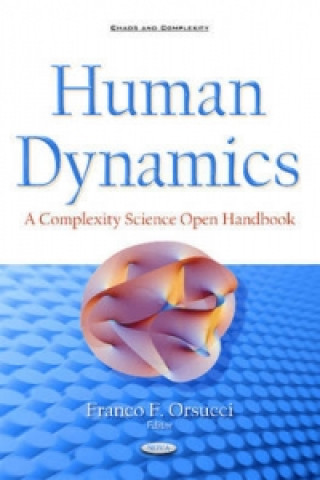
Human Dynamics
by Franco F Orsucci
The classical Roman poet, Titus Lucretius Carus (c. 99 BC c. 55 BC), described the clinamen, or swerve, as an occurrence that we now call singularity, also popularised as the butterfly effect. His poem, De Rerum Natura (On the Nat ... more


- Language:
 English
 - Binding: Hardback
- Number of pages: 302
Publisher: Nova Science Publishers Inc, 2016
- More about this

267.10 €
RRP: 296.78 €
You save 29.68 €
Availability:
50/50 We think title might be available. Upon your order we will do our best to get it within 6 weeks.
We search the world
You might also like
-

Gorzka czekolada i inne opowiadania o ważnych sprawach
10.71 € -17 % -

InvestiGators
10.21 € -29 % -

My Amy: The Life We Shared
14.76 € -25 % -

Mikrotužka Pentel GraphGear PG315 - bílá 0,5mm
3.43 € -23 % -

Bad Apple
11.32 € -25 % -

Internet Is Not What You Think It Is
29.53 € -

Proč potřebujeme Dalajlamu
10.31 € -16 % -

Fermented Foods vol. 3: Water Kefir
8.99 € -6 % -

Lucky Luke 1: La diligence
16.79 € -

Tank Girl - Armadillo and a Bushel of Other Stories
8.39 € -25 % -

Strategic Design
33.88 € -22 % -

Ithakám partját elértem... lekötöm hajómat
12.64 € -10 % -

La relazione genitore-bambino tra adeguatezza e rischio
42.08 € -9 % -

Os ecolimites no Rio de Janeiro
44.51 € -14 % -

Human Malignancies
102.99 € -7 % -

Eric
21.84 € -

Sinews of War
28.32 € -1 % -

Report on Education in Texas and Recommendations Made to the Governor and the Thirty-Seventh Legislature
13.24 € -25 % -

Televizyon Haberlerinin Gelisen ve Degisen Biçimsel Yapisi
57.86 € -14 % -

Secret of Guidance
14.36 € -

Ferrari
17.90 € -14 % -

Ausschuttungspolitik personenbezogener Kapitalgesellschaften unter Berucksichtigung der Einfuhrung des Halbeinkunfteverfahrens
42.79 € -11 % -

Explanation in Ethics and Mathematics
119.18 € -

L'Economie de La Revolution Francaise
48.05 € -

JahresZeiten an der Oberen Donau (Tischkalender 2026 DIN A5 quer), CALVENDO Monatskalender
18.71 € -11 % -

industrielle Entwicklung Polens
14.36 € -10 % -

Dream Spaces
182.41 € -

Briefe an Hermann Cardauns, Paul Fridolin Kehr, Aloys Schulte, Heinrich Finke, Albert Brackmann Und Martin Spahn 1923-1944
103.50 € -1 % -

Complex Human Dynamics
102.99 € -7 % -

Sports Related Injuries in Weight Training
174.12 € -14 % -

Human Biology Wallchts Pack(10
47.24 € -9 % -

In Those Days
19.62 € -24 % -

Poems for My Boyfriend on His Birthday: Poetry Written for Someone Special, by You, with a Little Help from Us
6.36 € -7 % -

Christmas Coloring Book: Christmas Coloring Pages for Kids
7.38 € -6 % -

Hochfürstlich Pfaltz-Zweybrückische Neu Auffgelegte Zoll- Und Geleits-Ordnung...
11.83 € -25 %
Give this book as a present today
- Order book and choose Gift Order.
- We will send you book gift voucher at once. You can give it out to anyone.
- Book will be send to donee, nothing more to care about.
Availability alert
Enter your e-mail address and once book will be available,
we will send you a message. It's that simple.
More about Human Dynamics
You get 646 loyalty points
 Book synopsis
The classical Roman poet, Titus Lucretius Carus (c. 99 BC c. 55 BC), described the clinamen, or swerve, as an occurrence that we now call singularity, also popularised as the butterfly effect. His poem, De Rerum Natura (On the Nature of Things), reminds us that an awareness of the intrinsic complexity of natural dynamics has been present for a very long times in human culture (Lucretius, 54BC in 1971; Greenblatt, 2011). It is quite recently, however, that complexity has become a suitable scientific approach. The meta-paradigm of Complexity Science crosses over different disciplines, from physics and mathematics to biology, social sciences, and now psychotherapy. Complexity Science is the scientific toolbox for complex dynamical systems. This definition comprehends a series of sub-disciplines: dissipative systems, cellular automata, fractals, catastrophes, self-organisation, self-organised criticality, chaos theory, fuzzy logic, stochastic resonance, cellular automata, neural networks, genetic algorithms, and others.
Book details
Book category Books in English Medicine Other branches of medicine Clinical psychology
267.10 €
- Full title: Human Dynamics
- Subtitle: A Complexity Science Open Handbook
- Author: Franco F Orsucci
- Language: English
- Binding: Hardback
- Number of pages: 302
- EAN: 9781634840545
- ISBN: 9781634840545
- ID: 10011918
- Publisher: Nova Science Publishers Inc
- Weight: 786 g
- Dimensions: 186 × 260 × 24 mm
- Date of publishing: 01. February 2016
Trending among others
-

On Becoming a Person
16.28 € -23 % -

Love's Executioner
12.94 € -30 % -

Doctor and the Soul
12.54 € -29 % -

Body-centered Psychotherapy
19.21 € -18 % -

Art of the Psychotherapist
20.73 € -17 % -

Dancing in the Flames
20.33 € -24 % -

Play Therapy - The Inner Dynamics of Childhood
33.88 € -10 % -

Family Therapy in Clinical Practice
105.22 € -

Overcoming Obsessive Compulsive Disorder, 2nd Edition
15.98 € -25 % -

Cognitive Behavior Therapy and Eating Disorders
63.02 € -

How Can I Forgive You?
12.74 € -25 % -

Introduction to Cognitive Behaviour Therapy
41.37 € -9 % -

Music Therapy, Sensory Integration and the Autistic Child
43.60 € -

Overcoming Perfectionism 2nd Edition
14.96 € -24 % -

Children's Solution Work
41.68 € -5 % -

Without Conscience
20.12 € -6 % -

Gift Of Therapy
13.04 € -29 % -

Manual of Psychomagic
13.95 € -29 % -

EMDR Toolbox
82.55 € -

Alchemy
20.12 € -25 % -

Polyvagal Theory in Therapy
31.56 € -5 % -

Eye Movement Desensitization and Reprocessing (EMDR) Therapy
100.56 € -

Gestalt Counselling in Action
34.59 € -10 % -

Satir Model
33.68 € -

Focusing-Oriented Psychotherapy
58.88 € -

Gestalt Therapy
19.11 € -25 % -

Cognitive Behavior Therapy
71.93 € -
Nurturing Resilience
16.18 € -24 % -

Healing the Fragmented Selves of Trauma Survivors
48.05 € -4 % -

Attachment-Focused EMDR
49.06 € -4 % -

Maps of Narrative Practice
35.40 € -7 % -

Transactional Analysis in Psychotherapy
11.32 € -

Cognitive Therapy and the Emotional Disorders
13.14 € -29 % -

Healing Path for Womb Twin Survivors
22.35 € -

Overcoming Social Anxiety and Shyness, 2nd Edition
14.26 € -19 % -

Wise Heart
16.38 € -24 % -

Contextual Schema Therapy
52.30 € -20 % -

Healing Relational Trauma with Attachment-Focused Interventions
42.89 € -5 % -

Morita Therapy and the True Nature of Anxiety-based Disorders (Shinkeishitsu)
39.15 € -

History of Madness
38.03 € -18 % -

The Inner Child Workbook
15.47 € -28 % -

Schema Therapy Clinician's Guide - A Complete Resource for Building and Delivering Individual, Group & Integrated Schema Mode Treatment Programs
46.84 € -10 % -

Teaching the Mindful Self-Compassion Program
60.90 € -

Attachment Disturbances in Adults
60.19 € -7 % -

Clinician's Guide to CBT Using Mind Over Mood
66.46 € -5 % -

Post Traumatic Success
30.65 € -5 % -

Nature of Loving
21.14 € -1 % -

Acceptance and Commitment Therapy for Borderline Personality Disorder
37.32 € -21 % -

Adolescent Identity Treatment
65.55 € -9 %
Collection points Bratislava a 13332 dalších
Copyright ©2008-26 najlacnejsie-knihy.sk All rights reservedPrivacyCookies

 26668 collection points
 Delivery 2.99 €
 02/210 210 99 (8-15.30h)