
Code: 04950308
I Remember Me - Mnemonic Self-Reference Effects in Preschool Children
by Josephine Ross, James R. Anderson, Robin N. Campbell
It is well established that children recognize themselves in mirrors by the end of infancy, showing awareness of the self as an object in the environment. However, the cognitive impact of objective self-awareness requires further ... more


- Language:
 English
 - Binding: Paperback
- Number of pages: 300
Publisher: John Wiley & Sons Inc, 2011
- More about this

46.95 €

Low in stock at our supplier
Shipping in 12 - 17 days
Potřebujete více kusů?Máte-li zájem o více kusů, prověřte, prosím, nejprve dostupnost titulu na naši zákaznické podpoře.
Add to wishlist
You might also like
-

In the end - A tribute to Chester Bennington
22.01 € -18 % -

Praktický průvodce baňkováním
16.18 € -12 % -
L'Enfant bilingue
26.54 € -

Sailor Moon 10 (Naoko Takeuchi Collection)
10.15 € -27 % -

Times Desktop Atlas of the World
26.23 € -25 % -

Проснись!
24.22 € -12 % -

Easy Knitted Fingerless Gloves
9.94 € -24 % -
Neuroscience of Emotion
61.23 € -12 % -

Livia Lone
6.83 € -59 % -

Cambridge Primary English Workbook 2 Second Edition
15.68 € -

Amazing Way to Reverse Heart Disease
11.25 € -24 % -

Evinizdeki Terapist
24.93 € -4 % -

Four Centuries of Women Composers
20.80 € -9 % -

But Aren't I Lucky That
12.26 € -7 % -

At Home with the Patagonians A Year's Wanderings Over Untrodden Ground
9.74 € -6 % -
Athéna, la déesse aux mille facettes
12.56 € -

Simple Machines
7.33 € -22 % -

Martwa strefa
9.94 € -10 % -

caccia dell'orso
9.34 € -

Why Weren't We Told?
27.34 € -

Train-the-Expert
79.23 € -

Treasure Island
14.07 € -

Primary Readers: Containing a Complete Course in Phonics, Book 2
29.85 € -2 % -
Pensamentos: Para Refletir
6.73 € -6 % -

Young Folks' History of England
12.56 € -14 % -

Carnet Blanc, Heures Anne de Bretagne, Raisin
14.67 € -2 % -

I Am Glad
19.70 € -1 % -

Agency in Ancient Writing
89.48 € -

The Lives and Opinions of Eminent Philosophers
38 € -1 % -

Le cahier d'Emeric - Blanc, 96p, A5 - Basketball
9.64 € -
Comparative Competition Law
73.39 € -5 % -

Multiple Family Therapy
46.75 € -

BEZPIECZE?STWO W ?RODOWISKU PRACY:
43.13 € -14 % -

Compendious History of New England, from the Discovery by Europeans to the First General Congress of the Anglo-American Colonies.
27.54 € -25 % -

Oxford Reading Tree inFact: Level 9: Class Pack of 36
384.21 € -

Sedimentation History Along the East Greenland Margin
61.83 € -14 % -

Misery and Company
41.42 € -
Ray the Unstoppable: Tales of the Can-Do Kid
11.45 € -7 % -

Encyclopedia of Early Modern History, Volume 2: (Beggar - Class Consciousness)
403.42 € -

Health Effects of Cannabis
41.72 € -10 % -

Nests And Eggs Of Familiar Birds (1890)
28.15 € -1 % -

Harriet, the Moses of Her People
7.23 € -6 % -

Relationships
8.03 € -2 % -

Estudios en la estructura genetica de la Perdiz Roja
52.28 € -14 % -
Road to Information Literacy
128.30 € -4 % -

Beyond the Persecuting Society
35.18 € -7 % -

Ensemble Works: an anthology
17.49 € -10 % -

Dark Matter
27.74 € -

rejected stone
15.17 € -14 % -

Dictionnaire Politique Napoleonien. Opinions, Pensees, Maximes Extraites Des Ouvrages
16.98 € -8 % -

Brigands of Palestra
17.29 € -

Knight Of Cheerful Countenance
23.92 € -

Que Bela Loira
10.65 € -6 % -

Warriors of Wakanda (Marvel: Black Panther)
5.62 € -17 % -

Le chevalier d'Harmental
20.10 € -7 % -

The Trappers Of Arkansas: Or The Loyal Heart (1864)
31.66 € -2 % -

Next Steps to the Cross
16.08 € -2 % -

Study Guide to John E. H. Sherry, "The Laws of Innkeepers, Third Edition"
99.54 € -

Vom Ende an
16.48 € -
Assortiment comptines nature 10vols mars 2005
74.20 € -

Süheyl Ünverin Defter-i Mesahirleri Ciltli
39.71 € -4 % -

Thermo-Hydro-Mechanical-Chemical Processes in Porous Media
102.35 € -7 % -

Jules Cesar Schmidt
12.06 € -

Performance Evaluation of Industrial Wastewater Treatment Plant
35.49 € -14 % -

La Reine Margot
17.39 € -2 % -

Sommertagtraum
18.19 € -6 % -

Who's That Woman in the Mirror?
14.17 € -20 % -

None Came Home
15.27 € -1 % -

Discipleship Explored: Universal Edition Leader's Guide
9.64 € -9 % -

Chief Recensions of the Book of Tobit
25.43 € -2 %
Give this book as a present today
- Order book and choose Gift Order.
- We will send you book gift voucher at once. You can give it out to anyone.
- Book will be send to donee, nothing more to care about.
More about I Remember Me - Mnemonic Self-Reference Effects in Preschool Children
You get 114 loyalty points
 Book synopsis
It is well established that children recognize themselves in mirrors by the end of infancy, showing awareness of the self as an object in the environment. However, the cognitive impact of objective self-awareness requires further elucidation. This gap in the literature is addressed in a series of 7 experiments exploring the role of self in 3- and 4-years-old' event memory. A mnemonic bias for self-relevant material has been described in adults. This effect is thought to be based on the organizational properties of a highly elaborated self-concept, and so offers a clear route to study the child's developing sense of self. However, very few studies have investigated the ontogeny of this effect. New evidence is provided to suggest that preschool children, like adults, show a mnemonic advantage for material that has been physically linked with the self through performance of a depicted action (Experiment 1). Moreover, 3- and 4-year olds show a bias for material that has been visually and linguistically processed with the self-image (Experiments 2, 3, 4), and material that has been socio-cognitively linked to the self in terms of ownership (Experiments 5, 6, 7). The data imply that both bottom-up (kinesthetic feedback, self-concept) and top-down (attention) aspects of self reflection may play a supporting role in early event memory, perhaps representing a nascent form of autobiographical processing. Importantly, this research highlights a promising methodology for elucidating the executive role of the self in cognition. Following William James' (1890) influential conception of the self, it seems that in typical development, "I" is primed to remember "me".
Book details
Book category Books in English Society & social sciences Psychology Child & developmental psychology
46.95 €
- Full title: I Remember Me - Mnemonic Self-Reference Effects in Preschool Children
- Author: Josephine Ross, James R. Anderson, Robin N. Campbell
- Language: English
- Binding: Paperback
- Number of pages: 300
- EAN: 9781118257999
- ISBN: 1118257995
- ID: 04950308
- Publisher: John Wiley & Sons Inc
- Weight: 168 g
- Dimensions: 229 × 151 × 6 mm
- Date of publishing: 24. October 2011
Trending among others
-

Integrating Play Therapy and Emdr with Children
13.87 € -1 % -

Secure Base
30.06 € -

Disappearance of Childhood
12.06 € -28 % -
Understanding Human Nature
11.96 € -

Highly Sensitive Child
15.07 € -28 % -
NurtureShock
14.67 € -25 % -

Playing and Reality
37.70 € -

Uses of Enchantment
13.16 € -28 % -
Free to Learn
14.67 € -25 % -
Assessing Adult Attachment
42.22 € -18 % -
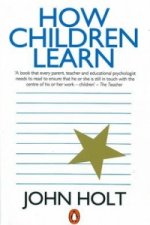
How Children Learn
13.97 € -24 % -

Maturity
13.97 € -25 % -

Child Psychology: A Very Short Introduction
9.94 € -24 % -

Child
55.70 € -
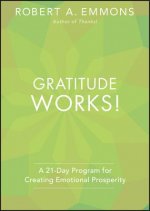
Gratitude Works! A 21-Day Program for Creating Emotional Prosperity
18.99 € -25 % -

Art and Science of Personality Development
43.63 € -

Abnormal Child Psychology
110.80 € -

Autism Spectrum Disorders
27.14 € -

Interpersonal World of the Infant
27.84 € -

Range
21.61 € -24 % -

Conscious Parent
17.89 € -25 % -

Affect Regulation, Mentalization, and the Development of the Self
36.19 € -2 % -
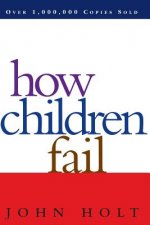
How Children Fail
14.67 € -25 % -

Attachment
30.66 € -
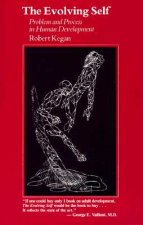
Evolving Self
71.28 € -

Early Trauma
28.15 € -1 % -

Mothers, Sons, and Lovers
27.24 € -18 % -

The Psychology of the Child
24.22 € -
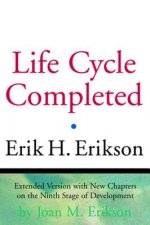
Life Cycle Completed
12.36 € -21 % -

Identity and the Life Cycle
13.06 € -21 % -

Early Start Denver Model for Young Children with Autism
75.61 € -

Bright Kids Who Can't Keep Up
12.66 € -24 % -
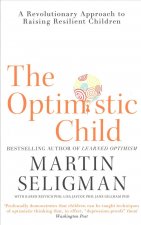
Optimistic Child
17.99 € -24 % -

Truth Will Set You Free
16.08 € -17 % -

Tree of Knowledge
27.84 € -27 % -
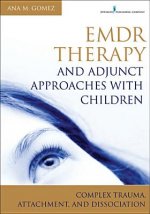
EMDR Therapy and Adjunct Approaches with Children
71.99 € -
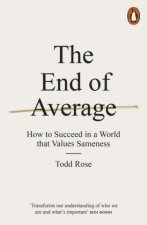
End of Average
13.26 € -27 % -

Developmental Neuropsychology
62.64 € -

Trapped in the Mirror
13.97 € -25 % -
Me, Myself, and Us
14.67 € -25 % -

Cambridge Handbook of Infant Development
74.70 € -
Teenage Brain
15.88 € -25 % -

Bilingual
25.63 € -12 % -
Attention, Balance and Coordination - The A.B.C.of Learning Success 2e
73.70 € -2 % -
Neurobiology and the Development of Human Morality
32.07 € -38 % -
Brain Child
18.29 € -20 % -

Self Efficacy
89.18 € -

Sandtray Play in Education
17.69 € -

Moral Judgment of the Child
21.31 € -17 %
Collection points Bratislava a 13392 dalších
Copyright ©2008-26 najlacnejsie-knihy.sk All rights reservedPrivacyCookies

 26788 collection points
 Delivery 2.99 €
 02/210 210 99 (8-15.30h)