Code: 01253705
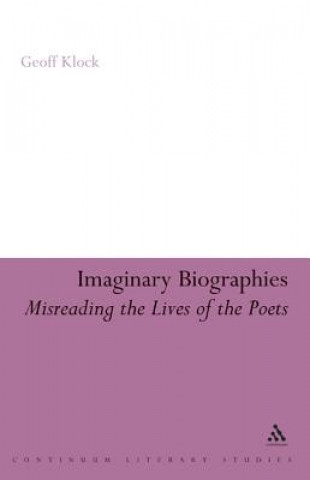
Imaginary Biographies
by Geoff Klock
In 1946, French film critic Nino Frank, having just seen "The Maltese Falcon", "Double Indemnity", "Laura", and "Murder", "My Sweet" linked them all with the term "film noir." No one working on these projects knew they were making ... more


- Language:
 English
 - Binding: Hardback
- Number of pages: 288
Publisher: Bloomsbury Publishing, 2007
- More about this

181.93 €
RRP: 181.98 €
You save 0.06 €

In stock at our supplier
Shipping in 10 - 18 days
You might also like
-

Cambridge Primary English Learner's Book 3 with Digital Access (1 Year)
26.53 € -
Complete Advanced Class Audio CDs (2)
34.50 € -8 % -
Zot!
15.93 € -25 % -

Past Finder Munich 1933 - 45
11.80 € -14 % -
Life's Golden Ticket
7.46 € -

Among Cultists: A Social Deduction Thriller
59.73 € -2 % -
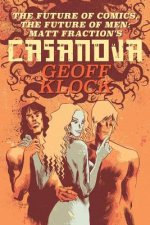
The Future of Comics, the Future of Men: Matt Fraction's Casanova
12.30 € -7 % -
Souvenirs de jeunesse 1939 - 1945
6.75 € -
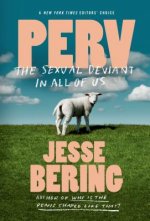
Perv
13.41 € -24 % -
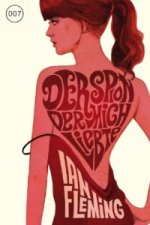
James Bond 007, Der Spion, der mich liebte
11.19 € -13 % -

INU X BOKU SS 8
10.79 € -
Ken's Guide to the Bible
8.87 € -
Teeny-Tiny Woman
6.95 € -26 % -
Rise of the President's Permanent Campaign
34 € -
Isus iz Nazareta
47.11 € -14 % -

Routledge Historical Atlas of Religion in America
243.88 € -
133 exercices corrigés de Mathématiques Terminale ES
18.66 € -
Pick Your Own Quest
10.28 € -2 % -

Bitcoin: Technical Background and Data Analysis
20.78 € -

Life System Modeling and Intelligent Computing
110.28 € -
Readerful Independent Library: Oxford Reading Level 20: Sleuth School: Jeremy Swift Investigates
10.79 € -17 % -

Analisis del Desarrollo del Reglamento Ce N 479/2008
86.97 € -14 % -

Meine Kindergartenfreunde: A5 Freundebuch / Kindergartenfreundebuch / Meine Kindergartenfreunde für Mädchen und Jungen im Kindergarten
9.98 € -6 % -
SLAY
8.67 € -25 % -
On Route 66
14.82 € -1 % -

Melancholy of Suzumiya Haruhi-chan, Vol. 5
12.60 € -15 % -
BEST THERE IS AT WHAT HE DOES
15.73 € -7 % -
Simple Views On Condensed Matter (Third Edition)
208.26 € -
Basement Tectonics 7
205.23 € -7 % -

CALENDARIO 2024 PARED ICONOS
15.43 € -

Upper Clyde Valley, Biggar & Lanark
18.05 € -24 % -
Edgar Allan Poe in Context
146.71 € -
Affective Worlds
143.48 € -

Was sind gute Schulen?
31.37 € -
Spellbound
42.57 € -

Amours solitaires - Une petite éternité
21.18 € -

Seek The Hidden Images! A Kids Look And Find Activity Book
14.02 € -25 % -
Adieu
12.30 € -7 % -

Dulces palabras de amor
13.92 € -17 % -
Serendipity: Found Poems From Ramona Convent's Class of 2019
8.97 € -6 % -
The Peach Stone
41.66 € -2 % -
Reports of Cases Argued and Determined in the Circuit Court of the United States for the First Circuit, Volume 3
40.76 € -2 % -

Male Infertility: Understanding, Causes and Treatment
153.97 € -7 % -
Mariupol 22. Life is a Story - story.one
16.24 € -10 % -

Rainwater-Smart Agriculture in Arid and Semi-Arid Areas
153.97 € -7 % -
Artificial Fireworks: Improved to the Modern Practice, from the Minutest to the Highest Branches (1901)
25.52 € -2 % -

Alles klar? Übungsbuch
12.60 € -7 % -
A tus órdenes
7.86 € -

ELS POEMES D'EN LEANDRE CAULFIELD
21.48 € -

Encyclopedia of Mass Spectrometry
478.49 € -10 % -
arte, spiegata. La guida, dettaglio per dettaglio, a 500 dei più grandi capolavori d'arte del mondo
49.03 € -
Accumulating Lives
18.25 € -7 % -

Air Fryer Cookbook
10.59 € -25 % -

Elder Abuse and Neglect in Residential Settings
132.78 € -
Unnatural Narratology
96.66 € -
Le sang des farines
36.11 € -
Astrologia ja Henkinen Tie
24.11 € -14 % -
Easter For Kids: A Fascinating Book Containing Easter Facts, Trivia, Images & Memory Recall Quiz: Suitable for Adults & Children
22.49 € -7 % -
Science, Society and Sustainability
70.73 € -

Ferroelectric Random Access Memories
322.69 € -
Lanza del vasto
8.57 € -

Field Guide to West Australian Beaufortias, Eremaeas, Kunzeas and Regelias
31.17 € -
Space
28.24 € -2 % -

Bilder aus dem roemischen Altertum
16.14 € -10 % -
Unfolding the City
31.88 € -

Global Health
69.72 € -

Bankenaufsicht und Regulierung
17.04 € -10 % -
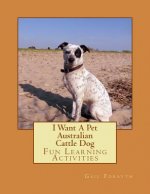
I Want A Pet Australian Cattle Dog: Fun Learning Activities
9.78 € -6 % -
Living Waters from Ancient Springs
49.54 € -20 % -

Healthy Cooking Recipes
10.89 € -2 %
Give this book as a present today
- Order book and choose Gift Order.
- We will send you book gift voucher at once. You can give it out to anyone.
- Book will be send to donee, nothing more to care about.
More about Imaginary Biographies
You get 441 loyalty points
 Book synopsis
In 1946, French film critic Nino Frank, having just seen "The Maltese Falcon", "Double Indemnity", "Laura", and "Murder", "My Sweet" linked them all with the term "film noir." No one working on these projects knew they were making film noirs; Frank invented a label that connected them after the fact, and it is because of his label that the genre became famous. "Imaginary Biographies: Misreading the Lives of the Poets" aims to do for poetry what Frank did for film: to gather together previously unrelated works in order to better understand and appreciate them as a new, unrecognized literary genre. In "Imaginary Biographies", Geoff Klock argues that the bizarre portrayal of historical writers in post-Enlightenment English poetry constitutes a genre, a battleground for two central conflicts: the confrontation of the self-sufficient Romantic imagination with the brute fact of external precursors (in the nineteenth century); and the participation in, and simultaneous deflation of, Romantic idealism (in the twentieth). In William Blake's "Milton", the author of "Paradise Lost" returns to earth to redeem his female half, confront Satan and herald the apocalypse. Percy Bysshe Shelley's Jean-Jacques Rousseau has been physically deformed and mentally ruined by a hellish chariot in "The Triumph of Life". Algernon Charles Swinburne, in his Anactoria, hijacks the ancient Greek poetess Sappho and turns her into his anti-Christian Sadistic lesbian vampire cannibal Muse. In "The Changing Light at Sandover", James Merrill contacts W.H. Auden and William Butler Yeats with a Ouija board and discovers their part in an insane cosmic hierarchy. Samuel Taylor Coleridge and Robert Southey abandoned their youthful plans to establish a utopian community in America; Paul Muldoon's Madoc imagines they went through with it and describes the ensuing disaster. John Ashbery's "Sleepers Awake" gages the work of Miguel de Cervantes, James Joyce and Homer in terms of how much they slept while writing. In "TV Men", Anne Carson portrays "Thucydides", "Sappho", and "Antonin Artaud" anachronistically preparing, or being prepared for, television adaptations. Klock makes the audacious and fascinating case that the imaginary biography is in continuity with literary criticism. He concentrates on how one poet misreads another by explicitly naming the earlier poet in the latter poem. This "misreading" forms a new genre, creating a new kind of character and a new kind of poem. The result is a dazzling work of literary scholarship that will stimulate debate for years to come.
Book details
Book category Books in English Literature & literary studies Literature: history & criticism Literary studies: general
181.93 €
- Full title: Imaginary Biographies
- Author: Geoff Klock
- Language: English
- Binding: Hardback
- Number of pages: 288
- EAN: 9780826428028
- ISBN: 0826428029
- ID: 01253705
- Publisher: Bloomsbury Publishing
- Weight: 566 g
- Dimensions: 231 × 162 × 27 mm
- Date of publishing: 01. April 2007
Trending among others
-
How to Read a Book
14.62 € -6 % -
Odyssey (Deckle Edge)
16.14 € -25 % -
The Picture of Dorian Gray
7.15 € -17 % -
Metamorphoses
7.15 € -25 % -

Saga of Tanya the Evil, Vol. 3
9.98 € -24 % -
Villette
9.68 € -25 % -
Mysteries of Udolpho
10.38 € -30 % -
If Not, Winter: Fragments Of Sappho
18.05 € -24 % -
Plainwater
14.02 € -25 % -
SEOUL University Korean 1B Workbook (QR), m. 1 Audio
34 € -
SEOUL University Korean 1B Student's Book (QR), m. 1 Audio
49.94 € -
Gravity's Rainbow Companion
40.05 € -
Germinal
7.15 € -25 % -
Zofloya or The Moor
10.38 € -24 % -
Moby-Dick
18.46 € -
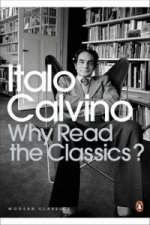
Why Read the Classics?
11.59 € -26 % -
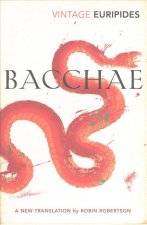
Bacchae
8.67 € -24 % -
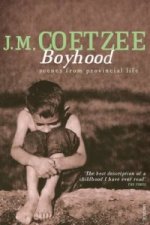
Boyhood
10.59 € -28 % -
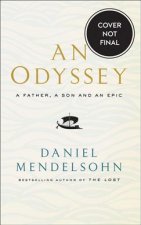
Odyssey: A Father, A Son and an Epic
12.40 € -28 % -
Art of Rhetoric
11.29 € -28 % -
Three Theban Plays
12.60 € -27 % -
Tenant of Wildfell Hall
8.57 € -24 % -
Poetics
9.27 € -24 % -
Mabinogion
18.05 € -24 % -
Literature and Evil
10.99 € -30 % -
Orphic Hymns
30.16 € -
Letters to a Young Poet
16.14 € -25 % -
Faust, Part I
8.57 € -25 % -
Experiment in Criticism
14.62 € -29 % -
Apollonius of Tyana
31.17 € -
Selected Literary Essays
17.55 € -24 % -
Golden Ass
10.59 € -25 % -
David Copperfield
7.15 € -25 % -
Apollonius of Tyana
33.49 € -
Sea Monkeys
13.81 € -18 % -
Complete English Poems
18.05 € -24 % -
Elias Portolu
50.44 € -
Nineteenth-Century Minor Poets
28.65 € -14 % -
Exposition of the ""On the Hebdomads"" of Boethius
25.32 € -
Twelfth Night
10.59 € -25 % -
Politics
32.89 € -9 % -
Reading Promise
14.42 € -19 % -

In My Father's Court
25.92 € -
Ecstasy of the Beats
17.55 € -14 % -
Homer Vol. I. Iliad (Books I-XII)
37.12 € -
The Karamazov Brothers
10.38 € -24 % -
Iliad
4.73 € -29 % -
Odyssey
9.27 € -29 % -
The Iliad - Penguin Classics Deluxe Edition
14.42 € -30 %
Collection points Bratislava a 13250 dalších
Copyright ©2008-26 najlacnejsie-knihy.sk All rights reservedPrivacyCookies

 26504 collection points
 Delivery 2.99 €
 02/210 210 99 (8-15.30h)