Code: 04838993
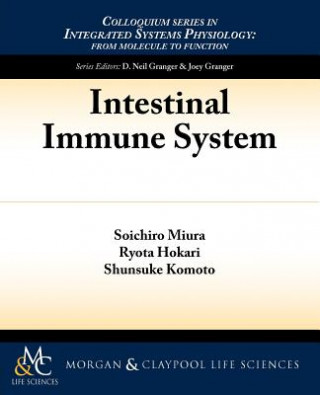
Intestinal Immune System
by Soichiro Miura
In the intestine, a unique immunological system that is different from the systemic immune system exists to provide adaptive immunity in response to luminal bacteria and dietary antigens. There are many lymphoid cell aggregates ca ... more


- Language:
 English
 - Binding: Paperback
- Number of pages: 122
Publisher: Morgan & Claypool Publishers, 2011
- More about this


You might also like
-

Oxford Reading Tree: Level 1+: Floppy's Phonics Non-Fiction: Pets
8.08 € -
Obr.
15.56 € -16 % -

EL PRINCIPITO
18.09 € -

Refugee's Journey from Iraq
10.81 € -24 % -

THE HOUSE OF RIMMON
34.56 € -2 % -

Everybody Poops Coloring Book for Mighty Poopers!
7.57 € -2 % -

Nurse, Soldier, Spy
9.70 € -9 % -

Adventures with My Stick and Carpet Bag; Or What I Saw in Austria and the East.
15.36 € -24 % -

Annäherungen
69.54 € -

British Museum Pocket Timeline of Ancient Rome
20.31 € -

ALFRED'S PREMIER PIANO COURSE: LESSON BOOK 2A PIANO
18.69 € -

Gedichte
35.58 € -11 % -

Fantasmas Urbanos: Crônicas, Causos E Histórias
7.67 € -7 % -

Recurrent Crisis in Corporate Governance
55.69 € -

Contribución de la teledetección a la estimación de las extracciones de agua subterránea
35.68 € -14 % -

Strömungsmaschinen
50.84 € -

W
13.54 € -10 % -

Efeito de GABA e Spermine Foliar Spermine Spray no Moinho Rosa Damasce
40.93 € -14 % -

How to Rule the World
12.32 € -7 % -

100 Worksheets - Find Predecessor and Successor of 7 Digit Numbers: Math Practice Workbook
8.99 € -6 % -

Narrating the Catastrophe
73.59 € -

Deal Decade
30.52 € -

Le Developpement D Une Relation Durable de Conseil Aupres de Tpe
102.10 € -12 % -

Fatzer, fragment
19.20 € -

Racism, Sexism, and the University
37.19 € -5 % -

Flora of Tropical East Africa
34.06 € -

Our Shared Opportunity
58.83 € -
![Voyage Au Cap Nord Et En Laponie Par La Finlande ... Deuxie Me E Dition. [Illustrated.]](https://media.libris.to/jacket/08113372t.jpg "Voyage Au Cap Nord Et En Laponie Par La Finlande ... Deuxie Me E Dition. [Illustrated.]")
Voyage Au Cap Nord Et En Laponie Par La Finlande ... Deuxie Me E Dition. [Illustrated.]
25.36 € -2 %
Give this book as a present today
- Order book and choose Gift Order.
- We will send you book gift voucher at once. You can give it out to anyone.
- Book will be send to donee, nothing more to care about.
More about Intestinal Immune System
You get 100 loyalty points
 Book synopsis
In the intestine, a unique immunological system that is different from the systemic immune system exists to provide adaptive immunity in response to luminal bacteria and dietary antigens. There are many lymphoid cell aggregates called gut-associated lymphoid tissue (GALT) including Peyer's patches (PPs), which function as important induction sites for the mucosal immune response. M-cells are present in the epithelium of PPs, having a specialized structure for uptake of macromolecules such as bacteria. In addition to GALT, there are abundant lymphoid cells in the intestinal lamina propria, where they mainly play a role as immune effector cells. A strong innate immune system that mainly consists of dendritic cells, macrophages, and żdT lymphocytes also exists in the intestinal mucosa to assist the barrier function of intestinal epithelial cells. The intestinal mucosa thus shows a unique morphological structure with many immune cells being present under physiological conditions. This condition is known as "controlled inflammation." These abundant immune cells also have characteristic functions: they are "negatively regulated" and have been educated not to overreact unnecessarily to the intestinal luminal milieu. Main players that control inflammation of the intestinal mucosa include regulatory cytokines and regulatory T cells which induce oral tolerance to intestinal bacteria and food antigens, and the secretory IgA system. The maintenance of unique immunological activity in the intestine is also related to an organized, orchestrated lymphocyte migratory mechanism called the "common mucosal immune system." These negative regulatory mechanisms of the intestinal immune system are disturbed in certain disease conditions, causing the immunocompetent cells to respond to food components and commensal bacteria by becoming activated and to overproduce inflammatory cytokines and chemokines. These disease conditions include food allergies, such as celiac disease, and the inflammatory bowel diseases, such as ulcerative colitis and Crohn's disease, although their exact etiological mechanisms remain to be revealed. Table of Contents: Introduction / GALT: Its Structure and Formation / Intestinal Epithelial Cells and Their Immune Function / Innate Immunity in the Intestinal Mucosa / Intraepithelial Lymphocytes (IELs) / Lymphoid Cell Trafficking in Intestinal Immunology / Site of Induction of Mucosal Immunity and Antigen Presentation by Dendritic Cells / Production of Secretory IgA (SIgA) / Effector Site of Acquired Immunity and T Helper Cell Subpopulation / Immune Regulatory System and Oral Tolerance / Food Allergy and Celiac Disease / Inflammatory Bowel Diseases / Enteric Infection with Pathogenic Microbes and Mucosal Immunity / References
Book details
Book category Books in English Mathematics & science Biology, life sciences Developmental biology
41.14 €
- Full title: Intestinal Immune System
- Author: Soichiro Miura
- Language: English
- Binding: Paperback
- Number of pages: 122
- EAN: 9781615041442
- ISBN: 1615041443
- ID: 04838993
- Publisher: Morgan & Claypool Publishers
- Weight: 236 g
- Dimensions: 235 × 192 × 8 mm
- Date of publishing: 25. August 2011
Trending among others
-
Developmental Biology: A Very Short Introduction
10 € -24 % -

Manipulating the Mouse Embryo: A Laboratory Manual, Fourth Edition
157.39 € -

Handbook of the Biology of Aging
114.02 € -10 % -
Developmental Biology
271.93 € -

Principles of Development
210.67 € -

Developmental Biology
67.02 € -

World Beyond Physics
31.03 € -12 % -

Biology of Lungfishes
111.50 € -

Developmental Biology of Higher Fungi
77.02 € -

Development of Animal Form
51.45 € -
Evo-Devo: Non-model Species in Cell and Developmental Biology
174.78 € -7 % -
Circulating Tumor Cells, From Biotech Innovation to Clinical Utility Part B
236.15 € -

Insect Ecomorphology
179.13 € -10 % -
Instrumental Insemination of Honey Bee Queens
21.62 € -10 % -
Immuno-oncology and immunotherapy Part B
164.17 € -9 % -

Vertebrate Development
226.04 € -7 % -

Growth, Differentiation and Sexuality
365.55 € -

The Neocortex, 1
154.26 € -7 % -

Playing With Form
66.61 € -
Current Topics in Developmental Biology
184.18 € -9 % -

Essentials of Stem Cell Biology
147.08 € -10 % -

Organoids and Mini-Organs
114.02 € -10 % -

Electroporation and Sonoporation in Developmental Biology
143.95 € -7 % -

Principles of Embryology
84.61 € -
Zebrafish: Cellular and Developmental Biology, Part A Cellular Biology
180.95 € -

Low-Temperature Microscopy and Analysis
205.62 € -7 % -

Physiology of Prenatal Exercise and Fetal Development
50.54 € -9 % -

Angiogenesis
281.44 € -9 % -
Photoautotrophic (sugar-free medium) Micropropagation as a New Micropropagation and Transplant Production System
205.62 € -7 % -

Cell Cycle in Development
205.62 € -7 % -
Heterochrony in Evolution
205.62 € -7 % -
Devbio Laboratory Vade Mecum3
47.10 € -

Evolutionary Biology: Applied Principles
119.89 € -12 % -

Maternal-to-Zygotic Transition
207.84 € -
Zebrafish: Cellular and Developmental Biology, Part B Developmental Biology
180.95 € -

Kaufman’s Atlas of Mouse Development Supplement
174.18 € -9 % -

Nuclear Receptors in Development and Disease
169.12 € -10 % -

Transdifferentiation
109.07 € -

Cell Cycle in Development
205.62 € -7 % -

Conceptual History of Modern Embryology
102.90 € -7 % -

Fetal Stem Cells in Regenerative Medicine
154.26 € -7 % -

Embryo Development
155.57 € -9 % -

Development of Auditory and Vestibular Systems
117.06 € -10 % -
Forces and Tension in Development
174.18 € -9 % -

Handbook of Stem Cell Therapy, 2 Teile
872.74 € -7 % -

Advances in Male Mediated Developmental Toxicity
154.26 € -7 % -

The Neocortex
154.26 € -7 % -

Branching Morphogenesis
154.26 € -7 % -

Introduction to Animal Behavior: An Integrative Approach
19 € -10 %
Collection points Bratislava a 13230 dalších
Copyright ©2008-26 najlacnejsie-knihy.sk All rights reservedPrivacyCookies

 26464 collection points
 Delivery 2.99 €
 02/210 210 99 (8-15.30h)