Code: 39295008
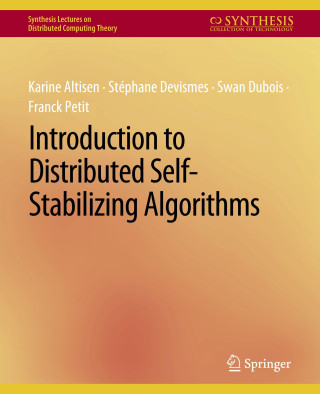
Introduction to Distributed Self-Stabilizing Algorithms
by Franck Petit, Swan Dubois, Stéphane Devismes
This book aims at being a comprehensive and pedagogical introduction to the concept of self-stabilization, introduced by Edsger Wybe Dijkstra in 1973. Self-stabilization characterizes the ability of a distributed algorithm to conv ... more


- Language:
 English
 - Binding: Paperback
- Number of pages: 147
Publisher: Springer International Publishing AG, 2019
- More about this

60.56 €
RRP: 67.05 €
You save 6.49 €

In stock at our supplier
Shipping in 5 - 8 days
You might also like
-

Fascial Release for Structural Balance
31.74 € -9 % -

The Very Hungry Worry Monsters
8.89 € -21 % -

Artificial Intelligence and Cybersecurity
164.50 € -7 % -

Mini Colouring Book for Adults: Selection of Patterns & Mandalas to Carry With You Everywhere
8.28 € -7 % -

Home Before Dark
9.39 € -2 % -

South Sea Bubble
17.08 € -10 %
Give this book as a present today
- Order book and choose Gift Order.
- We will send you book gift voucher at once. You can give it out to anyone.
- Book will be send to donee, nothing more to care about.
More about Introduction to Distributed Self-Stabilizing Algorithms
You get 147 loyalty points
 Book synopsis
This book aims at being a comprehensive and pedagogical introduction to the concept of self-stabilization, introduced by Edsger Wybe Dijkstra in 1973. Self-stabilization characterizes the ability of a distributed algorithm to converge within finite time to a configuration from which its behavior is correct (i.e., satisfies a given specification), regardless the arbitrary initial configuration of the system. This arbitrary initial configuration may be the result of the occurrence of a finite number of transient faults. Hence, self-stabilization is actually considered as a versatile non-masking fault tolerance approach, since it recovers from the effect of any finite number of such faults in an unified manner. Another major interest of such an automatic recovery method comes from the difficulty of resetting malfunctioning devices in a large-scale (and so, geographically spread) distributed system (the Internet, Pair-to-Pair networks, and Delay Tolerant Networks are examples of such distributed systems). Furthermore, self-stabilization is usually recognized as a lightweight property to achieve fault tolerance as compared to other classical fault tolerance approaches. Indeed, the overhead, both in terms of time and space, of state-of-the-art self-stabilizing algorithms is commonly small. This makes self-stabilization very attractive for distributed systems equipped of processes with low computational and memory capabilities, such as wireless sensor networks.After more than 40 years of existence, self-stabilization is now sufficiently established as an important field of research in theoretical distributed computing to justify its teaching in advanced research-oriented graduate courses. This book is an initiation course, which consists of the formal definition of self-stabilization and its related concepts, followed by a deep review and study of classical (simple) algorithms, commonly used proof schemes and design patterns, as well as premium results issued from the self-stabilizing community. As often happens in the self-stabilizing area, in this book we focus on the proof of correctness and the analytical complexity of the studied distributed self-stabilizing algorithms.Finally, we underline that most of the algorithms studied in this book are actually dedicated to the high-level atomic-state model, which is the most commonly used computational model in the self-stabilizing area. However, in the last chapter, we present general techniques to achieve self-stabilization in the low-level message passing model, as well as example algorithms.
Book details
Book category Books in German Naturwissenschaften, Medizin, Informatik, Technik Informatik, EDV Informatik, EDV - Allgemeines
60.56 €
- Full title: Introduction to Distributed Self-Stabilizing Algorithms
- Author: Franck Petit, Swan Dubois, Stéphane Devismes
- Language: English
- Binding: Paperback
- Number of pages: 147
- EAN: 9783031008856
- ISBN: 3031008855
- ID: 39295008
- Publisher: Springer International Publishing AG
- Weight: 329 g
- Dimensions: 235 × 191 × 10 mm
- Date of publishing: 15. April 2019
Trending among others
-

Resident Evil: Of Zombies And Men
21.63 € -25 % -

Alignment Problem - Machine Learning and Human Values
11.32 € -25 % -

Comptia Network+ Certification Kit: Exam N10-009
59.55 € -25 % -

Bulletproof TLS and PKI, Second Edition
63.69 € -1 % -
Distributed Systems
35.38 € -7 % -

How to Raise a Healthy Gamer: End Power Struggles, Break Bad Screen Habits, and Transform Your Relationship with Your Kids
20.31 € -24 % -

The Dream Machine
14.96 € -24 % -
CompTIA Network+ N10-009 Cert Guide
42.36 € -24 % -

Data Grab: The New Colonialism of Big Tech and How to Fight Back
18.90 € -25 % -

ISO/IEC 42001:2023 and Legal Compliance
18.29 € -24 % -
HTML and CSS: The Comprehensive Guide
42.26 € -25 % -
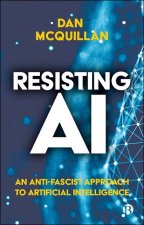
Resisting AI
23.75 € -24 % -

The Investigator's Guide to Online Research & OSINT
14.05 € -25 % -

Wires of War
14.85 € -24 % -
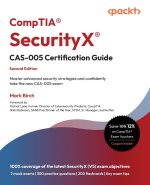
CompTIA® SecurityX® CAS-005 Certification Guide - Second Edition
41.75 € -2 % -

Microsoft Fabric Analytics Engineer Associate Study Guide
42.36 € -24 % -

Smalltalk Mastery
26.89 € -7 % -
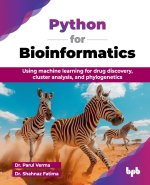
Python for Bioinformatics
37.81 € -
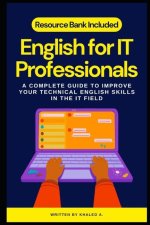
English for IT Professionals
9.80 € -6 % -

Dopamine Kids
18.19 € -24 % -

Beading with Algorithms: Cellular Automata in Peyote Stitch
39.12 € -

Exam Ref PL-300 Power BI Data Analyst
33.46 € -14 % -
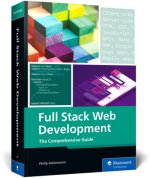
Full Stack Web Development: The Comprehensive Guide
42.26 € -25 % -

Hacking and Security: The Comprehensive Guide to Penetration Testing and Cybersecurity
42.36 € -24 % -

Writing Is Designing
51.05 € -
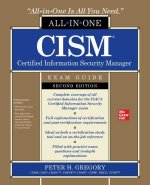
CISM Certified Information Security Manager All-in-One Exam Guide, Second Edition
42.36 € -26 % -

Test Automation Fundamentals: A Study Guide for the Certified Test Automation Engineer Exam * Advanced Level Specialist * Istqb(r) Compliant
35.38 € -25 % -
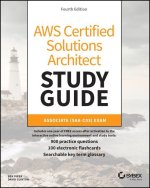
AWS Certified Solutions Architect Study Guide: Associate SAA-C03 Exam, 4th Edition
42.36 € -26 % -
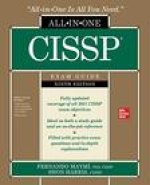
CISSP All-in-One Exam Guide, Ninth Edition
49.13 € -26 % -
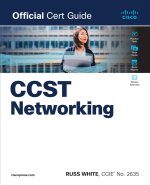
CCST Networking Official Cert Guide
35.48 € -24 % -
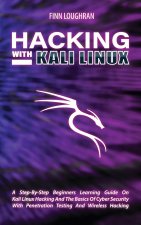
Hacking with Kali Linux
14.75 € -25 % -

Writing for Games
64.91 € -

Starflight
20.21 € -

Transportation Management with SAP S/4hana
69.86 € -24 % -
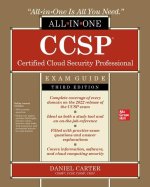
CCSP Certified Cloud Security Professional All-in-One Exam Guide, Third Edition
42.36 € -26 % -

Zero Trust Security
38.82 € -25 % -

Learn Computer Forensics - Second Edition
46.30 € -2 % -

Unlocking LaTeX Graphics
28.30 € -1 % -
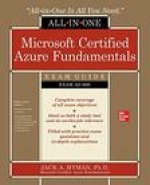
Microsoft Certified Azure Fundamentals All-in-One Exam Guide (Exam AZ-900)
28.71 € -26 % -

Financial Accounting with SAP S/4hana: Business User Guide
79.47 € -4 % -

100 Greatest Commodore 64 Games
11.72 € -1 % -
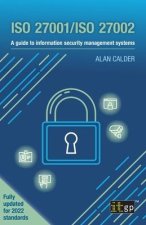
ISO 27001/ISO 27002
25.17 € -6 % -
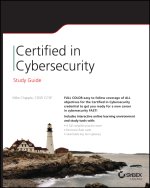
Certified in Cybersecurity Study Guide
28.71 € -26 % -

Docker
35.38 € -25 % -

The Optimist
23.25 € -29 % -

A Hacker's Mind: How the Powerful Bend Society's Rules, and How to Bend Them Back
14.75 € -25 % -

31 Days Before Your CCNP and CCIE Enterprise Core Exam
35.48 € -24 % -
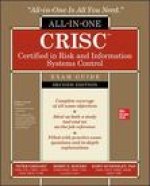
CRISC Certified in Risk and Information Systems Control All-in-One Exam Guide, Second Edition
42.36 € -24 % -

Faster Than Light
20.21 €
Collection points Bratislava a 12619 dalších
Copyright ©2008-26 najlacnejsie-knihy.sk All rights reservedPrivacyCookies

 25242 collection points
 Delivery 2.99 €
 02/210 210 99 (8-15.30h)