Code: 01209315
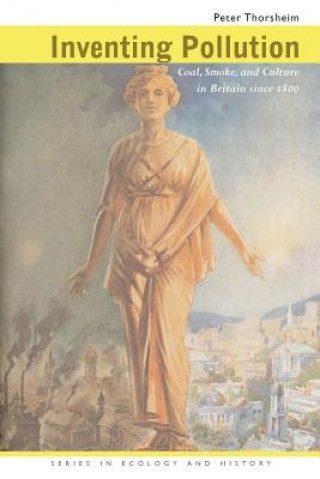
Inventing Pollution
by Peter Thorsheim
Britain's supremacy in the nineteenth century depended in large part on its vast deposits of coal. This coal not only powered steam engines in factories, ships, and railway locomotives but also warmed homes and cooked food. As coa ... more


- Language:
 English
 - Binding: Paperback
- Number of pages: 360
Publisher: Ohio University Press, 2006
- More about this


You might also like
-

Prima aktiv - Deutsch für Jugendliche - A2: Band 2
8.18 € -35 % -

En cuisine !
47.73 € -

ORGULLO Y PREJUICIO
15.87 € -10 % -

Black Potatoes
8.79 € -28 % -

Reise Know-How Landkarte Armenien / Armenia / Arménie
10.81 € -

How to Restore Classic Largeframe Vespa Scooters
36.80 € -25 % -

Walden or Life in the Woods: a book by transcendentalist Henry David Thoreau
16.17 € -17 % -

De la psicomagia al psicotrance
26.89 € -

Fall of the House of Fifa
13.95 € -24 % -

Druhé stvoření
8.08 € -24 % -

Štěstí si Tě najde
11.01 € -37 % -

30 Carolan Tunes with Sheet Music and Fingering for Tin Whistle
11.52 € -7 % -

Řemeslo královen
11.52 € -23 % -

Psychology of Dementia Praecox
120.85 € -

Carmelite Spirituality: A Theological Consideration of Jesus Christ
11.32 € -24 % -

Essence of Provence
14.35 € -9 % -

Castle: A Calm Before Storm
19.51 € -9 % -

Poemas Misticos
15.56 € -

Reflections
32.86 € -1 % -

Computational Modelling and Simulation of Aircraft and the Environment, Volume 2
77.06 € -9 % -

Marine Natural Products
205.70 € -7 % -

Behavioral Classification System for Problem Behaviors in Schools
44.49 € -

The Elasticity and Resistance of the Materials of Engineering V2 (1915)
38.22 € -1 % -

The Effectiveness of Amber Rear Turn Signals for Reducing Rear Impacts
16.68 € -6 % -

7 Great Schools of Catholic Spirituality
16.07 € -9 % -

Select Collection of Old English Plays, Originally Published by Robert Dodsley in the Year 1744
39.13 € -1 % -

Untersuchungen uber die Familie der Conjugaten
26.79 € -11 % -

Evelyn's Career. a Novel. by the Author of "Dr. Edith Romney," Etc.
22.24 € -24 % -

Pendulum
4.74 € -65 % -

Voyage Of Governor Phillip To Botany Bay With An Account Of The Establishment Of The Colonies Of Port Jackson And Norfolk Island (1789)
20.12 € -18 % -

Dosage Calculations Made Easy: Solving Problems Using Dimensional Analysis
120.75 € -

'75: The Red Sox Team That Saved Baseball
18.30 € -7 % -

Anders gärtnern
15.26 € -10 % -

Dampfturbinenkraftwerke Kleiner Und Mittlerer Leistung
72.30 € -4 % -

MPEG Video Compression Standard
154.32 € -7 % -

Cinco minutos
11.52 € -

Sobredosis de Gozos y Lamentos
12.03 € -

Anton Praetorius und das 1. Große Fass von Heidelberg
40.44 € -

Cognitive Reserve
233.51 € -

Rapport A Son Excellence M. Le Ministre de la Marine Et Des Colonies, Sur l'Ecorce de Cail-Cedra
12.43 € -9 % -

Speedbird
21.53 € -

Medizinische Schreibweisen
145.73 € -3 % -

Desempenho em matéria de segurança dos empreiteiros especializados
48.94 € -14 % -

Beyond Dodgeball
46.82 € -1 % -
Measuring the Value of Culture
123.48 € -7 % -

50 Gastrointestinal Cases and Associated Imaging
44.19 € -10 % -

An Essay on Aquatic Rights: Intended as an Illustration of the Law Relative to Fishing (1811)
22.85 € -2 % -

Anxiety Is Not Depression
21.23 € -

Vlasov and the Russian Liberation Movement
127.22 € -

Deconstruction Reframed
31.14 € -

Pathology of Asbestos-Associated Diseases
214.50 € -

Why Is There Philosophy of Mathematics At All?
104.46 € -

Faith Among Faiths
17.59 € -10 % -

Message of the Church
15.46 € -25 % -

Shetland
31.85 € -2 % -

Vida de Cristo
18.80 € -

Streets Are Paved With Gold
16.78 € -25 % -

Der Diskrete Charme Des Marktes
47.22 € -6 % -

An old-fashioned girl ( novel )
9.29 € -7 % -

Exam Success
28.81 € -10 % -

Therapie I
51.87 € -6 % -

Improving Money Stock Control
51.67 € -7 % -

Petimetra
21.94 € -2 % -

Organizational Ethnography
45 € -10 % -

History of the Irish Newspaper 1685-1760
45.91 € -

transformacion de las razas en America
17.89 € -14 % -

Hyperbole 2de 2014 livre du professeur
22.54 € -

Some Account Of Croyland Abbey, Lincolnshire (1856)
24.67 € -2 % -

Gesamtrisiko-Management von Banken
105.68 € -22 % -

Rising Star
21.13 € -

Close Listening
69.98 € -

ESPIDERMAN
15.56 € -

Extending the Scope of Construction Grammar
158.77 € -4 % -

Management of Organizational Culture as a Stabilizer of Changes
70.89 € -

Immigration and Nationality Act of 1965
82.72 € -

A.S. der Unsichtbare
13.54 € -10 % -

Moments With Meadors
8.59 € -1 %
Give this book as a present today
- Order book and choose Gift Order.
- We will send you book gift voucher at once. You can give it out to anyone.
- Book will be send to donee, nothing more to care about.
More about Inventing Pollution
You get 90 loyalty points
 Book synopsis
Britain's supremacy in the nineteenth century depended in large part on its vast deposits of coal. This coal not only powered steam engines in factories, ships, and railway locomotives but also warmed homes and cooked food. As coal consumption skyrocketed, the air in Britain's cities and towns became filled with ever-greater and denser clouds of smoke. In this far-reaching study, Peter Thorsheim explains that, for much of the nineteenth century, few people in Britain even considered coal smoke to be pollution. To them, pollution meant miasma: invisible gases generated by decomposing plant and animal matter. Far from viewing coal smoke as pollution, most people considered smoke to be a valuable disinfectant, for its carbon and sulfur were thought capable of rendering miasma harmless. "Inventing Pollution" examines the radically new understanding of pollution that emerged in the late nineteenth century, one that centered not on organic decay but on coal combustion. This change, as Peter Thorsheim argues, gave birth to the smoke-abatement movement and to new ways of thinking about the relationships among humanity, technology, and the environment.
Book details
Book category Books in English Humanities History History: specific events & topics
37.31 €
- Full title: Inventing Pollution
- Author: Peter Thorsheim
- Language: English
- Binding: Paperback
- Number of pages: 360
- EAN: 9780821416815
- ISBN: 0821416812
- ID: 01209315
- Publisher: Ohio University Press
- Weight: 515 g
- Dimensions: 230 × 154 × 32 mm
- Date of publishing: 15. April 2006
Trending among others
-

Man's Search for Meaning
13.04 € -

Women, Race & Class
11.11 € -27 % -

Man's Search For Meaning
9.19 € -36 % -

Man's Search For Meaning
17.18 € -19 % -

The Complete MAUS
20.52 € -9 % -

Black Skin, White Masks
11.32 € -23 % -

Monk
11.92 € -

The Rape of Nanking
15.87 € -30 % -

Discourse on Colonialism
12.23 € -14 % -

Society of the Spectacle
11.01 € -2 % -

Nuremberg Diary
16.17 € -25 % -

Madness and Civilization
14.86 € -24 % -

Thomas Sankara Speaks
14.86 € -24 % -

Narrative of the Life of Frederick Douglass, an American Slave & Incidents in the Life of a Slave Girl
5.86 € -24 % -

Reflections on the Revolution in France
9.90 € -25 % -

Race for the South Pole
16.48 € -12 % -

Blue
30.23 € -29 % -

Over the Edge of the World
16.88 € -20 % -

The Diary of a Young Girl
9.09 € -25 % -

Four Sisters: The Lost Lives of the Romanov Grand Duchesses
15.97 € -25 % -

At the Mind's Limits
16.68 € -9 % -

Heinrich Himmler
29.93 € -25 % -

How to Read Towns and Cities
16.88 € -16 % -

Viandier of Taillevent
25.38 € -12 % -

Narrative of the Life of Frederick Douglass, an American Slave
7.88 € -24 % -

Fruit of Knowledge
14.55 € -27 % -

Victorian House
18.09 € -24 % -

Christianity Through the Centuries
35.49 € -24 % -

New Worlds, New Animals
34.68 € -

Command of the Ocean
21.23 € -24 % -

Auschwitz Volunteer
25.07 € -25 % -

Eichmann in Jerusalem
13.24 € -24 % -
More Money Than God
16.68 € -29 % -

Guns, Germs and Steel
12.63 € -27 % -

Knight's Own Book of Chivalry
28 € -9 % -

State and Revolution
12.03 € -25 % -

Invisible Armies
21.63 € -15 % -

Che Guevara
23.25 € -25 % -

Night
9.70 € -29 % -

Billion Dollar Spy
13.85 € -25 % -

Night
10.31 € -15 % -

World Football Club Crests
17.99 € -23 % -

Alphabet Logo: Trademarks & Symbols
21.73 € -12 % -

Ascent of Money
15.16 € -29 % -

Diary of a Young Girl
7.37 € -25 % -

Football in Sun and Shadow
11.52 € -26 % -

Shadows Of The Workhouse
12.13 € -19 % -

Empire of Death
35.89 € -24 % -

Great Cities in History
16.17 € -12 %
Collection points Bratislava a 13080 dalších
Copyright ©2008-26 najlacnejsie-knihy.sk All rights reservedPrivacyCookies

 26164 collection points
 Delivery 2.99 €
 02/210 210 99 (8-15.30h)