
Code: 21348012
Lexical Collocation Analysis
by Pascual Cantos-Gómez
This book re-examines the notion of word associations, more precisely collocations. It attempts to come to a potentially more generally applicable definition of collocation and how to best extract, identify and measure collocation ... more


- Language:
 English
 - Binding: Paperback
- Number of pages: 140
Publisher: Springer Nature Switzerland AG, 2019
- More about this

153.44 €
RRP: 166.23 €
You save 12.79 €

In stock at our supplier
Shipping in 5 - 8 days
You might also like
-

My Reason to Die 7
16.18 € -10 % -

Passing Warm-Ups - Direct from Guardiola, Simeone, Ancelotti, Emery, Sarri & Heynckes
30.36 € -9 % -

Lang Lang: Carnival of the Animals
32.37 € -2 % -

Devil's Elbow
25.33 € -
Free Hand Drawing and Designing
18.39 € -9 % -

Leading the Epic Revolution - How CIOs Drive Innovation and Create Value Across the Enterprise
31.87 € -24 % -

The Ships of Minos 2
12.66 € -25 % -

Gli eredi
19.70 € -

Imaging Techniques
66.26 € -14 % -

Moral Minority
23.92 € -4 % -

Raising the Dead
40.21 € -

Ausbildungsmarketing unter veränderten Vorzeichen
59.32 € -

Sulle poesie di Vincenzo Monti
44.23 € -14 % -

Evolutionary Relationships Among Protozoa
408.64 € -7 % -

Sustainability, Citizen Participation, and City Governance
73.19 € -

Colazioni d'autore. #bookbreakfast
25.03 € -9 % -

Forward-Looking Manager in a VUCA World
19.20 € -9 % -

Death Spiral
25.43 € -2 % -

Repast
15.07 € -26 % -

Filhos Da Morte: Poesias de Uma Vida...
9.74 € -6 % -

Scent of Rainbow: Und Tödlichem Schrecken Gebe Ich Euch Preis
26.74 € -7 % -
Introduction to Machine Learning with Security
50.27 € -9 % -

Valley of the Upper Wabash, Indiana, with Hints on Its Agricultural Advantages; Plan of a Dwelling, Estimates of Cultivation, and Notices of Labor-Sav
30.76 € -2 % -

Shaun le mouton Le film : le roman
11.45 € -

Trauma Surgery
65.15 € -9 % -

Digital Transformation in Education and Artificial Intelligence Application
83.05 € -8 % -
The Story Of A Dacoity And The Lolapaur Week: An Up-Country Sketch (1893)
32.57 € -2 % -

Towards Next Generation Grids
153.44 € -7 %
Give this book as a present today
- Order book and choose Gift Order.
- We will send you book gift voucher at once. You can give it out to anyone.
- Book will be send to donee, nothing more to care about.
More about Lexical Collocation Analysis
You get 373 loyalty points
 Book synopsis
This book re-examines the notion of word associations, more precisely collocations. It attempts to come to a potentially more generally applicable definition of collocation and how to best extract, identify and measure collocations. The book highlights the role played by (i) automatic linguistic annotation (part-of-speech tagging, syntactic parsing, etc.), (ii) using semantic criteria to facilitate the identification of collocations, (iii) multi-word structured, instead of the widespread assumption of bipartite collocational structures, for capturing the intricacies of the phenomenon of syntagmatic attraction, (iv) considering collocation and valency as near neighbours in the lexis-grammar continuum and (v) the mathematical properties of statistical association measures in the automatic extraction of collocations from corpora. This book is an ideal guide to the use of statistics in collocation analysis and lexicography, as well as a practical text to the development of skills in the application of computational lexicography. Lexical Collocation Analysis: Advances and Applications begins with a proposal for integrating both collocational and valency phenomena within the overarching theoretical framework of construction grammar. Next the book makes the case for integrating advances in syntactic parsing and in collocational analysis. Chapter 3 offers an innovative look at complementing corpus data and dictionaries in the identification of specific types of collocations consisting of restricted predicate-argument combinations. This strategy complements corpus collocational data with network analysis techniques applied to dictionary entries. Chapter 4 explains the potential of collocational graphs and networks both as a visualization tool and as an analytical technique. Chapter 5 introduces MERGE (Multi-word Expressions from the Recursive Grouping of Elements), a data-driven approach to the identification and extraction of multi-word expressions from corpora. Finally the book concludes with an analysis and evaluation of factors influencing the performance of collocation extraction methods in parsed corpora.
Book details
Book category Books in English Society & social sciences Sociology & anthropology Sociology
153.44 €
- Full title: Lexical Collocation Analysis
- Subtitle: Advances and Applications
- Author: Pascual Cantos-Gómez
- Language: English
- Binding: Paperback
- Number of pages: 140
- EAN: 9783030064662
- ISBN: 3030064662
- ID: 21348012
- Publisher: Springer Nature Switzerland AG
- Weight: 454 g
- Dimensions: 235 × 155 × 8 mm
- Date of publishing: 25. January 2019
Trending among others
-

Fair Play Deck
18.19 € -24 % -

That Good Night
13.67 € -26 % -

Social Intelligence
14.47 € -16 % -

Disappearance of Rituals
16.68 € -10 % -

Oligarchy
24.93 € -25 % -

Constructing Grounded Theory
39.21 € -9 % -

Theory of Communicative Action V2 - Lifeworld and Systems, a Critique of Functionalist Reason
26.74 € -4 % -

Adventures of an Accidental Sociologist
20.60 € -17 % -

Commentary for Academic Writing for Graduate Students
21.91 € -5 % -

Hermeneutic Interpretation of the Origin of the Social State of Man
26.34 € -1 % -

Post-Adoption Blues
13.77 € -18 % -

Birth Of A Mother
20.10 € -
Academic Writing for Graduate Students
29.35 € -

Tragedy and Hope
31.46 € -

Being Mortal
11.75 € -24 % -
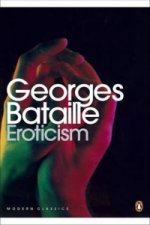
Eroticism
11.25 € -28 % -

The True Believer
15.27 € -9 % -

Gifts of Imperfection: 10th Anniversary Edition
14.37 € -29 % -

Transparency Society
12.86 € -8 % -

Blueprint for Revolution
10.35 € -30 % -

Theory of the Leisure Class
11.75 € -24 % -
Craftsman
13.77 € -25 % -

Being Mortal
15.07 € -29 % -

Anatomy of Love
13.26 € -25 % -

Bushido: The Soul Of Japan
13.46 € -30 % -

Cruel Optimism
24.93 € -6 % -

Of Woman Born
14.47 € -22 % -

Why Love Hurts - A Sociological Explanation
17.49 € -4 % -

Trickster Makes This World
16.08 € -25 % -

Research Design - International Student Edition
114.82 € -11 % -
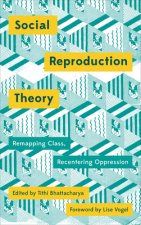
Social Reproduction Theory
20.91 € -21 % -

Sex at Dawn
13.77 € -25 % -

Intercourse
14.67 € -25 % -

Chrysanthemum and the Sword
15.98 € -

Surrendered Wife
10.65 € -25 % -

On Death and Dying
14.77 € -24 % -

History of Sexuality: 4
15.17 € -24 % -

Unexpected Joy of Being Single
12.16 € -22 % -

Wounded Woman
16.08 € -17 % -

World-Systems Analysis
17.39 € -25 % -

Expulsion of the Other - Society, Perception and Communication Today
13.97 € -6 % -
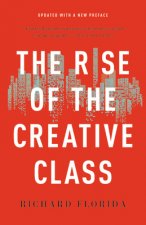
The Rise of the Creative Class
16.28 € -24 % -

Introduction to Japanese Society
37.90 € -

Smoke Gets in Your Eyes
11.75 € -24 % -

Book of Tea
10.65 € -25 % -
Critique of Everyday Life
31.77 € -25 % -
Statistics in Corpus Linguistics
39.51 € -

Why People Die by Suicide
18.79 € -25 % -

Baba Yaga
34.28 € -9 %
Collection points Bratislava a 13398 dalších
Copyright ©2008-26 najlacnejsie-knihy.sk All rights reservedPrivacyCookies

 26800 collection points
 Delivery 2.99 €
 02/210 210 99 (8-15.30h)