Code: 50893931
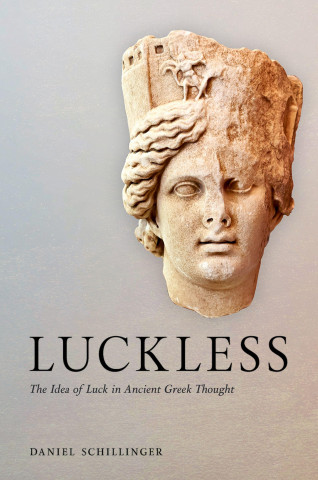
Luckless
by Schillinger, Daniel (Lecturer in Political Science, Lecturer in Political Science, Yale University)
What is luck? What is the significance of luck for our ethical and political lives? Could it be the case that luck is an intoxicating illusion, which threatens to obscure the true explanations of human action, excuse wrongdoing or ... more


- Language:
 English
 - Binding: Hardback
- Number of pages: 192
Publisher: Oxford University Press, 2026
- More about this


You might also like
-

Moonwalk
14.01 € -18 % -

The Score
13.71 € -12 % -

The Deal
12.30 € -21 % -

The Mistake
13.51 € -14 % -

Jujutsu Kaisen, Vol. 30
9.88 € -20 % -

The Goal
14.62 € -

Berserk Deluxe Volume 1
35.70 € -25 % -

Berserk Deluxe Volume 2
33.18 € -30 % -

Invincible Compendium Volume 2
45.69 € -24 % -

Legacy
11.89 € -22 % -

Lord of Mysteries, Vol. 3: The Clown, Part III
17.04 € -13 % -

Murdoku
14.62 € -22 % -

Berserk Deluxe Volume 3
55.17 € -

Witch Hat Atelier: Grimoire Edition 1
35.20 € -29 % -

Chainsaw Man, Vol. 21
9.27 € -25 % -

Jujutsu Kaisen, Vol. 25
9.68 € -25 % -

Jujutsu Kaisen, Vol. 29
9.68 € -25 % -

Witch Hat Atelier Manga Box Set 1
53.86 € -28 % -

JoJo's Bizarre Adventure: Part 7--Steel Ball Run, Vol. 7
18.15 € -25 % -

White Nights
4.53 € -14 % -

Dancing The Dream
19.86 € -31 %
Give this book as a present today
- Order book and choose Gift Order.
- We will send you book gift voucher at once. You can give it out to anyone.
- Book will be send to donee, nothing more to care about.
More about Luckless
You get 267 loyalty points
 Book synopsis
What is luck? What is the significance of luck for our ethical and political lives? Could it be the case that luck is an intoxicating illusion, which threatens to obscure the true explanations of human action, excuse wrongdoing or cowardice, provoke powerful emotions, and cloud judgment?Schillinger's original interpretation of the idea of luck in ancient Greek thought challenges both scholars of ancient Greek texts and theorists of luck in the present. While many contemporaries approach luck as something "out there" in the world that explains why some human beings flourish while others suffer or perish, Schillinger argues that luck is a psychological phenomenon: what we have in mind when we speak of "luck" are the intellectual and emotional reactions of human beings as they run up against the limits of their knowledge and power. Schillinger returns to the Greeks because they fully examined this phenomenon, revealing the roots of the idea of luck in the psyche, its (often confused) role in ethical judgments of praise and blame, and its salience as a rhetorical trope used by statesmen and demagogues. His analysis summons unfamiliar perspectives on these issues in ancient Greek thought—perspectives that are acutely skeptical and attuned to both the realities of politics and the complexities of the human soul.
Book details
Book category Books in German Geisteswissenschaften, Kunst, Musik Philosophie Mittelalter
110.26 €
- Full title: Luckless
- Author: Schillinger, Daniel (Lecturer in Political Science, Lecturer in Political Science, Yale University)
- Language: English
- Binding: Hardback
- Number of pages: 192
- EAN: 9780197690246
- ISBN: 0197690246
- ID: 50893931
- Publisher: Oxford University Press
- Weight: 381 g
- Date of publishing: 29. April 2026
Collection points Bratislava a 12666 dalších
Copyright ©2008-26 najlacnejsie-knihy.sk All rights reservedPrivacyCookies

 25336 collection points
 Delivery 2.99 €
 02/210 210 99 (8-15.30h)