Code: 41726415
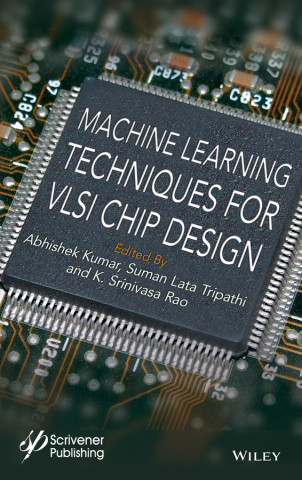
Machine Learning Techniques for VLSI Chip Design
by Suman Lata Tripathi, K Srinivasa Rao
MACHINE LEARNING TECHNIQUES FOR VLSI CHIP DESIGN This cutting-edge new volume covers the hardware architecture implementation, the software implementation approach, the efficient hardware of machine learning applications with FPGA ... more


- Language:
 English
 - Binding: Hardback
- Number of pages: 350
Publisher: John Wiley & Sons Inc, 2024
- More about this

190.83 €
RRP: 212.08 €
You save 21.25 €

In stock at our supplier
Shipping in 14 - 20 days
You might also like
-

Moonwalk
14.01 € -18 % -

The Score
13.71 € -12 % -

The Deal
12.30 € -9 % -

The Mistake
13.51 € -

Berserk Deluxe Volume 1
35.70 € -25 % -

Jujutsu Kaisen, Vol. 30
7.66 € -30 % -

Berserk Deluxe Volume 2
33.17 € -30 % -

Dancing The Dream
19.86 € -31 % -

The Goal
14.62 € -

Berserk Deluxe Volume 3
55.16 € -

Murdoku
14.01 € -25 % -

White Nights
4.53 € -

Chainsaw Man, Vol. 21
9.87 € -20 % -

Invincible Compendium Volume 2
45.68 € -24 % -

The Legacy
11.89 € -22 % -

Lord of Mysteries, Vol. 3: The Clown, Part III
17.04 € -13 % -

Jujutsu Kaisen, Vol. 29
9.87 € -20 % -

Invincible Compendium Volume 3
46.29 € -23 % -

JoJo's Bizarre Adventure: Part 7--Steel Ball Run, Vol. 7
18.15 € -25 % -

Witch Hat Atelier: Grimoire Edition 1
34.89 € -29 % -

Berserk Deluxe Volume 5
54.86 €
Give this book as a present today
- Order book and choose Gift Order.
- We will send you book gift voucher at once. You can give it out to anyone.
- Book will be send to donee, nothing more to care about.
More about Machine Learning Techniques for VLSI Chip Design
You get 463 loyalty points
 Book synopsis
MACHINE LEARNING TECHNIQUES FOR VLSI CHIP DESIGN This cutting-edge new volume covers the hardware architecture implementation, the software implementation approach, the efficient hardware of machine learning applications with FPGA or CMOS circuits, and many other aspects and applications of machine learning techniques for VLSI chip design. Artificial intelligence (AI) and machine learning (ML) have, or will have, an impact on almost every aspect of our lives and every device that we own. AI has benefitted every industry in terms of computational speeds, accurate decision prediction, efficient machine learning (ML), and deep learning (DL) algorithms. The VLSI industry uses the electronic design automation tool (EDA), and the integration with ML helps in reducing design time and cost of production. Finding defects, bugs, and hardware Trojans in the design with ML or DL can save losses during production. Constraints to ML-DL arise when having to deal with a large set of training datasets. This book covers the learning algorithm for floor planning, routing, mask fabrication, and implementation of the computational architecture for ML-DL. The future aspect of the ML-DL algorithm is to be available in the format of an integrated circuit (IC). A user can upgrade to the new algorithm by replacing an IC. This new book mainly deals with the adaption of computation blocks like hardware accelerators and novel nano-material for them based upon their application and to create a smart solution. This exciting new volume is an invaluable reference for beginners as well as engineers, scientists, researchers, and other professionals working in the area of VLSI architecture development.
Book details
190.83 €
- Full title: Machine Learning Techniques for VLSI Chip Design
- Author: Suman Lata Tripathi, K Srinivasa Rao
- Language: English
- Binding: Hardback
- Number of pages: 350
- EAN: 9781119910398
- ID: 41726415
- Publisher: John Wiley & Sons Inc
- Weight: 666 g
- Date of publishing: 11. September 2024
Collection points Bratislava a 12734 dalších
Copyright ©2008-26 najlacnejsie-knihy.sk All rights reservedPrivacyCookies

 25472 collection points
 Delivery 2.99 €
 02/210 210 99 (8-15.30h)