Code: 09083609
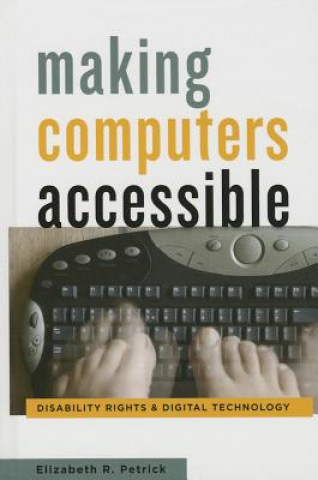
Making Computers Accessible
by Elizabeth R. Petrick
In 1974, not long after developing the first universal optical character recognition technology, Raymond Kurzweil struck up a conversation with a blind man on a flight. Kurzweil explained that he was searching for a use for his ne ... more


- Language:
 English
 - Binding: Hardback
- Number of pages: 208
Publisher: Johns Hopkins University Press, 2015
- More about this

54.11 €

Low in stock at our supplier
Shipping in 12 - 17 days
Potřebujete více kusů?Máte-li zájem o více kusů, prověřte, prosím, nejprve dostupnost titulu na naši zákaznické podpoře.
Add to wishlist
You might also like
-

Miraculous Journey of Edward Tulane
8.99 € -19 % -

Autobiography of Benjamin Franklin
9.79 € -25 % -

Fine Dining at Home by Chef Bernard
22.70 € -1 % -

Love from Giraffes Can't Dance
7.19 € -24 % -

Das Blut des Löwen
15.20 € -10 % -

Increasing Autodesk Revit Productivity for BIM Projects
46.71 € -1 % -

The Sociology of Play, Recreation, and Leisure Time
24.40 € -2 % -

Rock&Talk
10.09 € -1 % -

A Taytsh Manifesto – Yiddish, Translation, and the Making of Modern Jewish Culture
41.61 € -

AGENDA ANUAL SEMANAL 2024 ISA MUGURUZA***
15.10 € -

Prisciani Grammatici Caesariensis Institutionum Grammaticarum, Book 18 V1: Book 1-12 Continens (1855)
30.60 € -2 % -

Challenges in Detection Approaches for Forensic Science
238.89 € -

Islam, Gender, and Democracy in Comparative Perspective
32.30 € -

Eusebi Chronicorum Libri Duo; Volume 1
32.40 € -2 % -

Amazing Giant Crossword Puzzle Book
10.49 € -25 % -

Familie an Der Schwelle Zum Neuen Jahrtausend
52.51 € -4 % -

Analyse de la Liqueur Bayer Par R fractom trie Dispersive
58.11 € -14 % -

Educación y nuevos entornos mediáticos: El desafío de la innovación
25.70 € -
Contemporary Authors
551.02 € -

Experiencing Stanislavsky Today
236.99 € -

Wittgenstein's Language
101.83 € -7 % -

Countess Kate
9.69 € -6 % -

Primary That Made a President
24.80 € -25 % -

Sir Prise
17.50 € -

So You Want to Sing Cabaret
49.51 € -

Histoire Du Pere Vieyra, Jesuite Portugais, Missionnaire Dans l'Ancien Et Le Nouveau Monde
16.90 € -8 % -

Der digitale Zivilprozess
113.24 € -4 % -

Faded Love
9.29 € -6 %
Give this book as a present today
- Order book and choose Gift Order.
- We will send you book gift voucher at once. You can give it out to anyone.
- Book will be send to donee, nothing more to care about.
More about Making Computers Accessible
You get 132 loyalty points
 Book synopsis
In 1974, not long after developing the first universal optical character recognition technology, Raymond Kurzweil struck up a conversation with a blind man on a flight. Kurzweil explained that he was searching for a use for his new software. The blind man expressed interest: One of the frustrating obstacles that blind people grappled with, he said, was that no computer program could translate text into speech. Inspired by this chance meeting, Kurzweil decided that he must put his new innovation to work to "overcome this principal handicap of blindness." By 1976, he had built a working prototype, which he dubbed the Kurzweil Reading Machine. This type of innovation demonstrated the possibilities of computers to dramatically improve the lives of people living with disabilities. In Making Computers Accessible, Elizabeth R. Petrick tells the compelling story of how computer engineers and corporations gradually became aware of the need to make computers accessible for all people. Motivated by user feedback and prompted by legislation such as the Americans with Disabilities Act, which offered the promise of equal rights via technological accommodation, companies developed sophisticated computerized devices and software to bridge the accessibility gap. People with disabilities, Petrick argues, are paradigmatic computer users, demonstrating the personal computer's potential to augment human abilities and provide for new forms of social, professional, and political participation. Bridging the history of technology, science and technology studies, and disability studies, this book traces the psychological, cultural, and economic evolution of a consumer culture aimed at individuals with disabilities, who increasingly rely on personal computers to make their lives richer and more interconnected.
Book details
Book category Books in English Society & social sciences Society & culture: general Social issues & processes
54.11 €
- Full title: Making Computers Accessible
- Subtitle: Disability Rights and Digital Technology
- Author: Elizabeth R. Petrick
- Language: English
- Binding: Hardback
- Number of pages: 208
- EAN: 9781421416465
- ISBN: 1421416468
- ID: 09083609
- Publisher: Johns Hopkins University Press
- Weight: 410 g
- Dimensions: 160 × 236 × 19 mm
- Date of publishing: 22. May 2015
Trending among others
-

The Second Sex
7.79 € -29 % -
Individuals and Societies for the IB MYP 1
29.50 € -9 % -

Shock Doctrine
16.80 € -25 % -

Alcoholics Anonymous Big Book
29.40 € -

The Divide
12.30 € -24 % -

Staying with the Trouble
27.10 € -6 % -

Blitzed
12.09 € -30 % -

Manifestly Haraway
17.90 € -8 % -

Seeing Voices
11.79 € -20 % -

Storming Heaven
17.40 € -24 % -

Fear Of The Animal Planet
13.20 € -25 % -

Chronology of Water
11.39 € -22 % -

Politics of Heroin, New Edn****o/p
23.50 € -24 % -

Militant Vegan
8.39 € -2 % -
Essays of Woman
14.60 € -25 % -

Happy are You Poor
12.60 € -24 % -

John Coltrane and the Jazz Revolution in the 1960s
20.70 € -9 % -

Terrorists or Freedom Fighters
19.30 € -22 % -
Introducing Feminism
8.49 € -30 % -

History of Rape - Sexual Violence in France from the 16th to the 20th Century
30.80 € -

Animal Rights
12.60 € -24 % -

Anarchism and Animal Liberation
33.40 € -

Master's Tools Will Never Dismantle the Master's House
4.19 € -29 % -

Rebel Witch
18 € -25 % -

The Feminine Mystique
10.09 € -31 % -

Pedagogy of the Oppressed
9.89 € -32 % -

Testo Junkie
18.70 € -25 % -

My Life on the Road
13.90 € -30 % -

Regarding the Pain of Others
13.30 € -21 % -

Women & Power
8.49 € -30 % -

Best We Could Do
14.60 € -25 % -

Globalization Paradox
15.10 € -19 % -

The Next 100 Years
14.70 € -19 % -
Superforecasting
13.70 € -15 % -

Toxic Parents
14.50 € -21 % -

No Logo
11.69 € -24 % -

Miami
11.69 € -24 % -

We Should All Be Feminists
8.19 € -29 % -

Globalization and Its Discontents
12.30 € -30 % -

Feminism is for Everybody
22.60 € -14 % -

Inventing the Future
11.69 € -13 % -

Volatile Bodies
23 € -

Sociological Imagination
18 € -19 % -

Planet of Slums
14.60 € -25 % -

What Are People For?
12.60 € -24 % -

Trauma and Addiction
13.20 € -25 % -

How He Gets into Her Head
18.50 € -2 % -

#ChurchToo
12.60 € -25 % -

Pleasure Activism
14.80 € -24 %
Collection points Bratislava a 13422 dalších
Copyright ©2008-26 najlacnejsie-knihy.sk All rights reservedPrivacyCookies

 26848 collection points
 Delivery 2.99 €
 02/210 210 99 (8-15.30h)