Code: 01400539
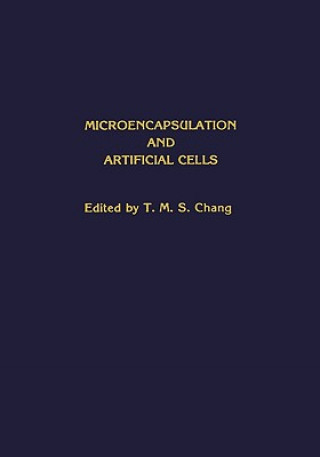
Microencapsulation and Artificial Cells
by T. M. S. Chang
Early studies by Pendleton and West (1) in 1932 demonstrated that urea moved from the blood into the small intestine in uremic dogs. In 1946, Twiss and Kolff (2) showed in uremic patients that urea could be removed when an isotoni ... more


- Language:
 English
 - Binding: Hardback
- Number of pages: 320
Publisher: Humana Press Inc.
- More about this

167.50 €

Low in stock at our supplier
Shipping in 11 - 15 days
Potřebujete více kusů?Máte-li zájem o více kusů, prověřte, prosím, nejprve dostupnost titulu na naši zákaznické podpoře.
Add to wishlist
You might also like
-

Dvacet tisíc zlodějů
0.90 € -24 % -

Dlouhá noc nad městem
3.42 € -29 % -

České hrady, zámky a tvrze III.
34.54 € -16 % -

Agenda escolar permanente - Vampiros y terror
6.25 € -10 % -

The Histories
33.43 € -4 % -

Energy Efficiency and Robustness of Advanced Machine Learning Architectures
159.92 € -

Geschichte des Volkes Israel bis Christus
29.19 € -34 % -

Gita Govinda, Drama Lyricum. Textum: Recognovit, Scholia Selecta, Annotationem Criticam, Interpret. Lat. Adjecit Christianus Lassen...
18.38 € -1 % -
Immunometabolism
120.72 € -9 % -

Apartheid on a Black Isle
109.21 € -

THE WHITE PERIL IN THE FAR EAST: AN INTE
35.45 € -1 % -

Eifersuchtsgenerator Facebook?
16.16 € -11 % -

A Meta-Spiritual Handbook: How to Be Spiritual Without Religion, Faith, or God
9.69 € -7 % -

Letters, Unwritten
11.51 € -7 % -

Szkolne szaleństwa Potwór, który zjadł mój prowiant
6.05 € -18 % -

Phase Separation in Soft Matter Physics
109.21 € -

Heliophysical Processes
205.49 € -7 % -

Numerical Ship Hydrodynamics
154.16 € -7 % -

Engaging with AQA GCSE (9-1) History: Conflict and tension, 1918-1939 Wider world depth study
29.59 € -

Die Kraft der Krise
10.90 € -15 % -

Seminare
53.03 €
Give this book as a present today
- Order book and choose Gift Order.
- We will send you book gift voucher at once. You can give it out to anyone.
- Book will be send to donee, nothing more to care about.
More about Microencapsulation and Artificial Cells
You get 406 loyalty points
 Book synopsis
Early studies by Pendleton and West (1) in 1932 demonstrated that urea moved from the blood into the small intestine in uremic dogs. In 1946, Twiss and Kolff (2) showed in uremic patients that urea could be removed when an isotonic solution was perfused through an isolated in testinalloop. Since these early studies had demonstrated the presence of urea and its removal from the gastrointestinal tract, Yatzidis (3) in 1964 investigated the use of activated charcoal for the removal of uremic wastes from the intestinal tract. In addition to Yatzidis' studies with char coal, other investigations with charcoal have been unable to confirm any significant reduction in serum levels of urea, creatinine, uric acid, or guanidines (4,5) via this approach. At the same time that Yatzidis proposed the use of charcoal for re moval of nitrogenous wastes from the intestinal tract, he also proposed using charcoal in a hemoperfusion microapparatus as an effective artifi cial kidney. However, clinical studies performed with the Yatzidis char coal artificial kidney showed an adverse affect on platelets and the re lease of embolizing particles (6,7). To overcome these platelet and emboli problems, Chang's group (8) proposed the general idea of "artificial cells," Le., microcapsules con taining adsorbents. Since the charcoal particles were now encased within blood compatible membranes, they could not leave the microcapsules to cause embolism, and platelets did not now come in direct contact with the charcoal. In their early clinical hemoperfusion studies, Chang et al.
Book details
Book category Books in English Medicine Nursing & ancillary services Biomedical engineering
167.50 €
- Full title: Microencapsulation and Artificial Cells
- Author: T. M. S. Chang
- Language: English
- Binding: Hardback
- Number of pages: 320
- EAN: 9780896030732
- ISBN: 0896030733
- ID: 01400539
- Publisher: Humana Press Inc.
- Weight: 1750 g
- Dimensions: 254 × 178 × 19 mm
Trending among others
-

Ultimate BMAT Guide - 600 Practice Questions
31.11 € -7 % -

Introduction To Bioengineering
81.02 € -4 % -

The Death of Death
23.73 € -24 % -
Biomedical Engineering
89.81 € -
Corneal Biomechanics and Refractive Surgery
50.51 € -9 % -
Clinical Kinesiology and Biomechanics
110.62 € -9 % -
Medical Devices
120.72 € -9 % -
Rehabilitation Robotics
110.62 € -9 % -
Medical Device Guidelines and Regulations Handbook
130.73 € -9 % -

Biodesign
105.06 € -
Introduction to Biomaterials
81.52 € -
Safety Risk Management for Medical Devices
148.10 € -
Computational Nanomedicine and Nanotechnology
100.62 € -9 % -
Clinical Simulation
218.12 € -
Comparative Kinesiology of the Human Body
166.39 € -10 % -

Wearable Robotics
218.12 € -

Analog Electronics for Radiation Detection
113.04 € -
Biomedical Microsystems
164.87 € -
Medical Device Quality Management Systems
174.78 € -
MATLAB Programming for Biomedical Engineers and Scientists
54.55 € -
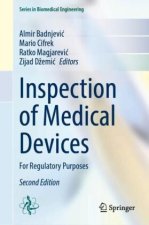
Inspection of Medical Devices
140.83 € -9 % -
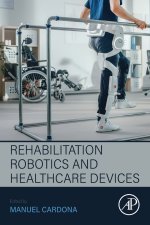
Rehabilitation Robotics and Healthcare Devices
176.59 € -
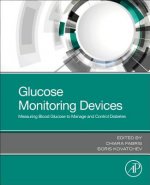
Glucose Monitoring Devices
142.34 € -
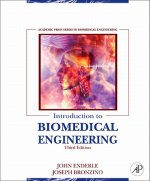
Introduction to Biomedical Engineering
132.24 € -
Principles of Biomedical Instrumentation
107.79 € -

Essential Current Concepts in Stem Cell Biology
75.56 € -9 % -
Medical Device Design
143.35 € -10 % -

Biomechanics of Human Motion
243.58 € -
Anthropology of Biomedicine 2e
69.10 € -4 % -
Biomechanics for Instructors
120.72 € -9 % -
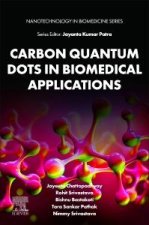
Carbon Quantum Dots in Biomedical Applications
261.36 € -

Synthetic Biopolymers for Drug Delivery
261.46 € -9 % -
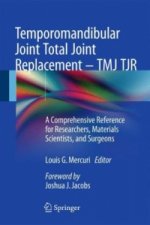
Temporomandibular Joint Total Joint Replacement - TMJ TJR
174.67 € -7 % -
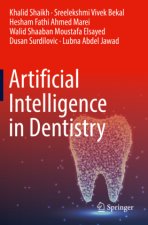
Artificial Intelligence in Dentistry
174.67 € -7 % -
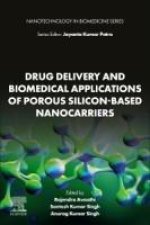
Drug Delivery and Biomedical Applications of Porous Silicon-Based Nanocarriers
259.44 € -9 % -

Handbook of Thermosetting Foams, Aerogels, and Hydrogels
293.79 € -

Applied Science and Engineering of Wound Dressings and their Clinical Effectiveness
245.09 € -

Introduction to Synthetic Biology
90.62 € -9 % -

Medical Imaging Application in Health Assessment and Disease Management
180.33 € -10 % -

Bioengineering Fluid Mechanics
94.35 € -
Handbook of Low-Level Laser Therapy
465.85 € -

Computational and Network Modeling of Neuroimaging Data
121.43 € -9 % -

Quantum Dot Nanocarriers for Drug Delivery
265.70 € -
Engineering and Medicine in Extreme Environments
184.88 € -7 % -

Air-Puff Tonometers
129.51 € -
Biomaterials
250.15 € -

Biomedical Engineering Handbook
1417.47 € -
Stem Cells and Biomaterials for Regenerative Medicine
144.36 € -10 % -

Bioelectricity
154.16 € -7 %
Collection points Bratislava a 12944 dalších
Copyright ©2008-26 najlacnejsie-knihy.sk All rights reservedPrivacyCookies

 25892 collection points
 Delivery 2.99 €
 02/210 210 99 (8-15.30h)