Code: 02021401
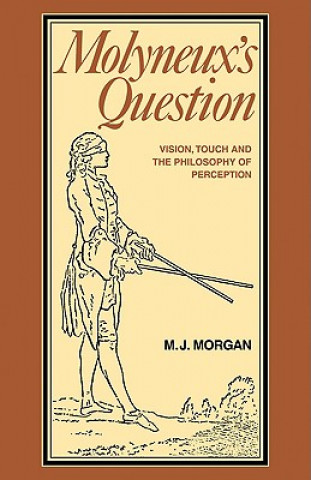
Molyneux's Question
by Michael J. Morgan
If a man born blind were to gain his sight in later life would he be able to identify the objects he saw around him? Would he recognise a cube and a globe on the basis of his earlier tactile experiences alone? This was William Mol ... more


- Language:
 English
 - Binding: Paperback
- Number of pages: 228
Publisher: Cambridge University Press, 2009
- More about this


You might also like
-
Endure
14.82 € -25 % -

Four Against the Great Old Ones: The Pen and Paper Solo and Cooperative Game of Lovecraftian Horror
13.50 € -7 % -

Hraj si!
7.40 € -20 % -

Čechy, domov můj
12.69 € -12 % -

Art of War
19.59 € -22 % -

Ramones' Ramones
11.37 € -24 % -

Maori - Heilsame Botschaften der Ureinwohner Neuseelands
23.66 € -16 % -

Histoire du mouvement ouvrier
16.95 € -24 % -

Kommunikative Wissensverteilung in Gruppen
44.79 € -11 % -

Anwendung des Wertstromdesigns in einem metallverarbeitenden Unternehmen
35.85 € -11 % -

Neuzeitliche Übersetzung
50.07 € -

Vuela
27.42 € -

Rose
10.55 € -

User's Guide to Natural Therapies for Cancer Prevention and Control
6.59 € -24 % -

Pandas' Earthquake Escape
16.34 € -9 % -

Método de guitarra
18.98 € -4 % -

Fundamentale Wechselkursprognose Mit Neuronalen Netzen
47.43 € -6 % -

AEltere Beschaftigte in der betrieblichen Weiterbildung
16.24 € -10 % -
Electron Paramagnetic Resonance
428.14 € -

Occupational Health and Safety Management System of a security company
49.15 € -14 % -

Lost Nottingham
17.05 € -25 % -

Emerging Nanotechnologies for Manufacturing
224.48 € -

Carl Hauptmann: Sämtliche Werke / Supplement
82.47 € -

Oedipus Complex
5.68 € -

HISTORICAL INSCRIPTIONS OF SOUTHERN INID
37.47 € -1 % -

Historia del dibujo y la ilustración
39.30 € -3 % -

Richard Wagners Instrumentalmusik am Beispiel des Siegfried-Idylls aus musikdidaktischer Perspektive
16.24 € -10 % -

CHIVALRY: DIZAIN DES REINES
32.90 € -2 % -

Mein Natursekt und ich
7.10 € -9 % -

Giardia: Risk for Children and Infants
13.30 € -25 % -

NCLEX: Pharmacology for Nurses: 105 Nursing Practice Questions & Rationales to EASILY Crush the NCLEX!
12.38 € -7 % -

International Law Reports
211.68 € -

Resurgence of East Asia
290.30 € -

Sister
14.62 € -

Heimat und Welt Plus 9 / 10. Schülerband. Sekundarstufe 1. Berlin und Brandenburg
36.96 €
Give this book as a present today
- Order book and choose Gift Order.
- We will send you book gift voucher at once. You can give it out to anyone.
- Book will be send to donee, nothing more to care about.
More about Molyneux's Question
You get 111 loyalty points
 Book synopsis
If a man born blind were to gain his sight in later life would he be able to identify the objects he saw around him? Would he recognise a cube and a globe on the basis of his earlier tactile experiences alone? This was William Molyneux's famous question to John Locke and it was much discussed by English and French empiricists in the eighteenth century as part of the controversy over innatism and abstract ideas. Dr Morgan examines the whole history of this debate: Locke's own (negative) answer to the question, the contributions of Berkeley, Condillac, Diderot and Voltaire and the factual accounts of early cataract operations and modern laboratory studies. He shows how this debate is involved in the development and eventual separation of philosophy and experimental psychology after the eighteenth century and considers why the original question is effectively still unanswered. This is one problem-area with its intricate cluster of connected conceptual and technical difficulties which suggests the need for some reunion or at least collaboration between the two subjects.
Book details
Book category Books in English Society & social sciences Psychology Cognition & cognitive psychology
46.11 €
- Full title: Molyneux's Question
- Subtitle: Vision, Touch and the Philosophy of Perception
- Author: Michael J. Morgan
- Language: English
- Binding: Paperback
- Number of pages: 228
- EAN: 9780521100670
- ISBN: 0521100674
- ID: 02021401
- Publisher: Cambridge University Press
- Weight: 300 g
- Dimensions: 216 × 140 × 13 mm
- Date of publishing: 29. January 2009
Trending among others
-
Thinking, Fast and Slow
15.23 € -33 % -
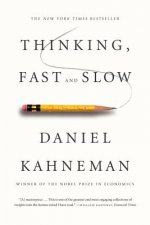
Thinking, Fast and Slow
13.80 € -29 % -

Gödel, Escher, Bach
17.87 € -26 % -
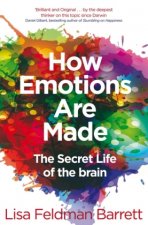
How Emotions Are Made
12.99 € -25 % -
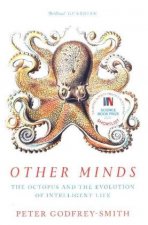
Other Minds
11.57 € -22 % -
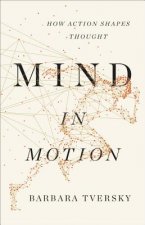
Mind in Motion
28.13 € -27 % -
Getting Started with EEG Neurofeedback
54.03 € -5 % -

Learning RFT
62.16 € -14 % -
Five Minds for the Future
20.41 € -24 % -
Courage to Create
11.37 € -24 % -
The Paradox of Choice
16.04 € -13 % -
Enigma of Reason
14.21 € -23 % -

250 Brief, Creative & Practical Art Therapy Techniques250 Brief, Creative & Practical Art Therapy Techniques
26.60 € -25 % -
Frames of Mind
18.38 € -24 % -

Shadows Of The Mind
16.04 € -25 % -
How We Learn
10.86 € -24 % -
The Art of Thinking Clearly
9.23 € -24 % -

Love & Will
13.50 € -24 % -

Ego and the Id - First Edition Text
6.90 € -

Detecting Lies and Deceit - Pitfalls and Opportunities 2e
61.24 € -10 % -
Where Good Ideas Come From
11.26 € -17 % -

Trauma and Memory
16.24 € -24 % -
Your Brain Is Playing Tricks On You
19.09 € -
Power of Mindful Learning
14.11 € -25 % -
Theory of Cognitive Dissonance
33.41 € -6 % -
Thinking and Reasoning: A Very Short Introduction
10.45 € -21 % -
MIRRORING PEOPLE
17.66 € -24 % -

Medieval Craft of Memory
31.28 € -6 % -
Power of Persuasion
12.79 € -24 % -

Art of Memory
37.27 € -
Multiple Intelligences
19.19 € -9 % -
The Memory Illusion
12.89 € -21 % -

Present Moment in Psychotherapy and Everyday Life
45.50 € -5 % -

Memory: A Very Short Introduction
12.38 € -10 % -
MINDWARE: TOOLS FOR SMART THINKING
17.66 € -24 % -

Frames of Mind
17.46 € -20 % -

The Neuroscience of Intelligence
39.60 € -9 % -

Strategic Thinking in Complex Problem Solving
116.19 € -
Communicative Musicality
105.22 € -

Behavioral Addictions
165.26 € -7 % -
Creative Model Construction in Scientists and Students
155 € -7 % -

Ethical Know-How
16.45 € -17 % -

Mind's Staircase
71.20 € -
Risk Savvy
12.99 € -30 % -

WHY WE LOVE
15.53 € -25 % -
Biggest Bluff
9.74 € -29 % -
On Creativity
27.01 € -4 % -
Gift of Fear
23.86 € -17 % -
Conditioned Reflexes
19.49 €
Collection points Bratislava a 13190 dalších
Copyright ©2008-26 najlacnejsie-knihy.sk All rights reservedPrivacyCookies

 26384 collection points
 Delivery 2.99 €
 02/210 210 99 (8-15.30h)